Book Excerpt: How The House Of IL&FS Came Crashing Down
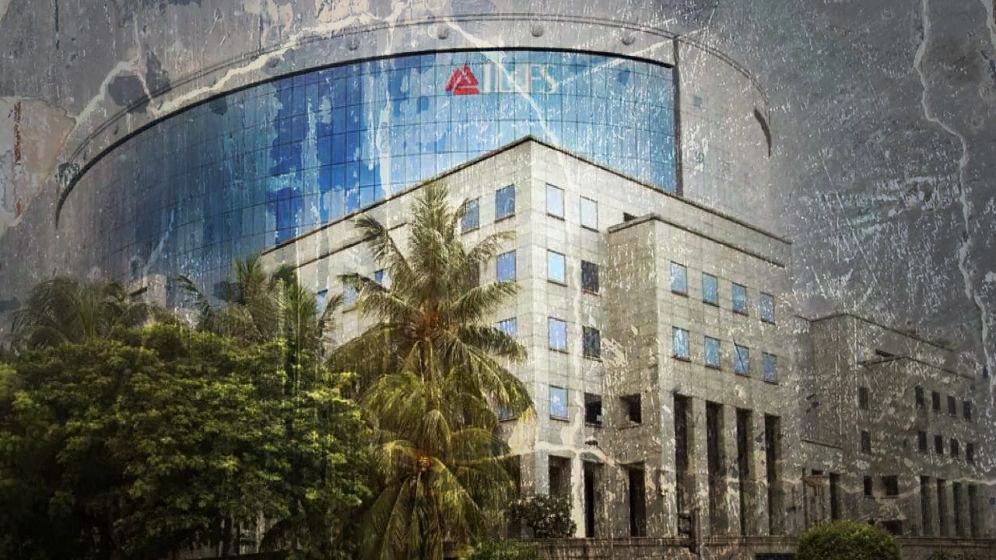
Excerpted from ‘Never Too Big To Fail - The Collapse of IL&FS' by Sandeep Hasurkar, with permission from Rupa Publications.
Ravi Parthasarathy became the chairman of the board of directors in 2004. He served as the president and CEO since 1987, as the MD and board member since 1989 and as the vice chairman and MD since 1994, a position he held till he stepped down in July 2018, after having helmed the Group for over 30 years since its inception. Almost without exception, to all within and without the company, for those 30 years, Ravi Parthasarathy was IL&FS.
An early jockeying for space and independence with territorial marking of the company as his turf rather than a larger collaborative purpose and a wilful temperament were rumoured to have caused distance with his mentor, Deepak Parekh, the chief of HDFC and with which IL&FS closely collaborated in its financial services business in its initial years. While the veracity of that is not known, and the two would continue to occasionally collaborate, it is a fact that Parekh, who was tasked by the government with leading the infrastructure finance sector and creating public-private institutions to facilitate it, chose to step down as the IL&FS chairman. He created a new institution, IDFC, to undertake infrastructure financing, with substantial funding and capitalization by the Government of India.
Parthasarathy had got his turf, albeit small, of which he was now unchallenged boss. Yet, it had come at a high price, for IL&FS would no longer be mentored and guided as a part of an official firmament, with the patronage of a senior statesman who would groom it as an instrument of state policy and its assured institutional support. A scrappy NBFC would have to survive by itself and with a street-smart wit.
The management style at IL&FS has been described by some as that of a wolf pack. To others, it was an empire, built semi independently by empowered chiefs, with the leader keeping his own position secure by encouraging palace politics, strategically favouring one over the other, reducing or banishing some from the court, in Byzantine intrigue. Of lords, or zamindars, keeping their place under the Imperial Sun at the emperor's whim and personal favour, owing unquestioned allegiance to the ruler. This was even as they jockeyed and intrigued for power within themselves while running their own subsidiary fiefdoms, but contributing to the revenue exchequer of the Imperial Court to keep it running and for its dividends to its shareholders.
Yet, externally it was a single monolithic ‘pack' or ‘empire', with AAA-rated IL&FS and Ravi Parthasarathy at the centre of it. Of a musketeer ‘one for all, and all for one' self-interest, in their coordination, funding and defence of the pack and the benefits it brought them collectively.
Yet, its management philosophy was one of a transactionbased, short-term perspective investment bank, driven by the immediate need for annual revenues, profits, dividend and bonus payouts while maintaining ever-increasing valuations and the highest credit rating, rather than any long-term institutional perspective to sustainability of its business model.
This ‘eat as you kill' model worked well while it was still a midsize investment bank with diverse revenue streams under a single company. Initially, it was primarily running a modest lending book of promoter funding and short-term loans supplemented with fee revenues. It was also engaged in developing, structuring, financing and managing the implementation of bilaterally driven projects such as the Noida Toll Bridge, Tirupur Water, the Gujarat Highways and so on—all projects seeing project completion on both management bandwidth and funding.
But this model could not work, as it changed its architecture to a pyramidal holding company and subsidiaries at multiple levels, each dependent on revenue streams of fees, dividends and interest on loans from below, and subsequently from each other. Thus, all rested on the underlying weak foundation of projects under implementation in various project companies.
The shift required in management thinking, from being primarily an investment bank to the ownership of a predominantly infrastructure project portfolio, never took place.

That each project it won in bidding or bilateral negotiation was large in its own context and constituted a long-term commitment on the part of the group to its implementation and financing, was ignored in the investment banker's mindset and hubris of grand ‘sector platforms' and ‘valuations'. Rather than seeing the risks and liabilities of the group being built up with each project that was added at a scorching pace, it was seen as ‘adding to the project pipeline' and a complex game of valuing ‘future cash flows from the projects', much as valuing a chicken farm from a single egg, and that too on borrowed money. There was little attention paid to the project implementation and there was an overconfident emphasis on clever structuring and extracting value, in most cases even before it was created, with no thought of the future. As a senior investment banker who had dealt extensively in structuring transactions and raising funds for companies in the infrastructure sector over decades said, the difference was of perspective.
If Larsen & Toubro, which also had a significant presence in the infrastructure and financing space, was a project developer-turning-financier, IL&FS was an investment bank- turning-project developer.
It is notable that with the exception of K Ramchand, the head of ITNL, there was no engineer in the entire top management team of IL&FS. The ITNL management too, while being predominantly of road engineers, was involved in estimating project costs, reviewing financial projections, submitting bids and spearheading the group's overseas push. It struggled to stabilize its Spanish acquisition of Elsamex and its subsequent Chinese acquisition of the Chongqing Expressway, rather than scaling back on expansion and prioritizing the management and troubleshooting of the stalled domestic projects.
ITNL had already mounted the stock market listing tiger, and now could ill afford to dismount the ill-thought-through revenue model of fees it had designed for itself. It feared being dumped on stock price by investors who wished to see constant growth in projects, revenues and profitability. The supervision and engineering review of the progress of implementation for other projects at group management level was even lesser.
Sandeep Hasurkar has been an investment banker, term lender and policy advisor with leading financial institutions for the last three decades. He was a part of the senior management team at IL&FS's renewable energy business.
The views expressed here are those of the author and do not necessarily represent the views of BloombergQuint or its editorial team.

-
Gold Is Rs 22,000 Cheaper Than A Month Ago. Should You Buy Amid The Wedding Season?

Gold's potential slide to $3,500 could save around Rs 4,700 per 10 grams, but a soft inflation print could just as easily push prices back up. One way to split the risk is to buy in parts, some now and the rest after the Fed's Dec. 9 decision.
-
AI Agents Are Gaining Power. Who Governs Them?
Artificial intelligence agents promise to transform productivity by moving machines from assisting decisions to executing them. But as organisations delegate greater authority to these AI-agents, they must first establish who controls that authority and who remains accountable when things go wrong.
-
Why Swapping Your Old Gold Can Trigger A Rs 5 Lakh Tax Bill, And How You Can Avoid It Legally
Swapping old gold for new is taxed as a sale and a fresh purchase. Getting your own gold remade can cut most of that bill, though it has its own costs.
-
The AI Trade is Done. The Real Opportunity for Investors Starts in 2027 | Unhedged Position
As pureplay AI stocks plunge and circular, capex-led financing unwinds, 2027 is set to be a year of reckoning for AI companies. Yet the bust clears the way for a better opportunity for investors in 2027 -- shifting the spotlight from AI builders to the companies using AI.
-
Leadership As Mission: Why The Age Of AI Demands More Human Leadership
Debjani Ghosh examines how AI is changing leadership, arguing that its success must be measured by its impact on people and the accountability of those guiding its use.
-
We May Need Another Tukaram Mundhe To Fight Air Pollution | The Reason Why
Developers may install basic measures such as sprinklers and green nets, resume work, and continue violating rules when this equipment stops working.
-
Extracting Value From Battery Scrap Could Be Challenging For India | The Reason Why
A discarded lithium-ion battery still contains valuable materials such as lithium, nickel and cobalt. These can be recovered and reused. When such batteries are crushed and shredded, they produce a dark powder called black mass.
-
One El Nino, India Can Handle. Two Could Break The Granary
India's grain stocks can absorb one bad year, but a second El Nino could drain the buffer in two to three years, economists say.
-
India's Troika Of Good Luck | Joining The Dots
As Jensen Huang's exit drags Nvidia down, a cooling AI trade and resilient earnings have revived investor interest in India. A likely RBI rate hike looms.
-
Talking Points This Week: Leadership Shock At Nvidia, Earnings Strength, And The Fog Over Hormuz
The Anthropic IPO pricing and first trading day, Nvidia's upcoming earnings, and any fresh signals from Iran will set the tone for the following week.









