Boeing Proposes 35% Wage Hike In New Bid To End Lengthy Strike
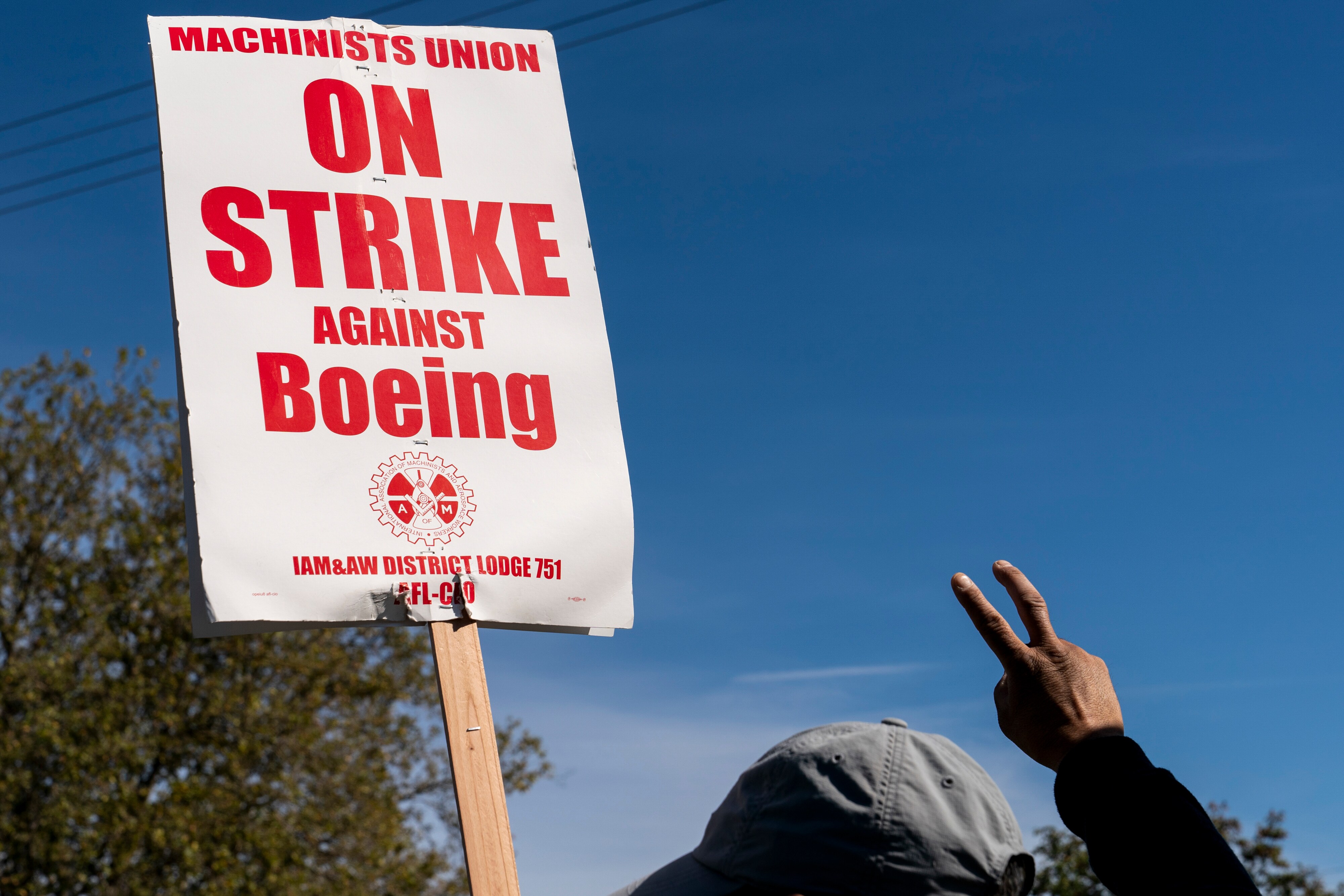
Boeing Co. and the union representing 33,000 striking workers reached a tentative agreement on a new contract with help from the White House, underscoring the high stakes to end a work stoppage that has crippled one of the largest US exporters.
The proposal hammered out overnight in Seattle includes a wage increase of 35% spread over four years, a guaranteed annual bonus of at least 4% and an additional $7,000 bonus if workers approve the contract, IAM District 751 said in a statement on its website Saturday. A ratification vote is set for Oct. 23.
The potential breakthrough ends a lengthy impasse marked by miscues and finger-pointing on both sides. The White House sent Acting Secretary of Labor Julie Su to Seattle to support the collective bargaining process, and she met multiple times with both the union and new Boeing Chief Executive Officer Kelly Ortberg to overcome the stalemate.
“President Biden believes the collective bargaining process is the best way to achieve good outcomes for workers, and the ultimate decision on a contract will be for the union workers to decide,” the White House said in a statement after the two sides confirmed that they'd reached a deal.
Resolving the strike would provide a boost to Ortberg, who joined Boeing in August with a mandate to revamp operations. He is slated to address analysts and investors for the first time Oct. 23, when Boeing reports its third-quarter results.
A tentative deal between Boeing and the union doesn't guarantee that workers will also fall in line. When the first proposal, which was backed by both sides, was put to a vote last month, employees overwhelmingly turned it down.
Boeing has since come back twice with sweetened bids, first with a 30% increase that it took directly to workers, and now with the latest plan that is on the table and is 10 percentage points above the initial offer.
“We look forward to our employees voting on the negotiated proposal,” Boeing said in a statement.
Pressure Mounting
Pressure is mounting for Boeing, its suppliers and striking workers as the strike enters a sixth week. The work stoppage that began Sept. 13 stretches along the West Coast and has forced Boeing to shut down assembly lines for its cash-cow 737 Max, 767 and 777 aircraft.
The planemaker is moving forward with plans to cut 10% of its workforce, the first step toward a broader realignment of its businesses under Ortberg. The pain has also started to ripple through Boeing's supply chain, with Spirit AeroSystems Holdings Inc. warning it would have to lay off 700 workers building components for the 767 and 777 programs.
Boeing has taken the initial steps to raise capital it will need to shore up its operations and maintain its investment-grade credit rating. The company has lined up a $10 billion credit facility with banks, and filed a shelf registration to raise as much as $25 billion over the next three years.
The strike by IAM District 751 marks the first major labor strife at Boeing in 16 years. As hourly workers are pushing for 40% pay increases and better retirement benefits, they're driven by resentment over receiving paltry wage increases over the past decade while senior executives were richly rewarded.
The latest agreement addresses many of the frustrations that workers expressed with the company's earlier proposals. But it doesn't reinstate Boeing's defined-benefit pension plan, a potential sticking point for some members.
Instead, Boeing would raise its contributions to workers' retirement savings plans. The company would make a one-time contribution of $5,000 into the 401(k) plans of all eligible workers, and fully match their contributions of as much as 8% of salaries.

-
Signature Play: The Classic Cocktail Is Dead. Or Is It?

Classic cocktails are disappearing from India's cocktail menus. But they're still being ordered, taught to bartenders and borrowed from. So, who's really having the last drink?
-
A New Samvat Wishlist: Inclusive Prosperity And Human Development
India has strengthened its economic foundations through infrastructure, digital access and enterprise. Its next growth chapter must deepen productivity, create better livelihoods and widen participation in prosperity.
-
Love, Sex Aur Dhokha: The Audacious Plot To Spy On Jensen Huang
A Taipei dinner, a Singapore chip buyer and a suspected Chinese asset: inside the alleged spy operation that got close to NVIDIA's Jensen Huang.
-
Ten Things I Learnt This Samvat
Patience can be a trap. Cheap stocks can stay cheap. Leverage can wipe you out. What did Samvat 2082 teach us? Niraj Shah writes on 10 lessons from the year gone by.
-
Talking Points This Week: Tech Nerves, FII Buying, And A Faraway Banking Shock
The global markets are not shining this Diwali. The exception in the large markets is, India.
-
Midterm Rally Lasted A Day. The Hard Reality Of A Divided US May Last Two Years | Opinion
Between a contested AI boom, a debt ceiling that arrives in 2027 and a president with every incentive to act alone, the next two years may prove more volatile than the first day's rally suggests.
-
Blue Wave Will Derail the AI Trade but Won't Dismantle the AI Era | Unhedged Position
The Democrats' sweep of the US Congress will see politics collide with economic forces both over the long and short term.
-
It's Time To Take The GST Council's Bet On Trust Global
Payment records can prove India's services exports, and clear, proportionate rules can bring foreign digital sellers into the tax net.
-
Opinion | India at 38: From Innovation Overperformer to Innovation Powerhouse
India now has 453 VC-backed deep science startups, 18 of them late-stage, after 117 percent growth since 2020. Laurus Labs, at USD 9.3 billion, is the most valuable deep science company in any middle-income economy outside China.









