The BMR Saga: Built On Talent, Beaten By It

It was the biggest homegrown challenger to the dominance of multinationals in tax and M&A advisory in India. But in less than a month the 13-year success of BMR unravelled. The firm will soon no longer exist.
Last week BMR announced that its tax practice, 22 partners and over 350 professionals, will merge with Deloitte India and its mergers and acquisition and risk advisory practice, 9 partners and over 100 professionals, will join KPMG India.
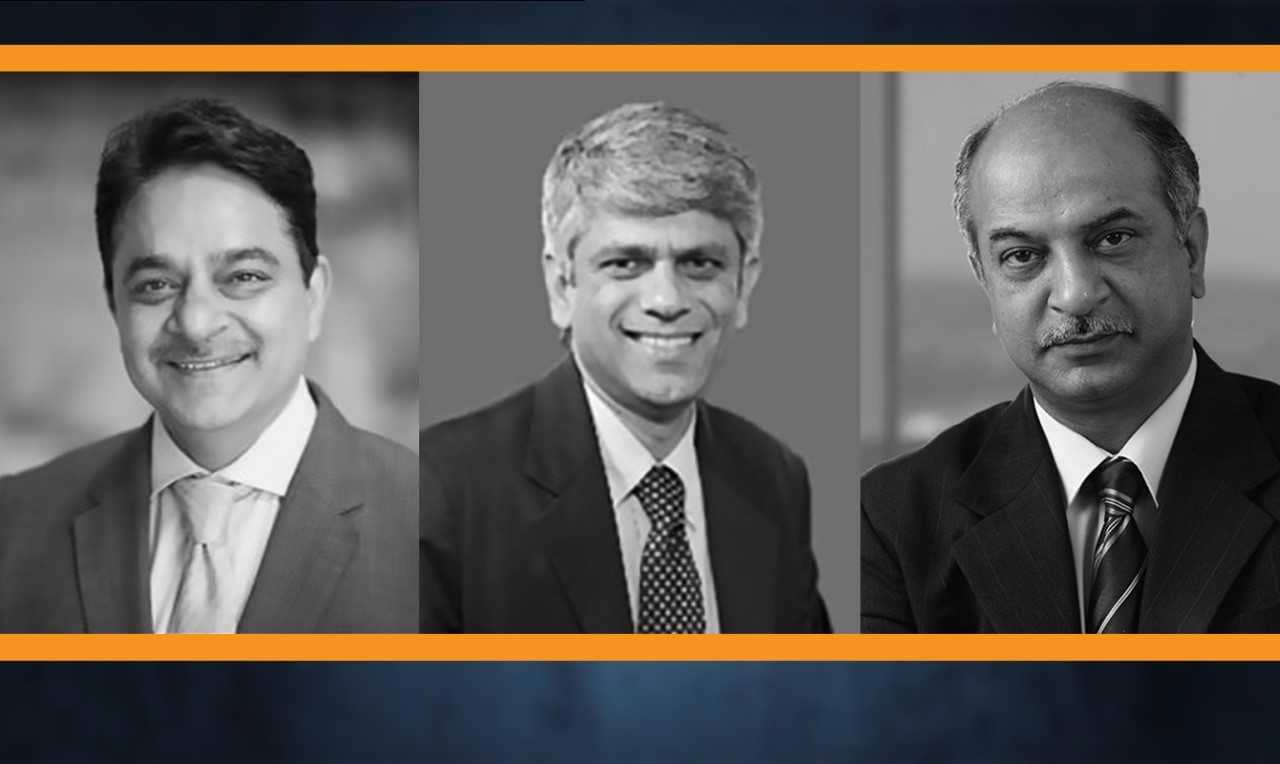
That leaves two partners in BMR – chief mentor Bobby Parikh and non-executive chairman Mukesh Butani. Both are name partners. The third name partner Rajeev Dimri is part of the team moving to Deloitte.
What went wrong?
One partner, preferring to remain unidentified, said the partners believe their aspirations and careers are better housed in a Big 4 environment.
The ‘Big 4' refers to the top four multinational audit and consulting firms - Deloitte, KPMG, PWC and EY.
Another partner, also speaking on the condition of anonymity, said managing the complexity of size without the structure of a multinational firm, was proving to be challenging.
Effectively it came down to a fairly common problem – scale. Which in a people driven business means - talent.
The “Upstart” Years
“Is BMR a startup or an upstart?”
That's how the firm was perceived in its early years, said the first partner quoted above.
The firm's formation owes itself to the collapse of Big 5 accounting firm Arthur Andersen after the Enron accounting scandal. Parikh was Andersen's country manager in India and Butani and Dimri partners in the firm. In 2004 they, along with colleagues Sanjay Mehta and Ajay Mehra, formed BMR & Associates. It had 50 employees including 12 partners.
When BMR started it was focused on challenging the status quo, said the partner. That meant an all consuming focus on quality and talent, he added.
The team consciously chose challenging assignments and clients who passed a ‘Client Acceptance Criteria', says a 2015 IIM Bangalore case study.
Before accepting any clients, the BMR team performed a check on the client's reputation, nature of assignment and probable conflicts with any existing assignments. Thus BMR chose its assignments, clients and people very carefully to build a platform for high quality performance. The team had developed a tag line of ‘Challenge Us'.Indian Institute of Management Bangalore - Case Study
From 2004 to 2008, BMR grew from 100 clients to 800 clients and from 50 employees to around 250 employees, the study notes.
Revenue jumped from Rs 40 crore to Rs 125 crore in the first four years, said the partner.
The success was partly attributable to a low leverage ratio, the study points out.
While the global financial crisis in 2008 reined in the rapid growth somewhat, by 2014 BMR was up to 41 partners. And that's when the tight rope walk between growth and quality began in full earnest.
Maintaining a lower leverage ratio was one challenge when faced with the need to grow faster. Leadership was another, with Parikh stepping down as chief executive officer to turn chief mentor and Butani continuing as non-executive chairman. But the toughest one was retaining talent.
The Beginning Of The End
In 2012 BMR lost its Bengaluru tax team to a rival firm. The talent bleed had begun. Another five partners were poached last year.
The bigger blow came in April this year when the entire M&A law team at BMR Legal, a group firm founded in 2010, moved to law firm Shardul Amarchand Mangaldas. That cost BMR 6 partners and 32 lawyers.
From a peak strength of 41 partners in recent years the firm was down to 33 this year, despite adding 5 partners recently.
The first partner quoted above attributes the departure of the legal team to the problem of size. The average value of deals they worked on was between $12-15 million whereas the large law firms did 3-5 times that, he said.
BMR Legal attempted to align itself with other mid-sized firms such as ELP and DSK Legal but the firm's lawyers found Shardul Amarchand Mangaldas to be a better fit, he added.
The lack of scale was probably what prompted the tax, M&A and risk advisory consulting partners to also take the call to separate, said the other partner quoted above, indicating that they'd been looking to move out for quite some time as well.
The tax partners picked Deloitte but the M&A and risk advisory team preferred a deal with KPMG. If possible we would have liked one transaction, said the second partner quoted. But that effort, reportedly on for a few years, had yielded little.
In the end BMR's experts did what they do best – close the deal.
Ending a 13-year challenge to the multinational giants.
Postscript
BMR Advisors preferred not to comment on recent events, pointing instead to its media statement on July 20 that confirms that over 30 partners and 500 professionals will participate in the combination of the tax practice with Deloitte and the M&A and risk advisory practice with KPMG.
The statement quotes Bobby Parikh as saying “In this ever-changing business environment, it is important to continuously adapt and innovate to stay ahead of the curve, and with BMR's high-quality talent pool, it will help serve clients better by blending domain expertise with analytical rigour while maintaining an uncompromising focus on quality”.

-
Extracting Value From Battery Scrap Could Be Challenging For India | The Reason Why

A discarded lithium-ion battery still contains valuable materials such as lithium, nickel and cobalt. These can be recovered and reused. When such batteries are crushed and shredded, they produce a dark powder called black mass.
-
One El Nino, India Can Handle. Two Could Break The Granary
India's grain stocks can absorb one bad year, but a second El Nino could drain the buffer in two to three years, economists say.
-
India's Troika Of Good Luck | Joining The Dots
As Jensen Huang's exit drags Nvidia down, a cooling AI trade and resilient earnings have revived investor interest in India. A likely RBI rate hike looms.
-
Talking Points This Week: Leadership Shock At Nvidia, Earnings Strength, And The Fog Over Hormuz
The Anthropic IPO pricing and first trading day, Nvidia's upcoming earnings, and any fresh signals from Iran will set the tone for the following week.
-
Signature Play: The Classic Cocktail Is Dead. Or Is It?
Classic cocktails are disappearing from India's cocktail menus. But they're still being ordered, taught to bartenders and borrowed from. So, who's really having the last drink?
-
A New Samvat Wishlist: Inclusive Prosperity And Human Development
India has strengthened its economic foundations through infrastructure, digital access and enterprise. Its next growth chapter must deepen productivity, create better livelihoods and widen participation in prosperity.
-
Love, Sex Aur Dhokha: The Audacious Plot To Spy On Jensen Huang
A Taipei dinner, a Singapore chip buyer and a suspected Chinese asset: inside the alleged spy operation that got close to NVIDIA's Jensen Huang.
-
Ten Things I Learnt This Samvat
Patience can be a trap. Cheap stocks can stay cheap. Leverage can wipe you out. What did Samvat 2082 teach us? Niraj Shah writes on 10 lessons from the year gone by.
-
Talking Points This Week: Tech Nerves, FII Buying, And A Faraway Banking Shock
The global markets are not shining this Diwali. The exception in the large markets is, India.
-
Midterm Rally Lasted A Day. The Hard Reality Of A Divided US May Last Two Years | Opinion
Between a contested AI boom, a debt ceiling that arrives in 2027 and a president with every incentive to act alone, the next two years may prove more volatile than the first day's rally suggests.