Bling No Longer King In India As Gold Loses Its Shine In Wake of Coronavirus
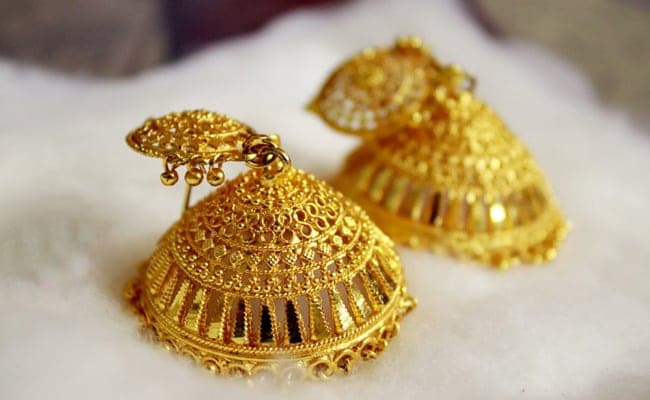
Jewellers in the traditionally lucrative Indian gold market are struggling -- even while the metal's value skyrockets -- as coronavirus fears keep sales down, craftsmen at home and shops shuttered. Months after India lifted its strict lockdown, the country's biggest gold market Zaveri Bazaar remains desolate, with most stores closed and no customers in sight.
"We have been running this shop for the last 40 years and I have never seen the business hit such lows," said 75-year-old Madhubhai Shah, one of only a handful of jewellers who decided to reopen.
The Mumbai market was hit hard by the March lockdown, which saw millions of migrant workers -- including many gold craftsmen -- flee India's cities as their income dried up.
"Seventy per cent of our artisans have left for their villages and manufacturing units are all closed," Shah told AFP.
And with gold prices hitting record highs after soaring around 30 per cent this year, there is little incentive for customers to splash out on jewellery.
Even the impending wedding season, which traditionally kicks off in October and sees families spend a small fortune, has failed to buoy spirits or boost spending as India braces for its first recession in four decades.
Chiranjeevi Ahire and his fiancee decided to break with tradition for their December wedding by choosing not to buy any gold jewellery, even though it is considered auspicious and a status symbol.
"Previously, we wanted the wedding to be a grand affair and follow all Indian traditions, just like our parents," the Mumbai-based marketing manager told AFP.
"But with the pandemic and uncertainty looming in the job market, we decided to cut down on our spending on gold and instead keep the money for a rainy day," the 29-year-old said.
Gold-backed loans
According to the World Gold Council (WGC), India's gold consumption fell by a staggering 56 per cent during the first half of 2020 compared with the same period last year.
Demand during the April-to-June quarter plunged 70 per cent to 63.7 tonnes, the lowest since the 2008 global financial crisis.
The twin blows of the lockdown and high prices meant customers did not empty their pockets even during the Akshaya Tritiya festival in April, considered a lucky time for Hindus to buy the metal.
In addition to jewellery, Indians have traditionally stockpiled gold bars and coins as a hedge against inflation.
Many are now leveraging these to secure credit, exploiting the commodity's high value and securing lower interest rates on personal loans.
Bhadresh Gowda, a farmer in Karnataka state, used his wife's wedding jewellery to secure a Rs 200,000 ($2,670) credit line after huge losses during the lockdown.
"Initially, I was hesitant to use gold as collateral because these jewels are my family's legacy, but times are tough," the 39-year-old told AFP.
In contrast to traditional loans, gold-backed credit "is very easy to access with less paperwork required", he said, making the process much faster.
"Gold offers more value for money right now. Once the economy improves, I'll pay back the loan and retrieve my gold," he added.
Digital gold
Some tech-savvy consumers are betting on prices rising even further as investors seek safe havens, and are pumping funds into so-called digital gold.
"Consumers are buying digital gold in bits and pieces because it enables you to buy gold for... as little as one rupee," said Rajesh Khosla, spokesman for the India Bullion and Jewellers Association.
"When they... need to convert digital gold to physical gold, it will be delivered to them," he told AFP.
Gold will eventually make a comeback in India as consumers recover their appetite, said Somasundaram P.R., managing director of WGC's India operations.
"People who saved money because of cancelled holidays or expenditures (will) invest in gold," he told AFP.
But with the economy still in the doldrums and coronavirus infections approaching three million, would-be consumers like Ahire say they would prefer to wait it out.
"It seems better to hold onto (my) money right now," he said.
"With the global pandemic, economic downturn and weak employment prospects, I will not risk my financial stability for gold. It just seems like a terrible idea."

-
Gold Is Rs 22,000 Cheaper Than A Month Ago. Should You Buy Amid The Wedding Season?

Gold's potential slide to $3,500 could save around Rs 4,700 per 10 grams, but a soft inflation print could just as easily push prices back up. One way to split the risk is to buy in parts, some now and the rest after the Fed's Dec. 9 decision.
-
AI Agents Are Gaining Power. Who Governs Them?
Artificial intelligence agents promise to transform productivity by moving machines from assisting decisions to executing them. But as organisations delegate greater authority to these AI-agents, they must first establish who controls that authority and who remains accountable when things go wrong.
-
Why Swapping Your Old Gold Can Trigger A Rs 5 Lakh Tax Bill, And How You Can Avoid It Legally
Swapping old gold for new is taxed as a sale and a fresh purchase. Getting your own gold remade can cut most of that bill, though it has its own costs.
-
The AI Trade is Done. The Real Opportunity for Investors Starts in 2027 | Unhedged Position
As pureplay AI stocks plunge and circular, capex-led financing unwinds, 2027 is set to be a year of reckoning for AI companies. Yet the bust clears the way for a better opportunity for investors in 2027 -- shifting the spotlight from AI builders to the companies using AI.
-
Leadership As Mission: Why The Age Of AI Demands More Human Leadership
Debjani Ghosh examines how AI is changing leadership, arguing that its success must be measured by its impact on people and the accountability of those guiding its use.
-
We May Need Another Tukaram Mundhe To Fight Air Pollution | The Reason Why
Developers may install basic measures such as sprinklers and green nets, resume work, and continue violating rules when this equipment stops working.
-
Extracting Value From Battery Scrap Could Be Challenging For India | The Reason Why
A discarded lithium-ion battery still contains valuable materials such as lithium, nickel and cobalt. These can be recovered and reused. When such batteries are crushed and shredded, they produce a dark powder called black mass.
-
One El Nino, India Can Handle. Two Could Break The Granary
India's grain stocks can absorb one bad year, but a second El Nino could drain the buffer in two to three years, economists say.
-
India's Troika Of Good Luck | Joining The Dots
As Jensen Huang's exit drags Nvidia down, a cooling AI trade and resilient earnings have revived investor interest in India. A likely RBI rate hike looms.
-
Talking Points This Week: Leadership Shock At Nvidia, Earnings Strength, And The Fog Over Hormuz
The Anthropic IPO pricing and first trading day, Nvidia's upcoming earnings, and any fresh signals from Iran will set the tone for the following week.









