BlackBerry Launches Square-screen Passport in Turnaround Push
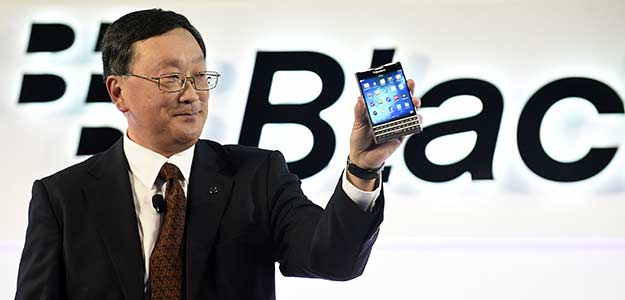
Toronto: BlackBerry Ltd's unconventional square-screened smartphone, the Passport, earned mixed reviews at its launch on Wednesday as the company's turnaround push moved into a critical phase in which it must prove its handsets are still desirable.
BlackBerry showed off the new device at events in Toronto, London and Dubai. The smartphone, which has a large touchscreen and a modified version of the company's well-known keyboard, comes to market as the phones of BlackBerry's rivals all converge on a tall, rectangular profile.
The Canadian company says its new device is ideal for professionals who need secure access and editing control of spreadsheets, medical scans and other documents. But reviewers said consumers may be disappointed to find some popular apps, including Instagram, were missing at launch.
"The Passport is a shrine to everything BlackBerry has done over the last 15 years, but none of that is very relevant in today's world," a reviewer for tech website The Verge wrote.
Another tech website, CNET, gave the phone 3.5 stars out of five, praising the keyboard but saying the phone's shape makes it awkward to hold.
Rob Enderle, an analyst at Enderle Group, said BlackBerry could have moved more quickly to combine keyboard and large screen. "Their loyal customer base is very keyboard-driven, and you want to be able to provide them with something that allows them to step into the future," he said.
Users can type to enter text, or swipe lightly across the slimmed-down keyboard to navigate. And using a new system called BlackBerry Blend, they can respond to messages and access information stored on their phones from tablets and computers.
The stock gained more than 3 per cent on Nasdaq to $10.89.
Trying times
After recently concluding a three-year restructuring process, BlackBerry and its chief executive, John Chen, now must prove the company's new devices and services can generate sustainable revenue and profit.
"BlackBerry is still fighting for survival," said Morningstar analyst Brian Colello. "There is still a lot of execution risk at this point in a very competitive market."
Speaking at the Toronto launch, which included an appearance by retired hockey star Wayne Gretzky, Chen thanked employees who have survived repeated purges of the company's ranks, noting they've been through "very trying times".
"I'm sure we're on our way back," he said.
Passport is now on sale in some North American and European markets, with a suggested retail price of C$699 ($629) in Canada and $599 in the United States.
BlackBerry said it expects the price on contract to be about $249. It said the phone should be available in more than 30 countries by yearend. It will be carried by AT&T in the United States.
Canada's Telus has a short exclusive window in which it will offer the phone for C$200.
Passport users can download apps from Amazon.com Inc's app store, previously only available for Android-based phones.
Needed: One hit phone
Waterloo, Ontario-based BlackBerry is set to report its second-quarter results on Friday and within months launch the BlackBerry Classic, which bears similarities to its once wildly popular Bold smartphone.
"BlackBerry just needs one hit phone for now," Colello said. "It doesn't quite matter whether it is the Passport, the Classic or anything else, but they do need one device to jump-start the hardware business."
Chen said in April BlackBerry's handset unit could return to profit on sales of as few as 10 million devices a year. Rival Apple Inc said this month it sold 10 million new iPhone 6 models in its first weekend.
The company hopes the new devices, coupled with its new mobile-device management system, BlackBerry Enterprise Service 12 (BES12), will allow it to claw back ground in both hardware and services.
The BES 12 platform, due out next month, will allow large companies and government agencies to manage Windows-based devices and more easily administer Android and iOS devices alongside their BlackBerry fleet.
Copyright: Thomson Reuters 2014

-
The Curious Case of Equitas Small Finance Bank And A CEO Who Quit For Stock

PN Vasudevan believes persistent investor concerns over a perceived conflict of interest had become a governance overhang on Equitas Small Finance Bank's stock, even as the lender improved profitability and asset quality.
-
Talking Points This Week: AI Cash Burn, A Tiger Comeback And An India That Still Finds Its Own Path
India is not immune to higher oil or tighter global liquidity, yet its earnings base is broader, its domestic policy levers are still available.
-
Foreign Investors Own Half Of HDFC Bank and ICICI Bank. An LTCG Cut Could Matter Most Here
Foreign portfolio investors have US$115 billion parked in HDFC Bank, ICICI Bank. If the government cuts long-term capital gains tax, Jefferies says returning foreign money could land here first.
-
'Never Seen This Level Of Negativity': Sandeep Tandon Says The Next Rally May Be Closer Than You Think
Veteran investor Sandeep Tandon says foreign selling is easing, large-caps are due a comeback and mid-caps are crowded, while he turns positive on gold, power and pharma this Diwali.
-
Indians Stay With Family, Not In Hotels | The Reason Why
India still lacks enough clean, reliable and affordable hotels for budget-conscious travellers.
-
The Economic Imperative: Analysing The Material Driving Force Behind India-Canada Strategic Reset
This economic complementarity is further reinforced by deep institutional investment ties and talent mobility, which form the bedrock of the bilateral framework.
-
Medicine Pricing: Where Must Profit Stop?
India must confront excessive margins, hidden incentives and regulatory gaps that threaten the integrity of medicine.
-
Why Amazon And Flipkart Are Struggling To Beat Meesho In India's Smaller Cities
With 274 million users and lowest-cost logistics, Meesho is defending its value commerce crown against giants like Amazon and Flipkart.
-
High US Salaries, No Green Card Certainty: The Financial Calculation Facing Indian H-1B Families
The suspension of PERM processing at eight technology employers does not cancel existing H-1B visas. What it does is force a question many Indian families have been avoiding: is the US salary worth tying your career and family plans to one employer?
-
Swiggy vs Eternal: Food Delivery's Two Rivals Are No Longer In The Same Race
Eternal is building a private AI assistant, dark.ai. Swiggy is still working out how to make Instamart pay, with an operating loss of Rs 895 crore in the July-September quarter while Blinkit stayed profitable.










