Bitcoin Will Soon Be Legal Tender In El Salvador - Here's What That Means
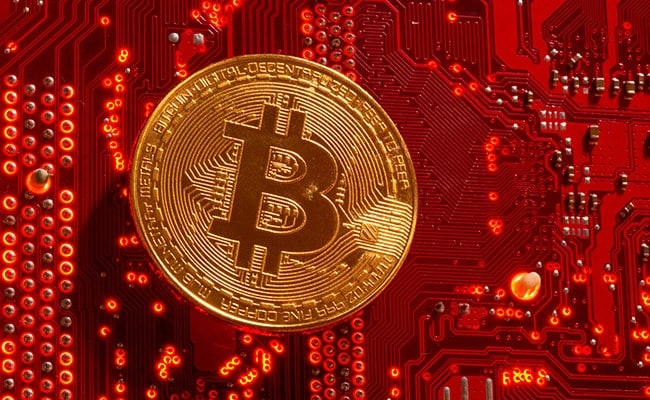
On Sept. 7, 2021, El Salvador will become the first country to make bitcoin legal tender.
The government even went a step further in promoting the cryptocurrency's use by giving US$30 in free bitcoins to citizens who sign up for its national digital wallet, known as “Chivo,” or “cool” in English. Foreigners who invest three bitcoins in the country – currently about $140,000 – will be granted residency.
Panama is considering following El Salvador's lead.
Does making bitcoin legal tender mean every store and merchant in El Salvador will now have to accept digital payments? If more countries do the same thing, what will this mean for consumers and businesses around the world?
As an economist who studies wealth and money, I believe that briefly explaining what legal tender is will help answer these questions.
What is legal tender?
Legal tender refers to money – typically coins and banknotes – that must be accepted if offered in payment of a debt.
The front of every U.S. banknote states “This note is legal tender for all debts public and private.” This statement has been enshrined in federal law in various forms since the late 1800s.
The greenback is not legal tender in just the U.S. El Salvador, for example, switched from the colon, its previous currency, to the U.S. dollar in 2001. Ecuador, Panama, East Timor and the Federated States of Micronesia also all use the dollar as legal tender.
Do merchants have to accept legal tender?
But despite the definition above, legal tender doesn't mean all businesses must accept it in payment for a good or service.
That requirement applies only to debts owed to creditors. The ability for a store to refuse cash or other legal tender is made explicit on the websites of both the U.S. Treasury, which is in charge of printing paper money and minting coins, and the Federal Reserve, which is in charge of distributing currency to the nation's banks.
This is why many companies such as airlines accept payments exclusively by credit card, and many small retailers take only cash.
As the U.S. Treasury points out, there is “no federal statute mandating that a private business, a person or an organization must accept currency or coins as payment for goods or services. Private businesses are free to develop their own policies on whether to accept cash unless there is a state law which says otherwise.”
And this would be no different if the U.S. made bitcoin legal tender. Private businesses would not be required to accept it.
There is clearly some confusion in El Salvador over the issue, however. Its original bitcoin law, passed in June 2021, states that “every economic agent must accept bitcoin as payment when offered to him by whoever acquires a good or service.”
This led to protests and resulted in skeptcism from economists and others. As a result, El Salvador President Nayib Bukele tweeted in August that businesses did not have to accept bitcoin.
Why did El Salvador make bitcoin legal tender?
El Salvador is betting that being the first to open its doors completely to bitcoin will help boost its economy.
President Bukele said he believes this will encourage investors with cryptocurrency to spend more of it in his country. He even has a plan to have El Salvador's state-run geothermal utility use energy from the country's volcanoes to mine bitcoin.
Creating, or mining, bitcoin takes a lot of energy, so mining makes sense only in places with cheap electricity.
The $30 given to every citizen who joins the cryptocurrency craze will temporarily stimulate the economy. However, the overall impact will likely be a short-term boost. The impact of similar payments in other countries, like COVID-19 stimulus payments, appear to end after people have spent the money. Moreover, it's unclear El Salvador's increasingly indebted government can even afford it.
And the widespread adoption of bitcoin will likely take years. El Salvador has been installing 200 bitcoin ATMs to allow people to convert cryptocurrency into dollars.
Since just 30% of the Central American country's population even has a bank account, I believe the U.S. dollar will still be used in El Salvador for a long time, even if its president wants to move toward bitcoin.
Jay L. Zagorsky, Senior Lecturer, Questrom School of Business, Boston University
This article is republished from The Conversation under a Creative Commons license. Read the original article.

-
AI Bias In Investing Cannot Be Eliminated, But It Can Be Governed

Framing is a particularly important example as identical financial information presented in terms of gains rather than losses can lead an LLM to reach a different assessment.
-
Joining The Dots | Dark Skies, Steady Diya: Why Hope Holds This Diwali
With war, a weak rupee and foreign outflows weighing on sentiment, policymakers at the NDTV World Summit and market veterans at NDTV Profit Ignite: Diwali Edition offered the same advice: stay invested and filter out the noise.
-
The Curious Case of Equitas Small Finance Bank And A CEO Who Quit For Stock
PN Vasudevan believes persistent investor concerns over a perceived conflict of interest had become a governance overhang on Equitas Small Finance Bank's stock, even as the lender improved profitability and asset quality.
-
Talking Points This Week: AI Cash Burn, A Tiger Comeback And An India That Still Finds Its Own Path
India is not immune to higher oil or tighter global liquidity, yet its earnings base is broader, its domestic policy levers are still available.
-
Foreign Investors Own Half Of HDFC Bank and ICICI Bank. An LTCG Cut Could Matter Most Here
Foreign portfolio investors have US$115 billion parked in HDFC Bank, ICICI Bank. If the government cuts long-term capital gains tax, Jefferies says returning foreign money could land here first.
-
'Never Seen This Level Of Negativity': Sandeep Tandon Says The Next Rally May Be Closer Than You Think
Veteran investor Sandeep Tandon says foreign selling is easing, large-caps are due a comeback and mid-caps are crowded, while he turns positive on gold, power and pharma this Diwali.
-
Indians Stay With Family, Not In Hotels | The Reason Why
India still lacks enough clean, reliable and affordable hotels for budget-conscious travellers.
-
The Economic Imperative: Analysing The Material Driving Force Behind India-Canada Strategic Reset
This economic complementarity is further reinforced by deep institutional investment ties and talent mobility, which form the bedrock of the bilateral framework.
-
Medicine Pricing: Where Must Profit Stop?
India must confront excessive margins, hidden incentives and regulatory gaps that threaten the integrity of medicine.
-
Why Amazon And Flipkart Are Struggling To Beat Meesho In India's Smaller Cities
With 274 million users and lowest-cost logistics, Meesho is defending its value commerce crown against giants like Amazon and Flipkart.










