Bitcoin Crashes Below $20,000 For The First Time Since 2020
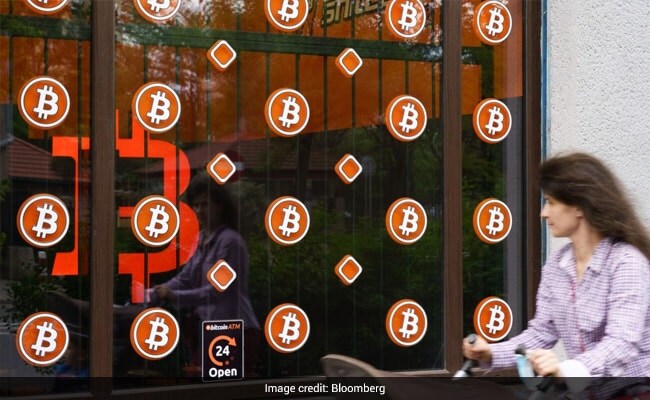
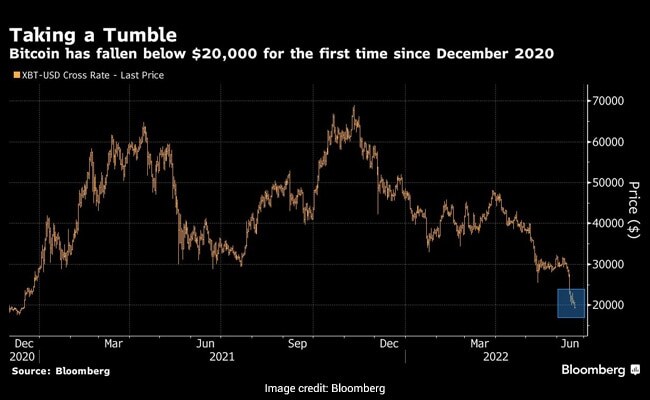
Bitcoin dropped below $20,000 for the first time since December 2020 as evidence of deepening stress within the crypto industry keeps piling up against a backdrop of monetary tightening.
The largest token by market value tumbled more than 9% to $18,740.52 by early morning in London on Saturday, marking a record-breaking 12th straight day in the red according to Bloomberg data.
Ether breached $1,000 and dropped almost 11% to $975.24, the lowest since January 2021.
“Investors are continuing to position defensively following last year's liquidity-driven digital asset bull market,” Alkesh Shah, head of crypto and digital assets strategy at Bank of America Corp., said in a note on Friday.
“Although painful, removing the sector's froth is likely healthy as investors shift focus to projects with clear road maps to cash flow and profitability versus purely revenue growth.”
A toxic mix of bad news cycles and higher interest rates has been deleterious to riskier assets like crypto, contributing to a roughly 70% slide in Bitcoin from its all-time high in November.
The Federal Reserve raised its main interest rate on June 15 by three-quarters of a percentage point -- the biggest increase since 1994 -- and central bankers signaled they will keep hiking aggressively this year in the fight to tame inflation.
Broader signs of stress emerged with last month's collapse of the Terra blockchain, and worsened this week following crypto lender Celsius Network Ltd.'s recent decision to halt withdrawals.
Adding to the mood, crypto hedge fund Three Arrows Capital suffered large losses and said it was considering asset sales or a bailout, while another lender, Babel Finance, followed in Celsius's footsteps on Friday. Even long-term holders who have avoided selling until now are coming under pressure, according to researcher Glassnode.
“Surging recession fears are crippling appetite for risky assets and that has crypto traders remaining cautious about buying Bitcoin at these lows,” Edward Moya, senior market analyst at Oanda, said in a note on Thursday. “The news flow has been terrible for cryptos.”
Altcoins were no exception to soured investor appetite in the wake of Bitcoin's fall, with every token on Bloomberg's cryptocurrency monitor trading in the red.
Cardano, Solana, Dogecoin and Polkadot recorded 24-hour falls of between 7% and 10% on Saturday, while privacy tokens such as Monero and Zcash lost as much as 9%.
Stablecoins — a type of cryptoasset pegged to the value of a fiat currency like the US dollar — have also struggled.
The top four stablecoins saw exchange net outflows last week that were 4.5 times larger than the prior week, Bank of America's Shah said, having charted net outflows in eight of the 10 prior weeks.
Stablecoins are often relied upon by crypto traders to move funds around the ecosystem without needing to exit into traditional currencies, so persistent outflows indicate that investors remain defensive, he added.
Even with the piercing of the key $20,000 level, historical data show that Bitcoin may find key support around that mark as previous selloffs demonstrate where the token usually finds points of resilience, according to Mike McGlone, an analyst for Bloomberg Intelligence.
Bitcoin may “build a base around $20,000 as it did at about $5,000 in 2018-19 and $300 in 2014-15,” he said in a note on Wednesday. “Declining volatility and rising prices are earmarks of the maturing digital store-of-value.”
The crypto market now stands at a fraction of its heights in late 2021, when Bitcoin traded near $69,000 and traders poured cash into speculative investments of all stripes.
The total market cap of cryptocurrencies was around $880 billion on Saturday morning, down from $3 trillion in November, according to pricing data from CoinGecko.
“Sentiment in crypto markets is that the unknown unknowns are the most significant at this point in time,” Ainsley To, Noelle Acheson and Konrad Laesser of Genesis Trading said in a note on Thursday.
“The resurgence of counterparty risk is a reminder that not everything that matters in risk management can be precisely quantified. Risk is what is left over after you think you've thought of everything.”
--With assistance from Emily Nicolle and Suvashree Ghosh.
(Except for the headline, this story has not been edited by NDTV staff and is published from a syndicated feed.)

-
Gold Is Rs 22,000 Cheaper Than A Month Ago. Should You Buy Amid The Wedding Season?

Gold's potential slide to $3,500 could save around Rs 4,700 per 10 grams, but a soft inflation print could just as easily push prices back up. One way to split the risk is to buy in parts, some now and the rest after the Fed's Dec. 9 decision.
-
AI Agents Are Gaining Power. Who Governs Them?
Artificial intelligence agents promise to transform productivity by moving machines from assisting decisions to executing them. But as organisations delegate greater authority to these AI-agents, they must first establish who controls that authority and who remains accountable when things go wrong.
-
Why Swapping Your Old Gold Can Trigger A Rs 5 Lakh Tax Bill, And How You Can Avoid It Legally
Swapping old gold for new is taxed as a sale and a fresh purchase. Getting your own gold remade can cut most of that bill, though it has its own costs.
-
The AI Trade is Done. The Real Opportunity for Investors Starts in 2027 | Unhedged Position
As pureplay AI stocks plunge and circular, capex-led financing unwinds, 2027 is set to be a year of reckoning for AI companies. Yet the bust clears the way for a better opportunity for investors in 2027 -- shifting the spotlight from AI builders to the companies using AI.
-
Leadership As Mission: Why The Age Of AI Demands More Human Leadership
Debjani Ghosh examines how AI is changing leadership, arguing that its success must be measured by its impact on people and the accountability of those guiding its use.
-
We May Need Another Tukaram Mundhe To Fight Air Pollution | The Reason Why
Developers may install basic measures such as sprinklers and green nets, resume work, and continue violating rules when this equipment stops working.
-
Extracting Value From Battery Scrap Could Be Challenging For India | The Reason Why
A discarded lithium-ion battery still contains valuable materials such as lithium, nickel and cobalt. These can be recovered and reused. When such batteries are crushed and shredded, they produce a dark powder called black mass.
-
One El Nino, India Can Handle. Two Could Break The Granary
India's grain stocks can absorb one bad year, but a second El Nino could drain the buffer in two to three years, economists say.
-
India's Troika Of Good Luck | Joining The Dots
As Jensen Huang's exit drags Nvidia down, a cooling AI trade and resilient earnings have revived investor interest in India. A likely RBI rate hike looms.
-
Talking Points This Week: Leadership Shock At Nvidia, Earnings Strength, And The Fog Over Hormuz
The Anthropic IPO pricing and first trading day, Nvidia's upcoming earnings, and any fresh signals from Iran will set the tone for the following week.









