Billionaire Jack Ma's Empire In Turmoil As China Halts Ant Group's IPO
It was heralded as China's answer to JPMorgan -- a homegrown financial giant on the cusp of the biggest stock-market debut the world has ever seen.
Instead, with billions on the line and an initial public offering all but sealed, Chinese authorities have abruptly thrown into doubt the future of Ant Group Co. and its celebrated founder, the billionaire Jack Ma.
Only days before the financial-technology juggernaut was to go public in Shanghai and Hong Kong -- a coup for China's financial markets that once would have been unimaginable -- the $35-billion IPO was halted on Tuesday after Mr Ma was summoned by regulators. In an extraordinary turn of events, authorities announced that they had belatedly discovered an array of shortcomings that, by some accounts, might require the sprawling Ant to be overhauled.
“The way I'd read it, it's a deliberate public relations move,” said Sean Darby, chief global equity strategist at Jefferies. “This has happened before when companies appear to have become too big versus the state for the authorities' liking.”
Reaction in the financial market was swift. Mr Ma's Alibaba Group Holding Ltd., which owns a third of Ant, plunged 7.1 per cent in Hong Kong, after falling by the most in almost six years in New York. The sell-off reduced Mr Ma's fortune by almost $3 billion. Hong Kong Exchanges & Clearing Ltd., owner of the city's bourse, dropped 2.2 per cent.

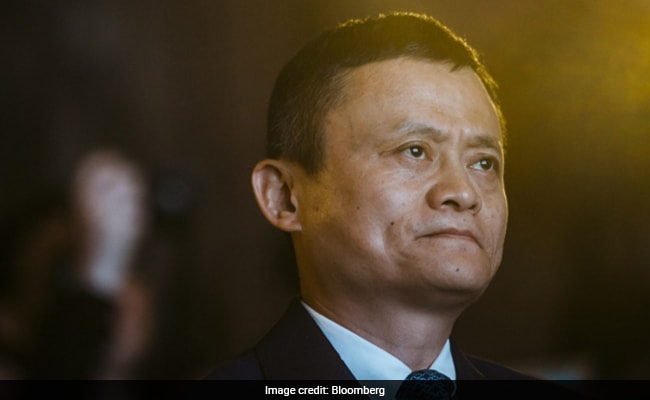
Jack Ma
The move upends what had been one of China's biggest business success stories, as well as what was to be a pivotal step in the development of the nation's fast-growing capital markets.
“It's definitely surprising,” said Mike Bailey, director of research at FBB Capital Partners. “If there is something strange going on on the macro side for China's financial markets or in the company, that would be worrisome.”
In just a decade, Ant, an affiliate of Mr Ma's Alibaba Group, has exploded into the world's largest financial technology company, reshaping the lives of many ordinary Chinese. But its ascendance -- and Mr Ma's growing global reputation -- has also posed a threat to China's state-run lenders and their political benefactors.
Tuesday's developments left bankers and global investors groping for answers. The immediate fate of the many billions already tied up in the IPO is for now uncertain.
Changes Needed
Chinese authorities didn't give much detail about the issues behind the suspension, beyond saying that the much-anticipated debut couldn't go ahead because there had been “significant change” in the regulatory environment.
The company will have to make changes that include capital increases at its lucrative micro-lending units, according to people familiar with the matter. It will also have to reapply for licenses for the units to operate nationwide, the people added, asking not to be identified discussing a private matter.
The IPO is expected to be delayed by about six months, and funds will be returned to investors in the meantime, news portal QQ.com reported, citing an unidentified person.
Major gray market brokers for the deal, including BTIG LLC, told clients all transactions will be canceled, according to people familiar with the matter. Millions of shares were traded in the over-the-counter market prior to Ant's planned debut, many at about a 50 per cent premium to the listing price of HK$80 ($10.32). BTIG didn't immediately respond to a request for comment.
Ant, which spun out of Alibaba in 2010, has long been seen as a champion of China's economy and an example of how the Communist Party has allowed entrepreneurs -- especially in the technology sector -- to flourish within its top-down political system. Tuesday's setback may cast a pall over the country's financial markets, even as President Xi Jinping tries to create stock exchanges that can rival the U.S.
“Ant Group sincerely apologizes to you for any inconvenience caused by this development,” the company said in a message to investors. “We will properly handle the follow-up matters in accordance with applicable regulations of the two stock exchanges.”
There were warning signs on Monday when Mr Ma was summoned to a rare joint meeting with the People's Bank of China and three other top financial regulators and told his firm would face increased scrutiny and be subject to the same restrictions on capital and leverage similar to banks.
“This further reinforces the regulatory pressures building on tech giants,” said Nader Naeimi, head of dynamic markets at AMP Capital Investors Ltd. in Sydney. “It's good news for banks, bad news for Jack Ma,” he said, referring to the competitive threat Ant poses for traditional lenders.
Record IPO
The IPO was on pace to break records. It had attracted at least $3 trillion of orders from individual investors for its dual listing in Hong Kong and Shanghai, and in the preliminary price consultation of its Shanghai IPO, institutional investors subscribed for over 76 billion shares, more than 284 times the initial offering tranche.
The fintech company's IPO would have given it a market value of about $315 billion based on filings, bigger than JPMorgan Chase & Co. and four times larger than Goldman Sachs Group Inc.
Dealmakers at firms including Citigroup Inc. and Morgan Stanley were set to feast on an estimated fee pool of nearly $400 million for handling the Hong Kong portion of the sale, but were instead left reeling after the listing was pulled. Top executives close to the transaction said they were shocked and trying to figure out what lies ahead.
But Ant has faced scrutiny in Chinese state media in recent days after Mr Ma criticized local and global regulators for stifling innovation and not paying sufficient heed to development and opportunities for the young. At a Shanghai conference late last month, he compared the Basel Accords, which set out capital requirements for banks, to a club for the elderly.
And over the weekend, at a meeting of the Financial Stability and Development Committee led by Vice Premier Liu He, officials stressed the need for fintech firms to be regulated.
Ant dominates China's payments market via the Alipay app. It also runs the giant Yu'ebao money-market fund and the country's largest online consumer-lending platform. Other businesses include a credit-scoring unit and an insurance marketplace.

-
AI Bias In Investing Cannot Be Eliminated, But It Can Be Governed

Framing is a particularly important example as identical financial information presented in terms of gains rather than losses can lead an LLM to reach a different assessment.
-
Joining The Dots | Dark Skies, Steady Diya: Why Hope Holds This Diwali
With war, a weak rupee and foreign outflows weighing on sentiment, policymakers at the NDTV World Summit and market veterans at NDTV Profit Ignite: Diwali Edition offered the same advice: stay invested and filter out the noise.
-
The Curious Case of Equitas Small Finance Bank And A CEO Who Quit For Stock
PN Vasudevan believes persistent investor concerns over a perceived conflict of interest had become a governance overhang on Equitas Small Finance Bank's stock, even as the lender improved profitability and asset quality.
-
Talking Points This Week: AI Cash Burn, A Tiger Comeback And An India That Still Finds Its Own Path
India is not immune to higher oil or tighter global liquidity, yet its earnings base is broader, its domestic policy levers are still available.
-
Foreign Investors Own Half Of HDFC Bank and ICICI Bank. An LTCG Cut Could Matter Most Here
Foreign portfolio investors have US$115 billion parked in HDFC Bank, ICICI Bank. If the government cuts long-term capital gains tax, Jefferies says returning foreign money could land here first.
-
'Never Seen This Level Of Negativity': Sandeep Tandon Says The Next Rally May Be Closer Than You Think
Veteran investor Sandeep Tandon says foreign selling is easing, large-caps are due a comeback and mid-caps are crowded, while he turns positive on gold, power and pharma this Diwali.
-
Indians Stay With Family, Not In Hotels | The Reason Why
India still lacks enough clean, reliable and affordable hotels for budget-conscious travellers.
-
The Economic Imperative: Analysing The Material Driving Force Behind India-Canada Strategic Reset
This economic complementarity is further reinforced by deep institutional investment ties and talent mobility, which form the bedrock of the bilateral framework.
-
Medicine Pricing: Where Must Profit Stop?
India must confront excessive margins, hidden incentives and regulatory gaps that threaten the integrity of medicine.
-
Why Amazon And Flipkart Are Struggling To Beat Meesho In India's Smaller Cities
With 274 million users and lowest-cost logistics, Meesho is defending its value commerce crown against giants like Amazon and Flipkart.










