Biden, In Rare Powell Meet, Seeks To Deflect Inflation Blame
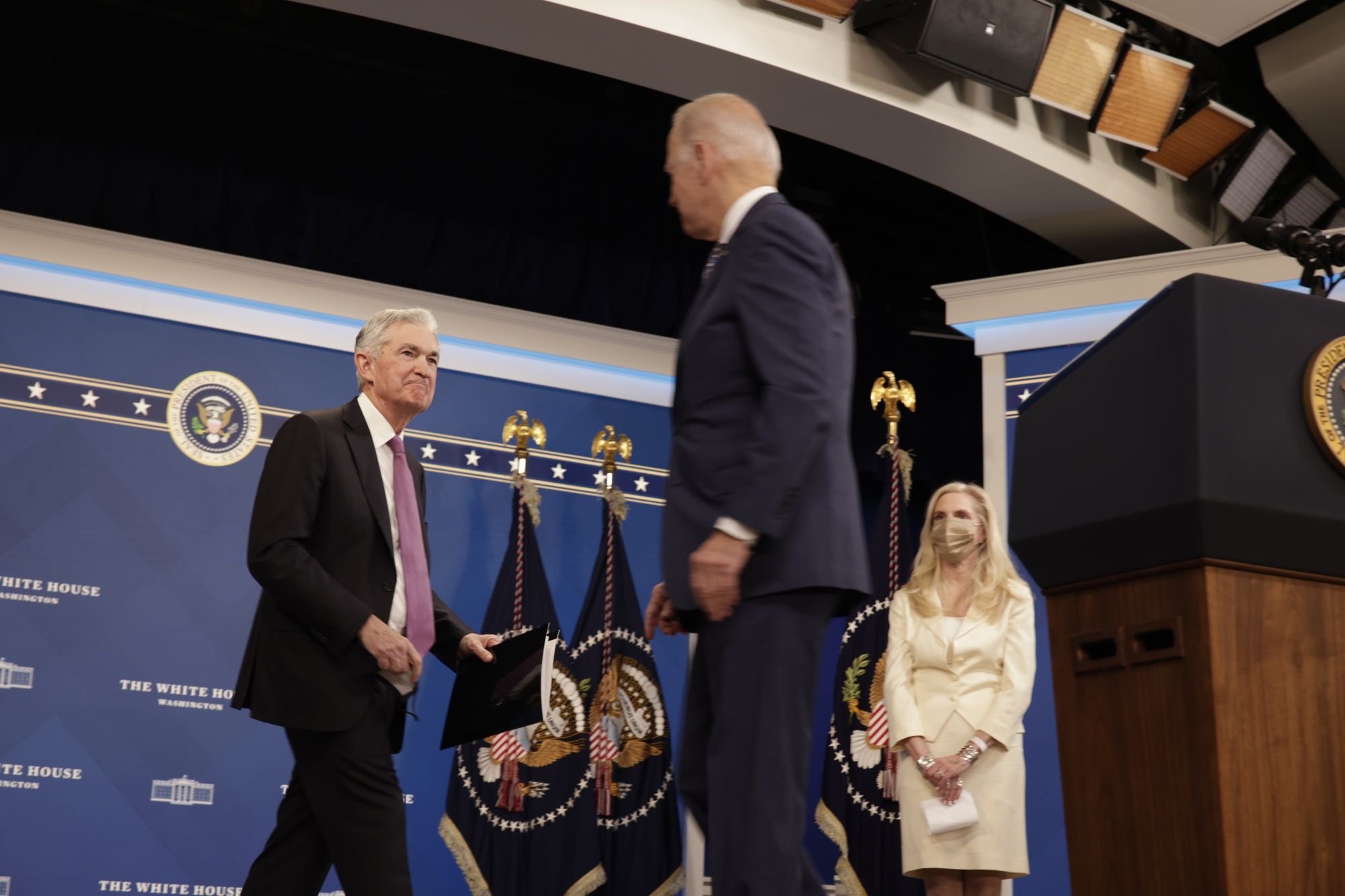
(Bloomberg) -- President Joe Biden used a rare meeting with Federal Reserve Chair Jay Powell to declare that he's respecting the central bank's independence - while simultaneously shifting responsibility for taming decades-high inflation ahead of the November midterms.
Biden seized on the Oval Office session to argue that while fighting price increases is his top priority, that work was primarily the purview of the Federal Reserve.
“My plan is to address inflation. That starts with a simple proposition: respect the Fed, respect the Fed's independence, which I have done and will continue to do,” Biden said.
It's Biden's third in-person session with Powell since taking office, and recalls the stakes when Ronald Reagan met with then-Fed chief Paul Volcker almost four decades ago as he sought re-election amid galloping price pressure.
Biden has been attempting to show he's maximizing efforts to curb the hottest inflation in 40 years heading into November midterms, in which Democrats' risk losing their slim congressional majorities.
The White House has increasingly sought to shift the burden for battling prices to the Fed in public comments, as polls show rising costs are voters' top concern. In an op-ed published Monday in the Wall Street Journal, Biden said the Fed has “a primary responsibility to control inflation.”
Biden said Tuesday that his his role as president is to give the Fed “the space they need to do their job, adding, “I'm not going to interfere with their critically important work.”
Fed Independence
Modern presidents, with the exception of Donald Trump, have made a point of publicly declaring their commitment to Fed independence and kept any criticism or advice private.
Trump broke with that tradition, regularly criticizing the central bank, arguing it should have been more aggressive in cutting interest rates, and at one point saying he was considering demoting Powell.
Biden sought to draw a contrast with Trump, writing in the op-ed that his predecessor “demeaned the Fed, and past presidents have sought to influence its decisions inappropriately during periods of elevated inflation. I won't do this.”
The president's message to the Fed in Tuesday's meeting was that he “plans to stay out of their way,” Cecilia Rouse, chair of the Council of Economic Advisers, told Bloomberg Television.
“The President wants to say, go forth and do what you need to do,” Rouse said.
Biden renominated Powell for a second four-year term at the Fed's helm, restoring the tradition of keeping the chair that he inherited from the previous administration in place. Powell was confirmed by the Senate earlier this month and was sworn into office last week.
Even so, White House economic adviser Brian Deese defended Tuesday's meeting, saying it was “standard practice for presidents and chairs of the Federal Reserve to meet from time to time to share views on the economy.”
Biden will use his session to stress that he's giving the central bank “space to operate” independently to address the inflation crisis, Deese, who attended the meeting along with Treasury Secretary and former Fed Chair Janet Yellen, said in an interview with Bloomberg Television earlier Tuesday.
Read more: Biden to Stress Fed Independence in Powell Meeting, Deese Says
The central bank answers to Congress, which has given it a dual mandate to pursue price stability and maximum employment, though presidents do get to select the Fed's seven governors including the chair and two vice chairs. As a result, White House officials usually try to avoid commenting on monetary policy.
Trump flatly ignored past practice and regularly castigated Powell for raising interest rates, calling him “clueless” and asking if he was a “bigger enemy” than Chinese President Xi Jinping.
At one point Trump even consulted advisers on whether he could fire Powell, who he'd promoted to chair. Powell stood his ground, publicly confirming that he would not resign if asked to by the president but otherwise declining to comment on the barrage of often belittling criticism.
Top Priority
Powell, who has been criticized for being too slow in confronting inflation, also calls it his top priority and has launched the most aggressive tightening campaigns in decades.
Data released Friday showed the central bank's preferred gauge of price pressures, the personal consumption expenditures price index, rose by 6.3% last month from April 2021 -- more than three times the Fed's 2% target.
Officials raised interest rates by a half-percentage point earlier this month and Powell signaled they plan to follow up with increases of the same size in June and July, even as they start shrinking their massive balance sheet.
Financial markets have swung sharply as investors fret the Fed could trigger a recession in its efforts to tame prices. Officials -- who admit this will be a challenge -- are aiming for a soft landing that cools demand by raising the cost of borrowing on everything from homes to autos, but doesn't push companies to lay off workers.
The U.S. labor market is historically tight, with April's unemployment rate of 3.6% near a 50-year low and two job vacancies for every one person looking for work. That's pushing up wages and stoking inflation, alongside price rises caused by Covid-19 supply-chain tangles and the impact on energy and food costs of Russia's invasion of Ukraine.
In addition to inflation, Biden and Powell will discuss the state of the U.S. and global economy and the recent confirmation of Lael Brainard, Lisa Cook and Philip Jefferson to the Fed board, a White House official said.
Biden has urged the Senate to also confirm Michael Barr as the Vice Chair for Supervision of the Federal Reserve, a key slot that oversees the banking industry.
(Adds Rouse comments, starting in 11th paragraph)
More stories like this are available on bloomberg.com
©2022 Bloomberg L.P.

-
Talking Points This Week: Leadership Shock At Nvidia, Earnings Strength, And The Fog Over Hormuz

The Anthropic IPO pricing and first trading day, Nvidia's upcoming earnings, and any fresh signals from Iran will set the tone for the following week.
-
Signature Play: The Classic Cocktail Is Dead. Or Is It?
Classic cocktails are disappearing from India's cocktail menus. But they're still being ordered, taught to bartenders and borrowed from. So, who's really having the last drink?
-
A New Samvat Wishlist: Inclusive Prosperity And Human Development
India has strengthened its economic foundations through infrastructure, digital access and enterprise. Its next growth chapter must deepen productivity, create better livelihoods and widen participation in prosperity.
-
Love, Sex Aur Dhokha: The Audacious Plot To Spy On Jensen Huang
A Taipei dinner, a Singapore chip buyer and a suspected Chinese asset: inside the alleged spy operation that got close to NVIDIA's Jensen Huang.
-
Ten Things I Learnt This Samvat
Patience can be a trap. Cheap stocks can stay cheap. Leverage can wipe you out. What did Samvat 2082 teach us? Niraj Shah writes on 10 lessons from the year gone by.
-
Talking Points This Week: Tech Nerves, FII Buying, And A Faraway Banking Shock
The global markets are not shining this Diwali. The exception in the large markets is, India.
-
Midterm Rally Lasted A Day. The Hard Reality Of A Divided US May Last Two Years | Opinion
Between a contested AI boom, a debt ceiling that arrives in 2027 and a president with every incentive to act alone, the next two years may prove more volatile than the first day's rally suggests.
-
Blue Wave Will Derail the AI Trade but Won't Dismantle the AI Era | Unhedged Position
The Democrats' sweep of the US Congress will see politics collide with economic forces both over the long and short term.
-
It's Time To Take The GST Council's Bet On Trust Global
Payment records can prove India's services exports, and clear, proportionate rules can bring foreign digital sellers into the tax net.
-
Opinion | India at 38: From Innovation Overperformer to Innovation Powerhouse
India now has 453 VC-backed deep science startups, 18 of them late-stage, after 117 percent growth since 2020. Laurus Labs, at USD 9.3 billion, is the most valuable deep science company in any middle-income economy outside China.









