Biden To Hike Tariffs On China EVs, Offer Solar Exclusions
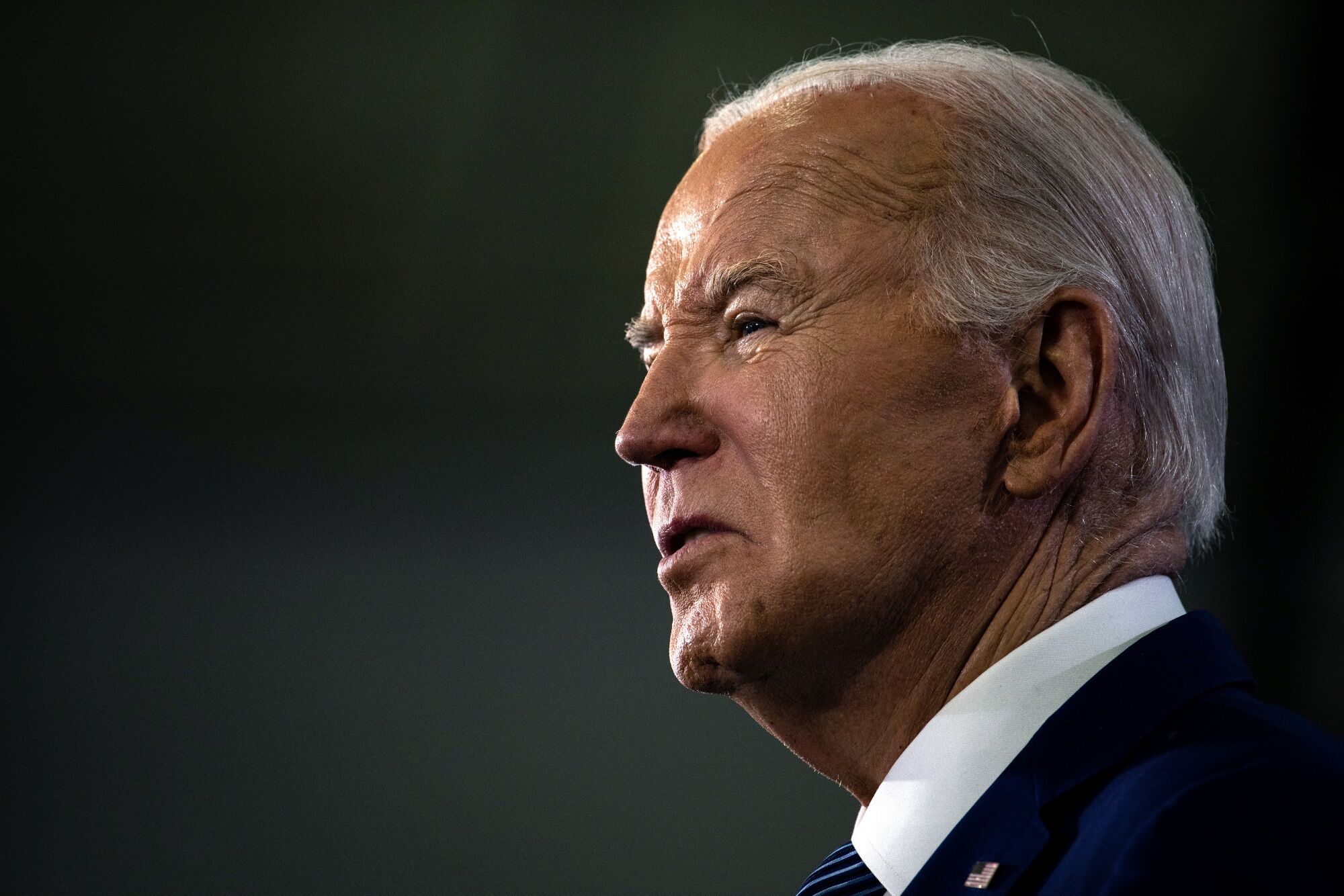
(Bloomberg) -- President Joe Biden will quadruple tariffs on Chinese electric vehicles and sharply increase levies for other key industries this week, unveiling the measures at a White House event framed as a defense of American workers, people familiar with the matter said.
Biden will hike or add tariffs in the targeted sectors after nearly two years of review. The total tariff on Chinese EVs will rise to 102.5% from 27.5%, the people said, speaking on condition of anonymity ahead of the announcement. Others will double or triple in targeted industries, though the scope remains unclear.
Biden and his staff spent recent weeks finalizing the measures, including which items to hit and which to avoid because the inputs are needed to fuel American growth, one of the people said. The final decision was a consensus, the person said.
It's not clear which items were spared but Biden won't announce tariff rate reductions, two of the people said. The administration has signaled to the US solar industry that it'll move to exclude some items, including machinery used to make solar panel components. The shift has been sought by some equipment makers who say current levies undermine Biden's goal of wresting clean-energy supply chains from China.
The 2024 presidential race looms large over the flagship announcement: Biden is trying to crack down on China and differentiate himself from Donald Trump — whose original tariffs Biden is set to largely renew, but who is seeking widespread hikes that the current administration views as going too far.
Biden's plan for more tariffs is mostly symbolic as China doesn't rely on US consumers for the targeted sectors. Chinese EVs were locked out of the US market years ago by existing tariffs, while solar firms mostly export to the US from overseas, avoiding similar curbs. China's foreign affairs and commerce ministries didn't immediately respond to requests for comment.
Chinese solar equipment makers slid on Monday morning despite the reported tariff exclusions. Shares of Suzhou Maxwell Technologies Co. Ltd., Shenzhen S.C New Energy Technology Corp. and Zhejiang Jingsheng Mechanical & Electrical Co. all lost more than 3% before paring some losses. EV makers such as NIO Inc., Li Auto Inc. and BYD also fell.
The Biden administration has been “focused on sectors of longstanding concern,” said Greta Peisch, a partner at law firm Wiley Rein LLP who served until January as the top trade lawyer for the US Trade Representative's office.
“These are calculated to address particular activities and risks and avoid escalation, to maintain the relationship with China that we have” outside those key goods, she said.
The White House declined to comment on the tariffs. The auto-tariff quadrupling was first reported by the Wall Street Journal.
Biden will target key sectors including electric vehicles, batteries, solar cells, steel and aluminum, people have said. He has previously announced the steel and aluminum tariffs, which will increase to 25% on some products that have a 7.5% rate or no tariffs now. The EV rate aims to protect the US from a potential flood of Chinese autos that could upend the politically sensitive auto sector.

Trump's 200%
The announcement is the culmination of a review of tariffs first imposed by Trump, who mocked the announcement during a campaign rally in New Jersey on Saturday.
”He says he's going to put a 100% tariff on all Chinese electric vehicles. Isn't that nice?” Trump said. “Biden should have done this four years ago.”
He warned that Chinese companies will try to build cars in Mexico, then avoid tariffs by shipping them to the US under the US-Mexico-Canada Agreement, which Trump agreed to as president. Trump said he'd put a 200% tariff on Chinese-made cars in Mexico.
“I will put a 200% tax on every car that comes in from those plants, and they're not going to do that,” he said. Trump has also pledged a 60% across-the-board tariff on all Chinese goods — a move Biden is stopping well short of, with allies saying it would fuel inflation.
Biden's measures are less about crushing segments of the market than heading off an anticipated increase in imports: Chinese steel, aluminum and autos make up tiny fractions of the US supply for now. The administration has warned that China is pushing to corner the market on key sectors and flood the US with subsidized goods, to destabilize its rival and power its own recovery.
Still, the jockeying signals a bipartisan consensus – led by the two presumptive candidates for the presidency – on the threat that Chinese electric vehicles pose to the US.
It didn't damp enthusiasm for the US debut of Zeekr Intelligent Technology Holding Ltd., the high-end electric car brand under Zhejiang Geely Holding Group Co., which rose 35% Friday after an expanded initial public offering that's the biggest US listing by a China-based company since 2021. One of its executives downplayed the planned tariffs.
“We're not considering short-term headwinds. We think long-term and try to make sure in the long run we make a very, very good business case,” Chief Financial Officer Jing Yuan told Bloomberg Television on Friday. “It's more about long-term view rather than short-term headwinds.”
The administration's approach is consistent with its goal to target China while maintaining a relationship, Peisch said.
“It's about being strategic, not an across-the-board escalation, but what makes sense as a response to China and support for impacted US sectors,” she said.
--With assistance from Annmarie Hordern, Kailey Leinz, Justin Sink, Jennifer Jacobs, Joe Mathieu and James Mayger.
(Updates with more context and market reaction in 6th and 7th paragraphs.)
More stories like this are available on bloomberg.com
©2024 Bloomberg L.P.

-
Extracting Value From Battery Scrap Could Be Challenging For India | The Reason Why

A discarded lithium-ion battery still contains valuable materials such as lithium, nickel and cobalt. These can be recovered and reused. When such batteries are crushed and shredded, they produce a dark powder called black mass.
-
One El Nino, India Can Handle. Two Could Break The Granary
India's grain stocks can absorb one bad year, but a second El Nino could drain the buffer in two to three years, economists say.
-
India's Troika Of Good Luck | Joining The Dots
As Jensen Huang's exit drags Nvidia down, a cooling AI trade and resilient earnings have revived investor interest in India. A likely RBI rate hike looms.
-
Talking Points This Week: Leadership Shock At Nvidia, Earnings Strength, And The Fog Over Hormuz
The Anthropic IPO pricing and first trading day, Nvidia's upcoming earnings, and any fresh signals from Iran will set the tone for the following week.
-
Signature Play: The Classic Cocktail Is Dead. Or Is It?
Classic cocktails are disappearing from India's cocktail menus. But they're still being ordered, taught to bartenders and borrowed from. So, who's really having the last drink?
-
A New Samvat Wishlist: Inclusive Prosperity And Human Development
India has strengthened its economic foundations through infrastructure, digital access and enterprise. Its next growth chapter must deepen productivity, create better livelihoods and widen participation in prosperity.
-
Love, Sex Aur Dhokha: The Audacious Plot To Spy On Jensen Huang
A Taipei dinner, a Singapore chip buyer and a suspected Chinese asset: inside the alleged spy operation that got close to NVIDIA's Jensen Huang.
-
Ten Things I Learnt This Samvat
Patience can be a trap. Cheap stocks can stay cheap. Leverage can wipe you out. What did Samvat 2082 teach us? Niraj Shah writes on 10 lessons from the year gone by.
-
Talking Points This Week: Tech Nerves, FII Buying, And A Faraway Banking Shock
The global markets are not shining this Diwali. The exception in the large markets is, India.
-
Midterm Rally Lasted A Day. The Hard Reality Of A Divided US May Last Two Years | Opinion
Between a contested AI boom, a debt ceiling that arrives in 2027 and a president with every incentive to act alone, the next two years may prove more volatile than the first day's rally suggests.









