Bharti Airtel Raises 4G Capex Plan To Rs 25,000 Crore For FY18
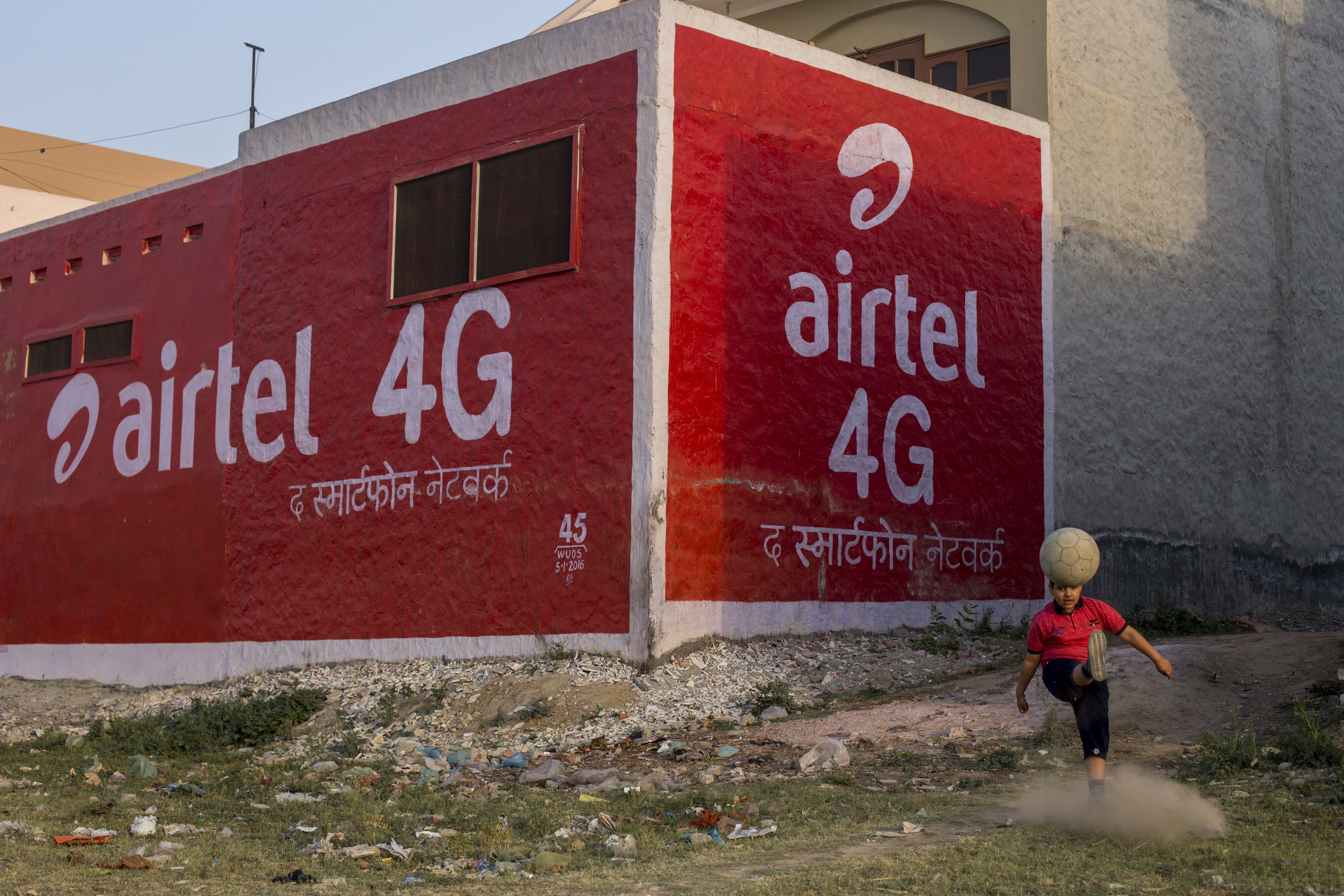
India's largest telecom operator Bharti Airtel Ltd. will invest Rs 25,000 crore for expanding and strengthening its 4G network during the current financial year, instead of Rs 20,000 crore announced earlier.
“Considering the data explosion in India... to accelerate our 4G roll out in terms of coverage and also build additional capacities in existing geographies..our capex forecast for the year is being upped from initial guidance of Rs 20,000 crore to Rs 25,000 crore,” Bharti Airtel Chief Financial Officer Nilanjan Roy said during an post-earnings call yesterday.
The company also said that it is likely to shut down its 3G network in 3-4 years and re-farm the spectrum linked with it for 4G services.
There is almost no spend that we are doing on 3G. Our view is in next 3-4 years we are likely to see 3G network actually shut down faster than 2G network because there are still 50 percent of phone being shipped out in India that are feature phones.Gopal Vittal, MD & CEO (India And South Asia), Bharti Airtel
He said that the company is investing in 4G technology to build more data capacity in the network.
The company will use the 2100 megahertz band, used for 3G services, for 4G services.
“Where we have the second carrier of 3G or third carrier then through flip of software you get incremental capacity on 3G. Most of that spectrum will finally go towards 4G for which we will need to have radio units,” Vittal said.
He said that in some telecom circles the company has installed modern 3G equipment which can support 4G services but the initially deployed equipments for 3G services will need to be replaced.
“Some of the older radios are pure 3G which we need to replace. It will take its time. I think that the answer for that will be function of how fast pick up of voice happens on VoLTE (4G voice call network). The moment that happens voice will not be required to be carried on 3G which can help refarm us 2100 megahertz for 4G,” Vittal said.
The telecom major on the previous day posted sixth straight quarter of drop in earnings as its consolidated net profit plunged 77 percent to Rs 343 crore for the September quarter, compared to Rs 1,461 crore it registered in the same period a year ago.
Also Read: Bharti Airtel Surges To 10-Year High After Upbeat Earnings
However, it recorded four-fold growth in the mobile data traffic during the reported quarter in India, and its mobile broadband customers rose by 34 percent to 55 million.
An Airtel representative on the call said that revenues will be further hit to the tune of 4 percent of its consolidated earnings before interest, tax, depreciation and amortisation, or around Rs 300 crore in the ongoing quarter, due to the reduction in mobile call connection charges to 6 paise applicable from Oct. 1.
Mobile companies charged 14 paise a minute for allowing a domestic call from a rival operator to terminate on their network before Oct. 1. The Telecom Regulatory Authority of India, the body which determines it, has slashed it to 6 paise per minute from Oct. 1.
The consolidated revenues for the just-ended quarter, at Rs 21,777 crore, represented a year-on-year drop of 10 percent (a drop of 12 percent) on an underlying basis when adjusted for Africa and Bangladesh divested operating units and tower asset sale.
In a separate development, Airtel announced the transfer of its optical fibre business to its wholly-owned subsidiary Telesonic Networks for a valuation of up to Rs 5,650 crore.

-
One Battle After Another: India's Corporate Dynasties Battle For Control

2026 could go down as Corporate India's year of succession wars, governance battles and family fault lines.
-
Rs 50-Lakh Gold In Bank Locker, Rs 3 Lakh Of Protection: The Gap Most Families Don't Know About
The RBI ties a bank's liability to the annual locker rent and families who want to insure their jewellery face a separate question about how to prove what was inside.
-
The More Food Turns Into Fuel, The Harder It Is To Read Agricultural Markets | The Reason Why
A policy designed to reduce dependence on imported fuel can create new pressures elsewhere in the food economy.
-
Your iPhone Costs 12 Grams Of Gold, A Car About 100. What Does Your Life Weigh?
Measured in rupees, almost everything looks more expensive than it did a generation ago. Measured in grams of gold, a lot of it has become cheaper.
-
Gold Is Rs 22,000 Cheaper Than A Month Ago. Should You Buy Amid The Wedding Season?
Gold's potential slide to $3,500 could save around Rs 4,700 per 10 grams, but a soft inflation print could just as easily push prices back up. One way to split the risk is to buy in parts, some now and the rest after the Fed's Dec. 9 decision.
-
AI Agents Are Gaining Power. Who Governs Them?
Artificial intelligence agents promise to transform productivity by moving machines from assisting decisions to executing them. But as organisations delegate greater authority to these AI-agents, they must first establish who controls that authority and who remains accountable when things go wrong.
-
Why Swapping Your Old Gold Can Trigger A Rs 5 Lakh Tax Bill, And How You Can Avoid It Legally
Swapping old gold for new is taxed as a sale and a fresh purchase. Getting your own gold remade can cut most of that bill, though it has its own costs.
-
The AI Trade is Done. The Real Opportunity for Investors Starts in 2027 | Unhedged Position
As pureplay AI stocks plunge and circular, capex-led financing unwinds, 2027 is set to be a year of reckoning for AI companies. Yet the bust clears the way for a better opportunity for investors in 2027 -- shifting the spotlight from AI builders to the companies using AI.
-
Leadership As Mission: Why The Age Of AI Demands More Human Leadership
Debjani Ghosh examines how AI is changing leadership, arguing that its success must be measured by its impact on people and the accountability of those guiding its use.
-
We May Need Another Tukaram Mundhe To Fight Air Pollution | The Reason Why
Developers may install basic measures such as sprinklers and green nets, resume work, and continue violating rules when this equipment stops working.









