Bharti Airtel Q2 Results Review: Analysts Cut Target Price Citing Lower-Than-Expected Revenue
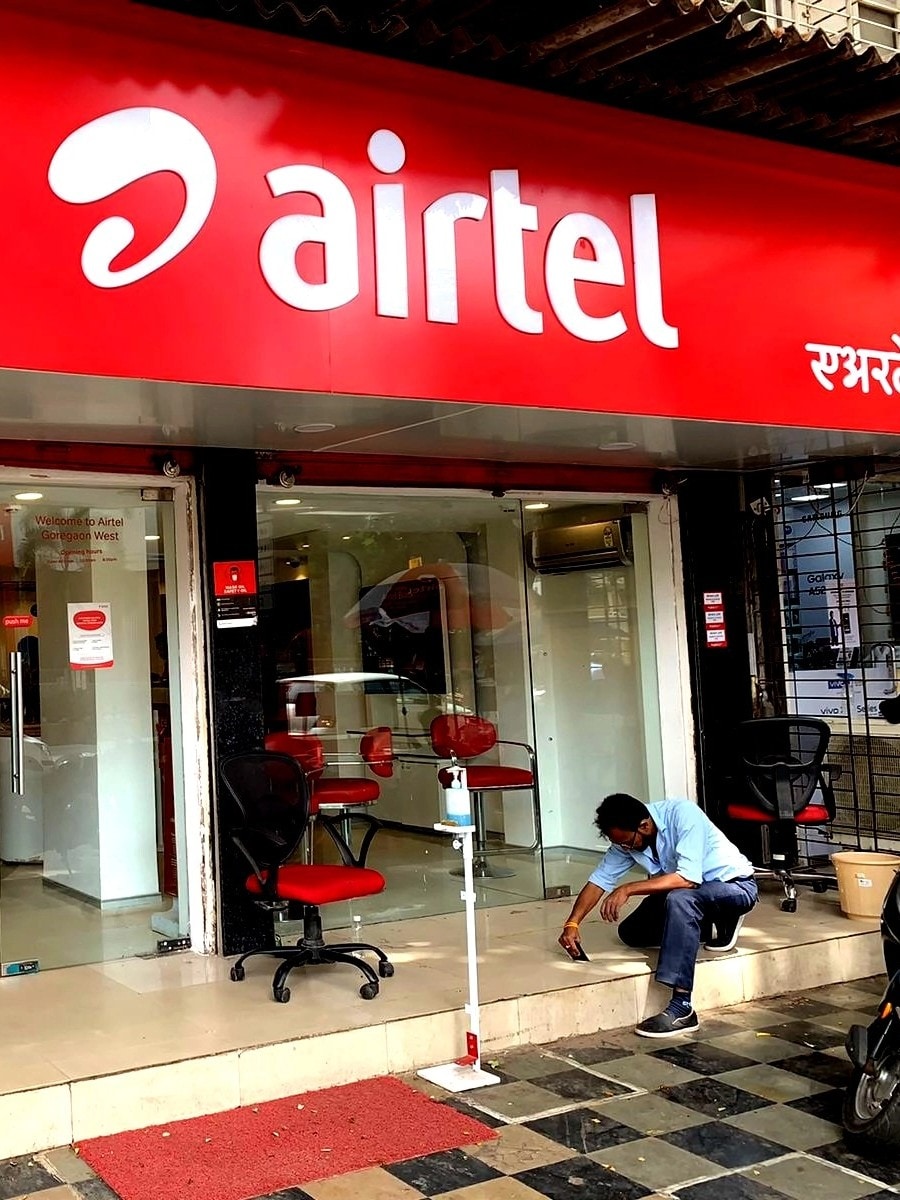
Bharti Airtel Ltd.'s target price was lowered to reflect the slightly lower-than-expected international revenue in the second quarter, according to Jefferies.
The brokerage revised the company's target price to Rs 1,085 from Rs 1,090. However, it maintains a 'buy' on the stock, citing higher postpaid/4G subscriber additions, a higher margin in India, higher growth in Africa, and strong FCF generation in Q2, according to Jefferies.
The country's second-largest telecom company's net profit increased 37.7% to Rs 2,093.2 crore, according to an exchange filing on Tuesday. That compares with a Bloomberg consensus estimate of Rs 3,205.2 crore.
The interest of Rs 1,350 crore on the above was considered an exceptional item in the income statement.
In the previous quarter, the telecom service provider reported a foreign exchange loss of Rs 3,416 crore as an exceptional item in the first quarter of fiscal 2024, on account of statutory changes made by the Central Bank of Nigeria.
Bharti Airtel booked an exceptional loss of Rs 15.7 billion, primarily on account of the recent ruling on the treatment of licence fees as capital expenses, according to Jefferies.
"India revenues (+11% year-on-year) were broadly in line, but a lower-than-expected decline in international revenues of -1% year-on-year drove the beat. Ebitda margins were up 170 basis points year-on-year, with both Indian and international business margins surprising positively," Jefferies said in an Oct. 31 note.
Airtel Q2 FY24 Earnings Key Highlights (QoQ)
Revenue fell 1.1% to Rs 37,044 crore (Bloomberg estimate: Rs 38,096.8 crore).
Operating profit down 0.4% at Rs 19,514 crore (Bloomberg estimate: Rs 19,916.8 crore).
Margin at 52.7% vs 52.3%.
Average revenue per user, or ARPU rose to Rs 203 vs Rs 200.
Mobile revenue grew by 11% year-on-year on account of improved realisation, as well as strong 4G/5G customer additions during the year, Airtel said.
Here's What Analyst Have To Say About Q2 Results
Jefferies
Maintains a 'buy' rating on the stock and revised target to Rs 1,085 from Rs 1,090, implying an upside return potential of 17%.
Company's net subscriber additions were healthy at 3.7 million and ARPU at Rs 203, up 1.5% QoQ. Rise in ARPUs was the key driver for the 11% YoY growth in India mobile revenues.
Airtel's margins expanded further to 54.9%, despite sharp uptick in network costs, driving a 16.5% growth in mobile Ebitda.
Indian non-mobile businesses moderated in second-quarter to 11%, mainly due to slower growth in the enterprise segment.
Homes segment continued to positively surprise, with 23% YoY revenue growth, led by higher-than-expected subscriber additions.
"Broadband ARPUs continued their downward trajectory, with newer subscribers coming at lower ARPUs. Africa revenues/Ebitda were above estimates due to higher than expected ARPUs," Jefferies said.
Bharti's capitalised capex in India mobile fell QoQ to Rs 57 billion, and this moderation should allay concerns over excessive capex spends by Bharti, given its ongoing 5G rollouts.
Bharti's consolidated free cash flow, adjusted for Rs 80 billion advance payment towards spectrum, stood at Rs 57 billion, despite Rs 97 billion of cash capex in Q2.
"FCF generation will pick up as capex moderates further. Consol. net debt (ex. lease liabilities) was down 1% QoQ to $17.7 billion with net debt/Ebitda ratio comfortable at 2.7x," the note said.
Prabhudas Lilladher Pvt.
Earnings miss was on account of slightly lower revenue and higher minority interest.
4G customer addition was at an impressive 7.7 million vs 6.4 million in Q1.
"Overall still strong operational performance," Prabhudas Lilladher said.
JP Morgan
JP Morgan has retained an 'underweight' rating on the stock with a target price of Rs 785.
"We believe a combination of higher 5G capex, a lack of tariff hikes, and deflation in premium ARPUs will drive down ROICs", the research firm said.
JP Morgan remains cautious on ARPU support from 4G prepaid hikes and smartphone upgrades, given the slow entry-level smartphone supply. "5G price wars have commenced that can put a ceiling on ARPU from new subs and deflate top-up momentum", the note said.
The risk of lower capex is the potential loss of subs market share to Jio, which has been aggressively rolling out 5G and has pivoted its strategy to premium subscribers across postpaid, broadband via 5G SA, pan-India coverage and broadband aggression.
"Overall net subs adds are stable at 3.7 million, while 4G net adds improved to 7.7 million, however lower than Jio's 11.2milliom. Data usage per sub saw growth of 3% QQ to 22.2GB, lower than Jio at 7% QQ", the research firm said.
Shares of the company fell as much as 2.07%, before paring loss to trade 0.25% lower at 10:27 a.m., compared to 0.14% decline in the NSE Nifty 50.
The stock has fallen 13.19% on a year-to-date basis. Total traded volume so far in the day stood at 1.8 times its 30-day average. The relative strength index was at 43.
Of the 30 analysts tracking the company, 23 maintain a 'buy' rating, three recommend a 'hold' and four suggest a 'sell', according to Bloomberg data. The average of 12-month price targets given by analysts implies a potential upside of 6.7%.

-
Talking Points This Week: Leadership Shock At Nvidia, Earnings Strength, And The Fog Over Hormuz

The Anthropic IPO pricing and first trading day, Nvidia's upcoming earnings, and any fresh signals from Iran will set the tone for the following week.
-
Signature Play: The Classic Cocktail Is Dead. Or Is It?
Classic cocktails are disappearing from India's cocktail menus. But they're still being ordered, taught to bartenders and borrowed from. So, who's really having the last drink?
-
A New Samvat Wishlist: Inclusive Prosperity And Human Development
India has strengthened its economic foundations through infrastructure, digital access and enterprise. Its next growth chapter must deepen productivity, create better livelihoods and widen participation in prosperity.
-
Love, Sex Aur Dhokha: The Audacious Plot To Spy On Jensen Huang
A Taipei dinner, a Singapore chip buyer and a suspected Chinese asset: inside the alleged spy operation that got close to NVIDIA's Jensen Huang.
-
Ten Things I Learnt This Samvat
Patience can be a trap. Cheap stocks can stay cheap. Leverage can wipe you out. What did Samvat 2082 teach us? Niraj Shah writes on 10 lessons from the year gone by.
-
Talking Points This Week: Tech Nerves, FII Buying, And A Faraway Banking Shock
The global markets are not shining this Diwali. The exception in the large markets is, India.
-
Midterm Rally Lasted A Day. The Hard Reality Of A Divided US May Last Two Years | Opinion
Between a contested AI boom, a debt ceiling that arrives in 2027 and a president with every incentive to act alone, the next two years may prove more volatile than the first day's rally suggests.
-
Blue Wave Will Derail the AI Trade but Won't Dismantle the AI Era | Unhedged Position
The Democrats' sweep of the US Congress will see politics collide with economic forces both over the long and short term.
-
It's Time To Take The GST Council's Bet On Trust Global
Payment records can prove India's services exports, and clear, proportionate rules can bring foreign digital sellers into the tax net.
-
Opinion | India at 38: From Innovation Overperformer to Innovation Powerhouse
India now has 453 VC-backed deep science startups, 18 of them late-stage, after 117 percent growth since 2020. Laurus Labs, at USD 9.3 billion, is the most valuable deep science company in any middle-income economy outside China.









