Bharatmala Execution Dependent On Faster Land Acquisition, Clearances, Timely Funding
The government's announcement of Bharatmala Pariyojana on Oct. 24, the second biggest highway development programme after the National Highways Development Programme (NHDP), is ambitious given the expected private participation through public private partnership of about Rs 1.06 lakh crore says India Ratings and Research.
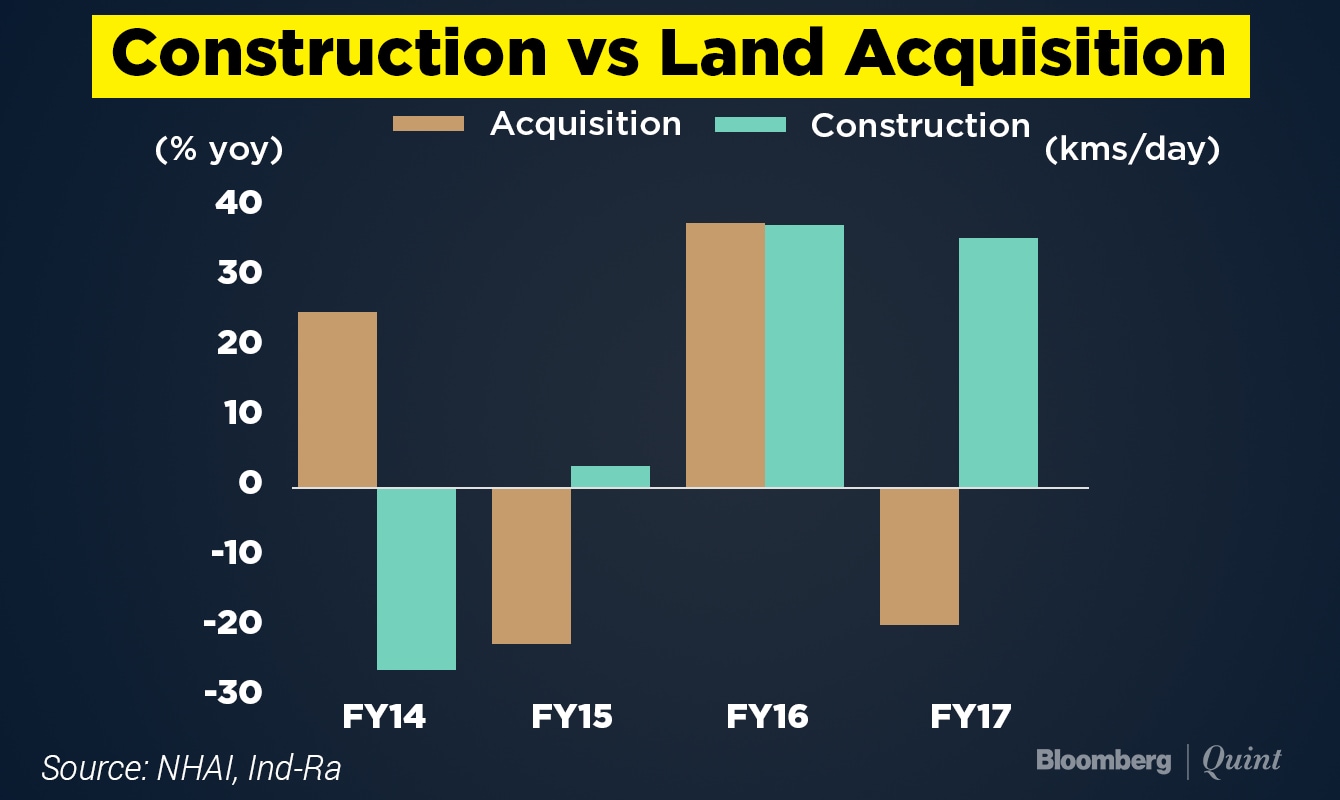
The agency said that private participation could be challenging due to the continued stretched balance sheets of many infrastructure developers. The implementation of Bharatmala would depend on fast-tracking of land acquisitions, clearances from the Ministry of Environment, Forest and Climate Change and other clearances, added India Ratings. Timely redressal of dispute by establishing a regulator is also crucial before undertaking such a large scale project because of possible arbitration issues.
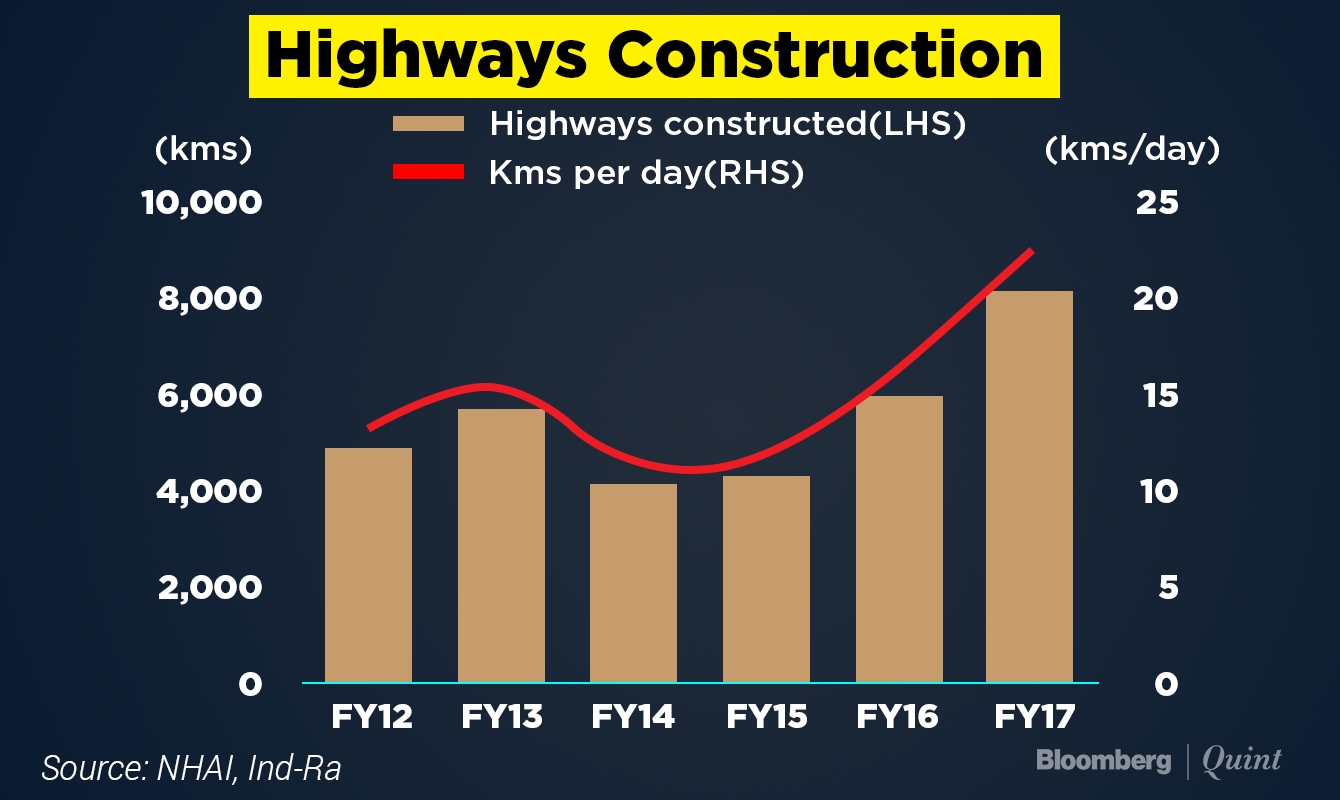
As per the National Highways Authority of India's data, the government constructed national highways of 8,231 kms in financial year 2017 against the set target of 15,000 km at 22.55 km/day, against the target of about 40 km/day owing to delays in land acquisition and other statutory framework.
However, the pace of construction picked up to 25.21 km/day during the first quarter of current financial year. India Ratings opines that a slew of measures such as enhancement of approval limit of projects by the NHAI to Rs 2,000 crore from Rs 1,000 crore, increase in compensation rates to farmers under the new land acquisition policy and digitalisation of land acquisitions would expedite projects under Bharatmala.
Since most of the projects are to be constructed in remote areas, India Ratings believes mobilisation of equipment and raw materials would be challenging.
The government announced to construct about 83,677 km of roads (45 km/day) including Bharatmala over the next five years. This would require vast improvement in pre-bidding completion procedures to bring the project until the bidding stage. The programme will incur a capital expenditure of Rs 6.92 lakh crore; of this Phase-1 of Bharatmala will incur capital expenditure of Rs 5.35 lakh crore.
Some of the major issues of the projects awarded through public private partnership under NHDP phases were delay in land acquisitions and obtaining statutory approvals and clearances, aggressive bidding and difficulties in forecasting traffic volumes which led to a decline in private sector participation in the road sector. In view of these issues, India Ratings said that majority of Bharatmala would be delegated through engineering, procurement and construction (EPC) mode.
Bharatmala, Phase-1 of 34,800 km will be implemented by the NHAI, Ministry of Road Transport and Highways (MoRTH), State Public Works Departments and National Highways & Infrastructure Development Corporation Limited to speed up execution. Phase 1 of Bharatmala also involves 10,000 km of pending work under the NHDP.
Bharatmala is different from the existing NHDP, as it focusses on improving the average speed of road network by shortening the length of roads and removing bottlenecks in the existing network, which would help in reducing logistics costs.
As per India Ratings, bank lending to road sector registered a mere 4 percent year-on-year growth to Rs 21 crore last year since the rise in non-performing assets has made banks wary of lending to infrastructure developers. In financial year 2015-16, of the 79 projects, about 80 percent were awarded through EPC mode, while last year, of the 77 projects, 45 percent were awarded through hybrid annuity model and about 32 percent through EPC mode.
The bankers were wary of funding these hybrid annuity model projects and were extremely selective in funding because of asset liability mismatches and increase in stressed assets in their exposure to infrastructure. However, according to India Ratings, the recent move of recapitalisation of banks could be an enabler for banks to carry out incremental lending to the infrastructure segment.

-
One Battle After Another: India's Corporate Dynasties Battle For Control

2026 could go down as Corporate India's year of succession wars, governance battles and family fault lines.
-
Rs 50-Lakh Gold In Bank Locker, Rs 3 Lakh Of Protection: The Gap Most Families Don't Know About
The RBI ties a bank's liability to the annual locker rent and families who want to insure their jewellery face a separate question about how to prove what was inside.
-
The More Food Turns Into Fuel, The Harder It Is To Read Agricultural Markets | The Reason Why
A policy designed to reduce dependence on imported fuel can create new pressures elsewhere in the food economy.
-
Your iPhone Costs 12 Grams Of Gold, A Car About 100. What Does Your Life Weigh?
Measured in rupees, almost everything looks more expensive than it did a generation ago. Measured in grams of gold, a lot of it has become cheaper.
-
Gold Is Rs 22,000 Cheaper Than A Month Ago. Should You Buy Amid The Wedding Season?
Gold's potential slide to $3,500 could save around Rs 4,700 per 10 grams, but a soft inflation print could just as easily push prices back up. One way to split the risk is to buy in parts, some now and the rest after the Fed's Dec. 9 decision.
-
AI Agents Are Gaining Power. Who Governs Them?
Artificial intelligence agents promise to transform productivity by moving machines from assisting decisions to executing them. But as organisations delegate greater authority to these AI-agents, they must first establish who controls that authority and who remains accountable when things go wrong.
-
Why Swapping Your Old Gold Can Trigger A Rs 5 Lakh Tax Bill, And How You Can Avoid It Legally
Swapping old gold for new is taxed as a sale and a fresh purchase. Getting your own gold remade can cut most of that bill, though it has its own costs.
-
The AI Trade is Done. The Real Opportunity for Investors Starts in 2027 | Unhedged Position
As pureplay AI stocks plunge and circular, capex-led financing unwinds, 2027 is set to be a year of reckoning for AI companies. Yet the bust clears the way for a better opportunity for investors in 2027 -- shifting the spotlight from AI builders to the companies using AI.
-
Leadership As Mission: Why The Age Of AI Demands More Human Leadership
Debjani Ghosh examines how AI is changing leadership, arguing that its success must be measured by its impact on people and the accountability of those guiding its use.
-
We May Need Another Tukaram Mundhe To Fight Air Pollution | The Reason Why
Developers may install basic measures such as sprinklers and green nets, resume work, and continue violating rules when this equipment stops working.









