Berkshire share gains may offer Buffett cover at annual meeting
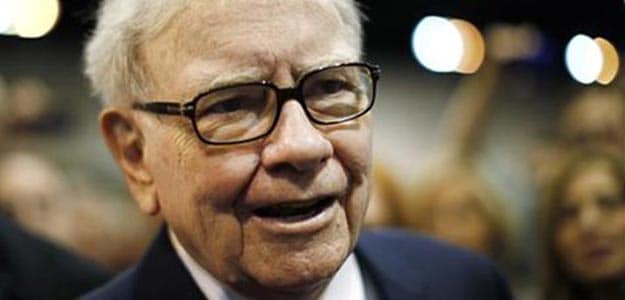
A ho-hum stock market so far this year may be just what Berkshire Hathaway shareholders needed.
As they gather this week at the sprawling conglomerate's annual meeting in Omaha, Nebraska, and rub shoulders with its iconic chairman, Warren Buffett, the fact that its shares are once again beating the broader market should help dim the sour memory of its recent run of underperformance.
Last year, for the first time in nearly half a century, the gain in Berkshire's book value over five years - Buffett's preferred measure of performance - lagged the total return of the S&P 500.
Buffett himself concedes his company is just not built to run neck and neck with the kind of raging bull market that produced a 128 per cent total return for the S&P from the end of 2008 through 2013. Berkshire, which saw its net worth grow just 91 per cent by comparison in that run, does best in a weak market - the weaker the better, perhaps.
"For impressive outperformance you need a crisis," said Meyer Shields, an analyst with Keefe, Bruyette & Woods Inc.
"He's a headline investor," said Michael Yoshikami, chief executive of Destination Wealth Management, who owns about $18 million of Berkshire's class B stock. "If bad news comes, he's looking."
So with the S&P delivering a return, including reinvested dividends, of just 2.5 per cent through the first four months of 2014 - and less than 2 per cent on price alone - the 8.7 per cent gain in Berkshire shares should provide shareholders some comfort.
More importantly for Buffett, it could also offer him some cover as he hosts the company's annual meeting in Omaha on Saturday, even though he will still face questions about how well the company can do going forward and why, at 83, he still hasn't named a successor.
Often called the called the Woodstock of capitalism, tens of thousands of people make the trek annually to hear Buffett and his partner, Charlie Munger, 90, answer hours of questions about the future of Berkshire, which has operations ranging from insurance to house paint.
THE ELEPHANT GUN
One topic of discussion is certain to be what he might buy next and how me might structure his next big deal.
Analysts at Barclay's estimate that Berkshire now has about $25 billion available for purchases, but as with last year's $23 billion Heinz deal, he may opt not to go it alone as he hunts for his "elephants." In that deal, Buffett broke new ground for Berkshire, partnering with private equity firm 3G Capital for the deal.
He could use that template again, Buffett said in an interview with Reuters last week. But he acknowledged that such deals aren't exactly thick on the ground.
"If I live long enough we'll do another one," he joked.
Buffett is transparent about his purchase criteria.
"Our long-held acquisition strategy is to acquire businesses at sensible prices that have consistent earning power, good returns on equity and able and honest management," Berkshire noted in a regulatory filing this year.
Finding a company that fits his requirements and can soak up that much cash could be a challenge, as could replicating the hands-down success of his largest-ever deal: the $26 billion purchase of Burlington Northern Santa Fe in 2009.
In hindsight, he looks prescient for buying the railroad on the eve of a U.S. oil production renaissance that sparked a boom in an oil-by-rail business now dominated by BNSF.
He called it an "all-in wager on the economic future of the United States." Five years later, BNSF now accounts for nearly 20 per cent of Berkshire's pretax income.
No less an investor than Bill Gross, in fact, pointed out how hard it will be for investing titans such as himself and Buffett to keep replicating their past success.
Last year Gross, the chief investment officer of the bond firm Pacific Investment Management Co, said that he, Buffett and others had seen their returns boosted over the past few decades "during perhaps a most advantageous period of time, the most attractive epoch, that an investor could experience."
In one of his monthly investment outlook missives, Gross mulled whether that time could be drawing to a close: "Perhaps ... it was the epoch that made the man as opposed to the man that made the epoch."

-
Talking Points This Week: AI Cash Burn, A Tiger Comeback And An India That Still Finds Its Own Path

India is not immune to higher oil or tighter global liquidity, yet its earnings base is broader, its domestic policy levers are still available.
-
Foreign Investors Own Half Of HDFC Bank and ICICI Bank. An LTCG Cut Could Matter Most Here
Foreign portfolio investors have US$115 billion parked in HDFC Bank, ICICI Bank. If the government cuts long-term capital gains tax, Jefferies says returning foreign money could land here first.
-
'Never Seen This Level Of Negativity': Sandeep Tandon Says The Next Rally May Be Closer Than You Think
Veteran investor Sandeep Tandon says foreign selling is easing, large-caps are due a comeback and mid-caps are crowded, while he turns positive on gold, power and pharma this Diwali.
-
Indians Stay With Family, Not In Hotels | The Reason Why
India still lacks enough clean, reliable and affordable hotels for budget-conscious travellers.
-
The Economic Imperative: Analysing The Material Driving Force Behind India-Canada Strategic Reset
This economic complementarity is further reinforced by deep institutional investment ties and talent mobility, which form the bedrock of the bilateral framework.
-
Medicine Pricing: Where Must Profit Stop?
India must confront excessive margins, hidden incentives and regulatory gaps that threaten the integrity of medicine.
-
Why Amazon And Flipkart Are Struggling To Beat Meesho In India's Smaller Cities
With 274 million users and lowest-cost logistics, Meesho is defending its value commerce crown against giants like Amazon and Flipkart.
-
High US Salaries, No Green Card Certainty: The Financial Calculation Facing Indian H-1B Families
The suspension of PERM processing at eight technology employers does not cancel existing H-1B visas. What it does is force a question many Indian families have been avoiding: is the US salary worth tying your career and family plans to one employer?
-
Swiggy vs Eternal: Food Delivery's Two Rivals Are No Longer In The Same Race
Eternal is building a private AI assistant, dark.ai. Swiggy is still working out how to make Instamart pay, with an operating loss of Rs 895 crore in the July-September quarter while Blinkit stayed profitable.
-
Where You Live Shapes How You Get To Work | The Reason Why
Two-wheelers are the most popular way to get to work in India, accounting for nearly 43% of workplace commutes.










