Battery Energy Storage Systems Face Cost Challenges Despite Viability Gap Funding
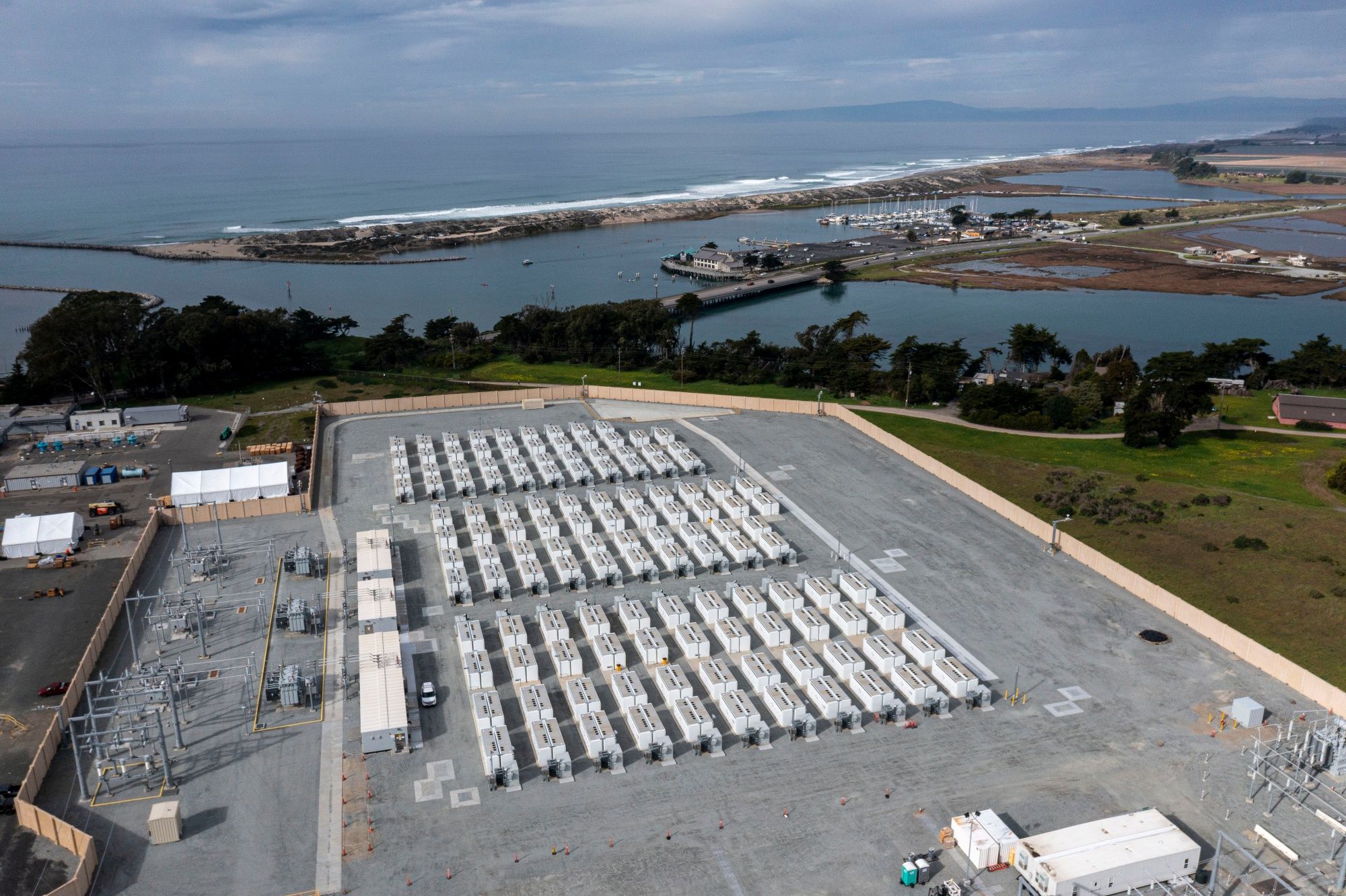
The central government's allocation of Rs 3,760 crore in viability gap funding for battery energy storage systems promises to boost the integration of renewable energy into the power grid. However, experts say that challenges such as rising raw material costs and ongoing technological innovations will continue to impact the sector in the coming years.
India's target of achieving 500 GW of renewable energy capacity by 2030 requires an annual addition of around 40 GW of renewable energy capacity. Currently, it has been able to add only 10–12 GW annually. To bridge this deficit, battery storage, along with hybrid wind and solar projects, emerges as the most promising solution, as it would help overcome the intermittency in renewable power generation.
Solar power is produced during the daytime, and wind power is generated mostly at night. Battery storage allows storage of the surplus power generated during the day or night, which can then be utilised to meet peak demand.
Kaustubh Dhonde, founder and chief executive officer of AutoNxt Automation, an electric tractor manufacturer, said, "Viability gap funding will breathe life into BESS projects, making them economically viable for investors and developers alike."
By bridging the financial gap, VGF will encourage innovation and lead to the proliferation of large-scale BESS installations. This translates into enhanced grid reliability, increased renewable energy integration, and a significant reduction in greenhouse gas emissions, Kaustubh said.
However, according to him, reducing the per-unit price of BESS remains a pressing challenge. "High initial capital costs, limited energy density, and the need for rare (earth) materials drive up expenses," Kaustubh said.
As founders of the electric tractor company, they recognise that research and development initiatives, economies of scale, and government incentives play a pivotal role in making BESS more affordable.
Ankit Mittal, co-founder and chief executive officer of Sheru, an eCloud battery storage aggregator, said the cost of energy storage systems is still very high and hence difficult for power distribution companies to integrate into their networks. "A number of energy storage projects have not taken off the ground because of the costs involved and the long payback times," he said.
The announced viability gap funding will support up to 40% of the capital cost of proposed capacity and would increase the viability quotient of projects that are on the fence, Mittal added.
Dr. Irfan Khan, founder and chief executive officer of eBikeGo, an electric two-wheeler manufacturer, said that although VGF for battery energy storage system projects is a promising move, there are concerns that need early resolution to have a positive impact. Foremost among them is the dependency on imported raw materials for battery production, which affects cost-effectiveness.
The tariff from battery storage projects ranges on average between Rs 10 and Rs 11 per unit. The government, through the VGF, plans to reduce the tariff to Rs 5.5–Rs 6.50 per unit. "The per-unit price reduction is directly linked to achieving economies of scale, which requires robust domestic manufacturing and infrastructure," Khan said.
According to Khan, another major concern is the integration of large-scale energy storage with the existing grid, which would demand upgrades and skilled manpower. "While VGF addresses the initial financial hurdles, a holistic strategy encompassing technology, manufacturing, and skill development is crucial to realising our energy storage ambitions," Khan said.
N Venu, managing director and chief executive officer, India and South Asia, Hitachi Energy, believes the timing of the VGF could not have been better as the government is planning to introduce a policy framework to make energy storage mandatory for renewable projects of more than 5 MW. This will help build a flexible grid and adopt clean energy.
Measures such as VGF are essential for the country's seamless energy transition to build an energy system that is stable and swiftly responsive to peak or low demands. A dedicated energy storage system at each renewable power project will also go a long way towards addressing the issue of power intermittency, Venu said.
Moreover, the funding from the government will attract additional investment in the segment in the coming years, eventually creating a robust renewable power infrastructure.
"The aim is to have the storage sector achieve economies of scale so that when VGF support is exhausted, storage prices have reduced to the point that external support is not needed for projects to be launched," Mittal said.

-
Signature Play: The Classic Cocktail Is Dead. Or Is It?

Classic cocktails are disappearing from India's cocktail menus. But they're still being ordered, taught to bartenders and borrowed from. So, who's really having the last drink?
-
A New Samvat Wishlist: Inclusive Prosperity And Human Development
India has strengthened its economic foundations through infrastructure, digital access and enterprise. Its next growth chapter must deepen productivity, create better livelihoods and widen participation in prosperity.
-
Love, Sex Aur Dhokha: The Audacious Plot To Spy On Jensen Huang
A Taipei dinner, a Singapore chip buyer and a suspected Chinese asset: inside the alleged spy operation that got close to NVIDIA's Jensen Huang.
-
Ten Things I Learnt This Samvat
Patience can be a trap. Cheap stocks can stay cheap. Leverage can wipe you out. What did Samvat 2082 teach us? Niraj Shah writes on 10 lessons from the year gone by.
-
Talking Points This Week: Tech Nerves, FII Buying, And A Faraway Banking Shock
The global markets are not shining this Diwali. The exception in the large markets is, India.
-
Midterm Rally Lasted A Day. The Hard Reality Of A Divided US May Last Two Years | Opinion
Between a contested AI boom, a debt ceiling that arrives in 2027 and a president with every incentive to act alone, the next two years may prove more volatile than the first day's rally suggests.
-
Blue Wave Will Derail the AI Trade but Won't Dismantle the AI Era | Unhedged Position
The Democrats' sweep of the US Congress will see politics collide with economic forces both over the long and short term.
-
It's Time To Take The GST Council's Bet On Trust Global
Payment records can prove India's services exports, and clear, proportionate rules can bring foreign digital sellers into the tax net.
-
Opinion | India at 38: From Innovation Overperformer to Innovation Powerhouse
India now has 453 VC-backed deep science startups, 18 of them late-stage, after 117 percent growth since 2020. Laurus Labs, at USD 9.3 billion, is the most valuable deep science company in any middle-income economy outside China.









