Banks Want Overseeing Committee To Give ‘Comfort’ On Large Haircuts
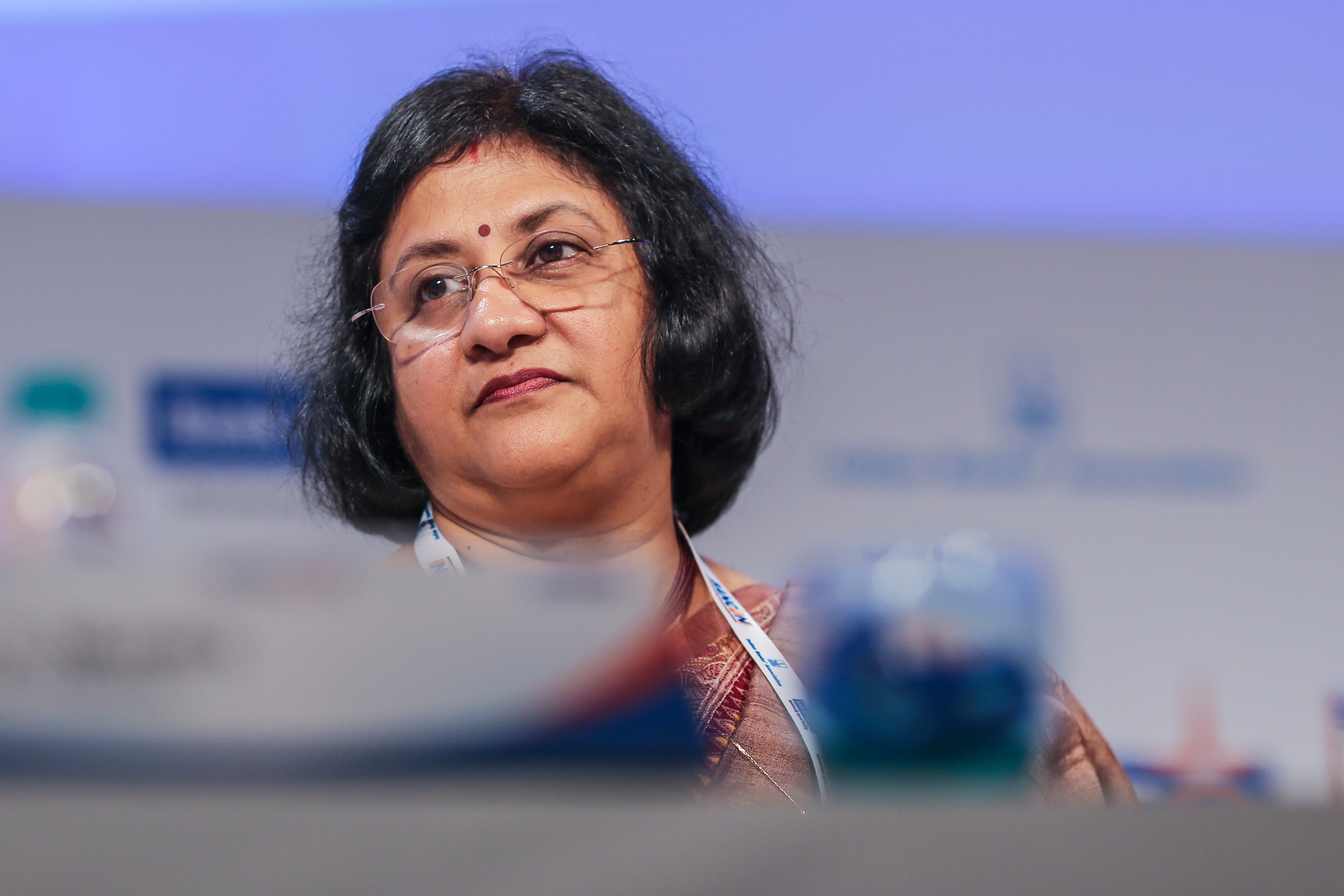
An overseeing committee which would vet large bad loan restructuring deals would give comfort to bankers at a time when lenders need to take deep haircuts on stressed assets, Arundhati Bhattacharya, chairman of State Bank of India, told BloombergQuint in an interview.
Earlier this month, the government said that it is considering setting up committees along the lines of one set up to review deals under the Scheme for Sustainable Structuring of Stressed Assets (S4A). While details of the plan are yet to be announced, these committees are likely to oversee the resolution process of large bad loan accounts to try and speed up decision-making.
“I think what the banks have been asking for is some kind of comfort that when they take decisions regarding haircuts, they should not be unnecessarily questioned,” Bhattacharya said.
Overseeing committees, when formed, would look at the process followed in large restructuring deals and give a view on whether it is in keeping with the regulations and board-approved policies, said a person familiar with matter on the condition of anonymity. If it finds the resolution plan lacking in any of these ways, it could send the proposal back to the banks to be reviewed, this person explained. There may be more than one committee set up for this purpose, this person said.
Bankers have been reluctant to take decisions on haircuts needed for stressed assets for fear of being questioned by agencies like the Central Bureau of Investigation (CBI) and the Central Vigilance Commission (CVC) at a later stage. The recent arrest of former IDBI Chairman Yogesh Aggarwal in a case related to loans given the defunct Kingfisher Airlines has only soured the mood further.
According to Bhattacharya, steep haircuts “are the need of the hour”. In order to prevent a repeat of the corporate debt restructuring (CDR) experience, where a number of accounts went bad despite restructuring, banks need to take realistic haircuts, said Bhattacharya.
Also Read: SBI To Relocate 1,800 Branches Following Merger With Associates
Banks had restructured loans heavily using the CDR process starting 2008-09, when an economic downturn had led to stress in the corporate sector. Data from the CDR cell website, however, shows that the restructuring plan has failed in at least a quarter of the cases admitted to the cell. One reason for this is that banks did not write down debt to the extent needed under the CDR process, said Bhattacharya. This time around, banks need to be more realistic about determining the sustainable amount of debt in stressed accounts while writing down the unsustainable part, she added.
To do this, banks want an external committee to give its stamp of approval to the process followed and the restructuring plan finally chosen.
“We want somebody to look at it and say that what the banks are doing is reasonable and correct. Under the circumstances, this is the best solution. That is all that bankers are looking for,” said Bhattacharya. Any such committee, however, will not take decisions on behalf of the banks, she clarified.
Indian banks are sitting on a pile of more than Rs 7 lakh crore in gross non-performing assets (NPAs). While an asset quality review (AQR) conducted by the Reserve Bank of India (RBI) in the second half of 2015 pushed banks to recognise stressed assets, resolution of these assets has been slow. Apart from existing provisions like S4A and the Strategic Debt Restructuring (SDR) scheme, the RBI and the government have also been toying with the idea of a bad bank-like structure.
The problem with a bad bank will once again be the lack of capital, said Bhattacharya.
According to the person quoted above, a public sector-led bad bank is not the first option for the government. The use of taxpayer money for such a venture would take away from funds from other development priorities, this person explained while adding that setting up such an entity and getting it off the ground would also delay the resolution process.
Investors and analysts are eagerly awaiting the government's revised plan for resolution of bad loans. In a report dated March 28, Kotak Institutional Equities said that they are in favour of a mix of “curative and preventive” measures to resolve the bad loan problem.
For existing non-performing loans, approval of specific resolution plans for 20-30 large stressed assets by a government committee and conversion of a portion of debt of stressed assets to equity may partly alleviate the problem, wrote Sanjeev Prasad, co-head of Kotak Institutional Equities.
We believe government support would be critical for a successful resolution of non-performing loans in the large corporatebook of Indian banks. Public banks will be reluctant to execute any resolution scheme that entails 30-50 percent write-down of loans to large private companies without the formal support of the government.Sanjeev Prasad, Co-Head, Kotak Institutional Equities
Also Read: A Few Healthy Banks Better Than Many Weak Ones, Says Vinod Rai

-
Getting To Work Costs Women More | The Reason Why

It is not just about women paying more than men. It is about women paying much more in cities than in villages.
-
AI Bias In Investing Cannot Be Eliminated, But It Can Be Governed
Framing is a particularly important example as identical financial information presented in terms of gains rather than losses can lead an LLM to reach a different assessment.
-
Joining The Dots | Dark Skies, Steady Diya: Why Hope Holds This Diwali
With war, a weak rupee and foreign outflows weighing on sentiment, policymakers at the NDTV World Summit and market veterans at NDTV Profit Ignite: Diwali Edition offered the same advice: stay invested and filter out the noise.
-
The Curious Case of Equitas Small Finance Bank And A CEO Who Quit For Stock
PN Vasudevan believes persistent investor concerns over a perceived conflict of interest had become a governance overhang on Equitas Small Finance Bank's stock, even as the lender improved profitability and asset quality.
-
Talking Points This Week: AI Cash Burn, A Tiger Comeback And An India That Still Finds Its Own Path
India is not immune to higher oil or tighter global liquidity, yet its earnings base is broader, its domestic policy levers are still available.
-
Foreign Investors Own Half Of HDFC Bank and ICICI Bank. An LTCG Cut Could Matter Most Here
Foreign portfolio investors have US$115 billion parked in HDFC Bank, ICICI Bank. If the government cuts long-term capital gains tax, Jefferies says returning foreign money could land here first.
-
'Never Seen This Level Of Negativity': Sandeep Tandon Says The Next Rally May Be Closer Than You Think
Veteran investor Sandeep Tandon says foreign selling is easing, large-caps are due a comeback and mid-caps are crowded, while he turns positive on gold, power and pharma this Diwali.
-
Indians Stay With Family, Not In Hotels | The Reason Why
India still lacks enough clean, reliable and affordable hotels for budget-conscious travellers.
-
The Economic Imperative: Analysing The Material Driving Force Behind India-Canada Strategic Reset
This economic complementarity is further reinforced by deep institutional investment ties and talent mobility, which form the bedrock of the bilateral framework.
-
Medicine Pricing: Where Must Profit Stop?
India must confront excessive margins, hidden incentives and regulatory gaps that threaten the integrity of medicine.










