Banking Sector On "Course To Recovery" As Bad Loans Fall: RBI Governor Shaktikanta Das
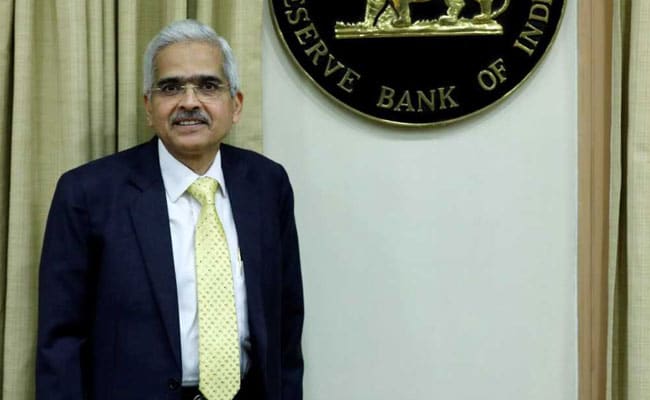
The banking sector is on "course to recovery" as the afflicting non-performing assets recede, but state-run lenders need reforms in governance, Reserve Bank of India (RBI) Governor Shaktikanta Das said on Monday. The weaker ones among the public sector banks need to be supported through recapitalisation, the governor said in his foreword to RBI's half-yearly financial stability report (FSR). "After a prolonged period of stress, the banking sector appears to be on course to recovery as the load of impaired assets recedes," said Mr Das, who took charge earlier this month after the sudden exit of Urjit Patel.
He pointed out that the period till September has seen a decline in gross NPA ratios -- the first such dip in three years -- and also pointed out at improving provision coverage ratio, which is the ability of a bank to withstand stress, as a positive. According to the FSR, gross NPAs ratio declined to 10.8 per cent in September 2018 from 11.5 per cent in March 2018, while for the state-run lenders, the same improved to 14.8 per cent in September 2018 from close to 15.2 per cent in March 2018.
Under the baseline scenario, the GNPA ratio of all banks may come down to 10.3 per cent by March 2019 from 10.8 per cent in September 2018, the report said.
The Governor said even though the current NPA levels are high, stress tests done by the RBI have pointed to an improvement in the ratio in future.
Having done a lot of work on the NPA front, which started with the accelerated recognition through the asset quality review, Mr Das said there is a need for operational improvements at the state-run lenders which account for a bulk of the dud assets.
"The immense effort put in by the stakeholders so far is required to be buttressed with substantive reforms in governance and oversight regime, supported by recapitalisation of weak PSBs," he said in the comments, which come days after the Centre committed an additional Rs 41,000 crore in FY19 for the recapitalisation.
Eleven of the 20 state-run lenders are under the prompt corrective action (PCA) framework, which restricts their normal lending and is a bone of contention between the conservative regulator and a government that will be facing elections in a few months.
Mr Das, a career bureaucrat who steered the Government's note ban move from the finance ministry, said despite its high costs, the NPA recognition has led to improvements in the operational risk assessment at state-run lenders.
"...it appears to have led to a greater discipline in credit assessment, higher sensitivity to market risk and better appreciation of operational risks," he said. Mr Das acknowledged that some of the cases referred for resolution under the two-year-old bankruptcy framework have lagged time-lines, but said the Insolvency and Bankruptcy Code (IBC) will strengthen credit discipline.
"A time-bound resolution of impaired assets will go along way in unclogging the credit pipeline thus improving the allocative efficiency in the economy," he said.
Mr Das also touched on the troubled non-bank lending sector, saying the non banking finance companies (NBFCs) need to be more prudent on risk-taking and also underlined the need to rebalance excessive credit growth, especially the one funded by short term liabilities.
The high credit growth is "not stability enhancing", Mr Das said. Both the banks as well as non-banks need to be diligent, prudent and follow sound risk management practices as they support the growth needs of the economy, he said.
Mr Das said the slowdown in GDP growth to 7.1 per cent is slower-than-expected, but pointed out to an uptick in gross fixed capital formation along with the dip in crude oil prices as a positive for a sustained growth going forward.
Globally, the threat of trade war which would have weakened growth prospects has softened, he said. A stricter enforcement of global trade and investment rules could potentially lead to market stability and win-win bargains in trade, Mr Das said.
(This story has not been edited by NDTV staff and is auto-generated from a syndicated feed.)

-
Signature Play: The Classic Cocktail Is Dead. Or Is It?

Classic cocktails are disappearing from India's cocktail menus. But they're still being ordered, taught to bartenders and borrowed from. So, who's really having the last drink?
-
A New Samvat Wishlist: Inclusive Prosperity And Human Development
India has strengthened its economic foundations through infrastructure, digital access and enterprise. Its next growth chapter must deepen productivity, create better livelihoods and widen participation in prosperity.
-
Love, Sex Aur Dhokha: The Audacious Plot To Spy On Jensen Huang
A Taipei dinner, a Singapore chip buyer and a suspected Chinese asset: inside the alleged spy operation that got close to NVIDIA's Jensen Huang.
-
Ten Things I Learnt This Samvat
Patience can be a trap. Cheap stocks can stay cheap. Leverage can wipe you out. What did Samvat 2082 teach us? Niraj Shah writes on 10 lessons from the year gone by.
-
Talking Points This Week: Tech Nerves, FII Buying, And A Faraway Banking Shock
The global markets are not shining this Diwali. The exception in the large markets is, India.
-
Midterm Rally Lasted A Day. The Hard Reality Of A Divided US May Last Two Years | Opinion
Between a contested AI boom, a debt ceiling that arrives in 2027 and a president with every incentive to act alone, the next two years may prove more volatile than the first day's rally suggests.
-
Blue Wave Will Derail the AI Trade but Won't Dismantle the AI Era | Unhedged Position
The Democrats' sweep of the US Congress will see politics collide with economic forces both over the long and short term.
-
It's Time To Take The GST Council's Bet On Trust Global
Payment records can prove India's services exports, and clear, proportionate rules can bring foreign digital sellers into the tax net.
-
Opinion | India at 38: From Innovation Overperformer to Innovation Powerhouse
India now has 453 VC-backed deep science startups, 18 of them late-stage, after 117 percent growth since 2020. Laurus Labs, at USD 9.3 billion, is the most valuable deep science company in any middle-income economy outside China.









