Bank Privatisation: How Should We Pick The Banks?
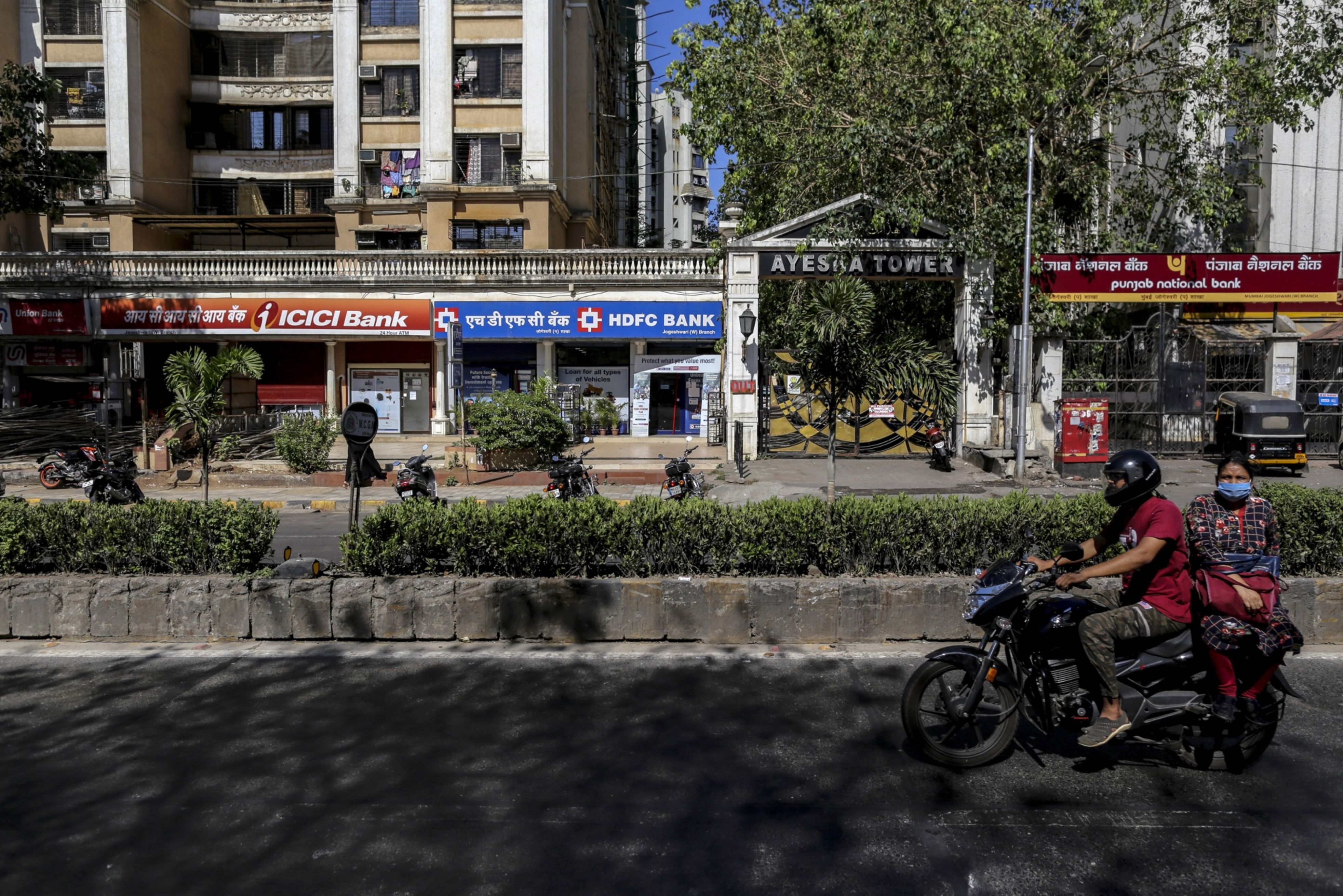
The government has signaled a clear intent to privatise public sector banks. They plan to start with two, Finance Minister Nirmala Sitharaman said as part of her budget speech, only to go on to suggest, in interviews, that more will follow.
This, for all intents and purposes, suggests that the country is starting the process of reversing the decision of bank nationalisation, taken a little more than 51 years ago in 1969. This is far more meaningful than the one-off privatisation of IDBI Bank, which, frankly, was driven more by the necessity of capital – which the government at that time wasn't willing to provide, than any great policy objective.
As the government begins privatisation of banks, it would do well to explain its objectives. That, in turn, will help them decide on which banks to privatise.
Why Privatise? Which Banks To Privatise?
The first question to answer is why we want to privatise.
It is true that we have a large and often inefficient government owned banking sector. It is also true that the efficiency of these banks is partly hampered by the government ownership. Think of the many schemes like Jan Dhan and MUDRA that mostly public sector banks have executed.
So, is the privatisation driven by the desire to reduce government influence on banking? Or is it simply driven by the need to reduce the proportion of government resources going towards banking. Yes, the two are linked but what is the core objective – the former or the latter?
If it is the former, then the government has to pick banks which have a meaningful share of the banking business. For instance, purely hypothetically, in that scenario, it would make sense to privatise a bank the size of a Punjab National Bank, Bank of Baroda or Bank of India. That would meaningfully bring down the share of government in banking.
If, on the other hand, the objective is to reduce the drain of government resources on account of recapitalisation, then the government's strategy has to be the reverse. It should pick the smallest and weakest lenders which need the most government support.
Remember, the better-run banks, like SBI, go to the government for capital far less frequently than the weaker ones.
In the second scenario, it would make sense for the government to try and privatise a bank like Indian Overseas Bank, hypothetically.
Is It About The Money? Or Is It About The Policy Signal?
There is a second line of thinking that needs to be done – is the government doing this to raise resources for its budget or is it more a signal? Again, the choice of banks will be different under those different lines of thinking.
If part of the privatisation objective is raising resources, then you need to sell the larger, better run banks where you have some hope of getting at least close to book value. Weaker banks will need to be sold at a much larger discount given that any buyer will be wary of the proverbial skeletons in the cupboard.
But if raising resources is not an objective and just a by-product, then you can just as well do with selling a few weaker banks to signal banking reform. The impact of that degree of reform, though, would be limited.
Who Are The Buyers? And What Are They Buying?
A third line of thinking is on the buyers and what they are buying.
Remember, banking licences are no longer a scarce commodity. They are available on tap. With the exception of a tech entrepreneur and possibly a group of professional bankers, there has been no application for a new banking licence.
So if not too many of the existing set of entities permitted as bank promoters are looking to start a bank, will there a far larger number of investors looking to buy a bank? If not, is the plan to privatise part of a larger plan to expand the pool of bank promoters? That decision is still pending with the RBI and may provide a piece of puzzle when guidelines are released.
Equally, what are these promoters buying?
If you sell a strong bank, you can argue that the buyer is getting a licence and a strong asset and liability franchise. If you sell a weak bank, is the buyer essentially buying the licence? Yes, they get the all-important liability base with it but it must be asked whether that liability base will shift when the comfort of the government backing is taken away.
In The Words Of A Veteran
While we are yet to get any insights on these issues from the government, it may be worth taking note of comments from former Reserve Bank of India Governor YV Reddy.
“Even today, the average citizen of India is most comfortable banking with PSU banks,” Reddy told BloombergQuint in an interview in 2019. He went on to argue that public sector banks should have a strategic presence.
“What does strategic presence mean? You decide that so much percentage (of banking) should be in public sector. Determine through competition which public sector banks should be supported. Public sector banks which are doing well, you support. Those public sector banks which are not doing well, sell away the shares. Then there will be competition among them.”
Reddy had added that the Indian economy may still require public sector banks but “focused, purposeful, limited and competitive public sector banks.”
Is that how the government sees it as well? We'd like to understand.
Ira Dugal is Editor - Banking, Finance & Economy at BloombergQuint.

-
The Economic Imperative: Analysing The Material Driving Force Behind India-Canada Strategic Reset

This economic complementarity is further reinforced by deep institutional investment ties and talent mobility, which form the bedrock of the bilateral framework.
-
Medicine Pricing: Where Must Profit Stop?
India must confront excessive margins, hidden incentives and regulatory gaps that threaten the integrity of medicine.
-
Why Amazon And Flipkart Are Struggling To Beat Meesho In India's Smaller Cities
With 274 million users and lowest-cost logistics, Meesho is defending its value commerce crown against giants like Amazon and Flipkart.
-
High US Salaries, No Green Card Certainty: The Financial Calculation Facing Indian H-1B Families
The suspension of PERM processing at eight technology employers does not cancel existing H-1B visas. What it does is force a question many Indian families have been avoiding: is the US salary worth tying your career and family plans to one employer?
-
Swiggy vs Eternal: Food Delivery's Two Rivals Are No Longer In The Same Race
Eternal is building a private AI assistant, dark.ai. Swiggy is still working out how to make Instamart pay, with an operating loss of Rs 895 crore in the July-September quarter while Blinkit stayed profitable.
-
Where You Live Shapes How You Get To Work | The Reason Why
Two-wheelers are the most popular way to get to work in India, accounting for nearly 43% of workplace commutes.
-
Unhedged Position: Can India See An Indonesia-Style Time Correction?
The Nifty is trading below levels it first clocked in 2024. Is there, then, as I have suggested in the headline, potential that the current time correction drags on painfully for the next three-five, even ten years?
-
Navigating Friction And Energy Realities: An Analysis Of Marco Rubio's October Visit To India
Occurring at a critical juncture marked by stalled trade negotiations and escalating geopolitical pressures over global energy supplies, the visit offers a profound window into modern US-India relations.
-
India Exports Capital. Why Not Export Trusteeship?
The big question, then, is whether India can build an institution that global borrowers, investors, banks, and lawyers can trust, even without an Indian connection.
-
France's Economy & Politics Are In Crisis | The Reason Why
Let's look at how the French economy and politics evolved under Nicolas Sarkozy, Franois Hollande and Emmanuel Macron.










