Bank of Korea Keeps Rate Restrictive as It Looks to Jackson Hole
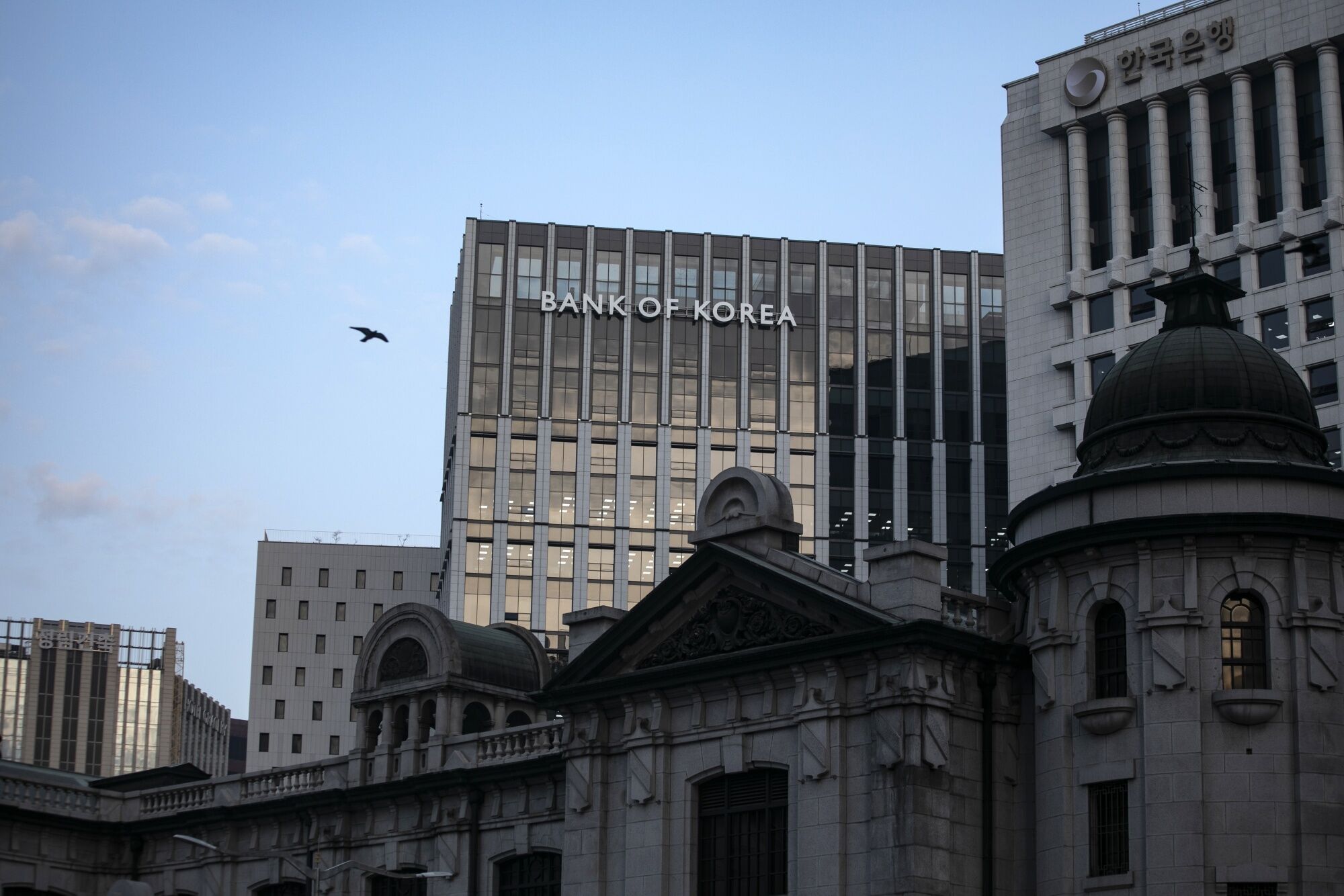
(Bloomberg) -- Bank of Korea Governor Rhee Chang-yong sought to maintain focus on reining in inflation and household debt as the board left its benchmark interest rate unchanged and opted to remain hawkish ahead of major central bank events in the US.
The BOK kept its seven-day repurchase rate at 3.5% on Thursday as forecast by all 18 economists surveyed by Bloomberg, and reiterated a pledge to stay restrictive for “a considerable time.” The BOK has stood pat since it last raised the rate in January.
In his press conference to explain the unanimous decision, Rhee said it will take “considerable time” before consumer inflation settles comfortably to a pace within the bank's target of 2%. He also made it clear the board would closely watch Jackson Hole meetings later this week and the Federal Reserve decision next month.
“It's quite a dilemma for us if the Federal Reserve maintains a tight policy for a considerable period of time and it starts to affect our monetary policy,” the governor said.

Fed Chairman Jerome Powell is set to deliver a keynote address at the annual Fed event in Jackson Hole on Friday. The annual meeting hosted by the Fed's Kansas City branch is considered a key opportunity for flagging US policy direction outside regular rate-decision meetings.
Rhee also noted China's growing economic troubles that would potentially weigh on Korea's growth. While the BOK largely kept its economic forecasts intact, saying it still expects the economy to expand by 1.4% and consumer prices to rise by 3.5%, it trimmed its 2024 GDP growth forecast to 2.2%, a move that reflects the impact from slowing activity in China. The BOK also nudged up its 2023 estimate for core consumer inflation to 3.4%.
China's economic doldrums are also expected to be on the agenda at Jackson Hole.
As was the case in recent meetings, all six members of Rhee's board said they were open to another hike by a quarter percentage point if such a move is deemed necessary in the future, in a reminder that the battle against inflation remains at the top of their agenda.
The governor added that household debt levels are already weighing on economic growth and noted that they've increased more than expected in recent months. South Korea's has one of the world's highest household debt-to-GDP ratios, adding to challenges for policymakers who fear heavily indebted consumers will cut back on spending. How to bring debt down without causing a crash is a key issue, Rhee said, adding it remains his major goal during his term.

Rhee highlighted other persistent concerns weighing on growth, saying banking-sector risks have yet to be fully resolved. Although authorities have taken steps to stabilize the sector, pockets of vulnerability remain, he said.
The trade-reliant economy has been hit by weak overseas demand for South Korean products, particularly in China, where property-market woes are among a host of challenges undermining the growth outlook. South Korea's exports to China fell 25.1% in July, outpacing the 16.5% decline in overall shipments.
“The status quo is the best way to go for the time being,” said Kim Sung-soo, a fixed-income analyst at Hanwha Investment & Securities Co. “We could be seeing a hold continuing at least through the first quarter of next year.
What Bloomberg Economics Says...
“A pivot to a looser stance is unlikely until the Federal Reserve changes course.”
— Kwon Hyosung, economist
For the full report, click here
Even as risks to the growth outlook persist, the BOK has been steadfast in its battle to cool price pressure as a top priority. Consumer inflation slowed to 2.3% in July, but monetary authorities expect it will accelerate back to the 3% level toward the end of the year.
Adding to the risks for the BOK is the possibility the Federal Reserve may keep its policy rate elevated for longer as the US economy chugs along with more momentum than previously expected. That's giving the BOK another reason to keep its policy restrictive as Korean rates remain below US rates by the widest differential on record. That gap has weighed on the won this year, although Rhee said current currency levels aren't a reason for concern.
“While Rhee left the door open to more policy tightening, the possibility for that to become a reality is low, especially since Rhee acknowledged Korea's current real interest rate is high,” said Stephen Lee, chief economist at Meritz Securities.
The won has been among the weakest performers in Asia this month. Its deterioration against the dollar was a key reason the BOK raised the rate at a faster-than-usual pace in the second half of last year.
The BOK's vow to stay restrictive comes amid increasing indications that the tightening cycles in many developed nations are nearing a peak if not already there. While many Fed officials see upside risks to inflation, two were open to taking a pause in July. The swaps market is pricing in no more increases.
In Europe, worse-than-expected numbers Wednesday from Germany and France prompted market bets to shift toward a pause in ECB hikes next month.h
(Adds details from Governor Rhee's press conference)
More stories like this are available on bloomberg.com
©2023 Bloomberg L.P.

-
We May Need Another Tukaram Mundhe To Fight Air Pollution | The Reason Why

Developers may install basic measures such as sprinklers and green nets, resume work, and continue violating rules when this equipment stops working.
-
Extracting Value From Battery Scrap Could Be Challenging For India | The Reason Why
A discarded lithium-ion battery still contains valuable materials such as lithium, nickel and cobalt. These can be recovered and reused. When such batteries are crushed and shredded, they produce a dark powder called black mass.
-
One El Nino, India Can Handle. Two Could Break The Granary
India's grain stocks can absorb one bad year, but a second El Nino could drain the buffer in two to three years, economists say.
-
India's Troika Of Good Luck | Joining The Dots
As Jensen Huang's exit drags Nvidia down, a cooling AI trade and resilient earnings have revived investor interest in India. A likely RBI rate hike looms.
-
Talking Points This Week: Leadership Shock At Nvidia, Earnings Strength, And The Fog Over Hormuz
The Anthropic IPO pricing and first trading day, Nvidia's upcoming earnings, and any fresh signals from Iran will set the tone for the following week.
-
Signature Play: The Classic Cocktail Is Dead. Or Is It?
Classic cocktails are disappearing from India's cocktail menus. But they're still being ordered, taught to bartenders and borrowed from. So, who's really having the last drink?
-
A New Samvat Wishlist: Inclusive Prosperity And Human Development
India has strengthened its economic foundations through infrastructure, digital access and enterprise. Its next growth chapter must deepen productivity, create better livelihoods and widen participation in prosperity.
-
Love, Sex Aur Dhokha: The Audacious Plot To Spy On Jensen Huang
A Taipei dinner, a Singapore chip buyer and a suspected Chinese asset: inside the alleged spy operation that got close to NVIDIA's Jensen Huang.
-
Ten Things I Learnt This Samvat
Patience can be a trap. Cheap stocks can stay cheap. Leverage can wipe you out. What did Samvat 2082 teach us? Niraj Shah writes on 10 lessons from the year gone by.
-
Talking Points This Week: Tech Nerves, FII Buying, And A Faraway Banking Shock
The global markets are not shining this Diwali. The exception in the large markets is, India.









