Bank Of England Set To Hold Rates At Record Low As Brexit Risks Loom
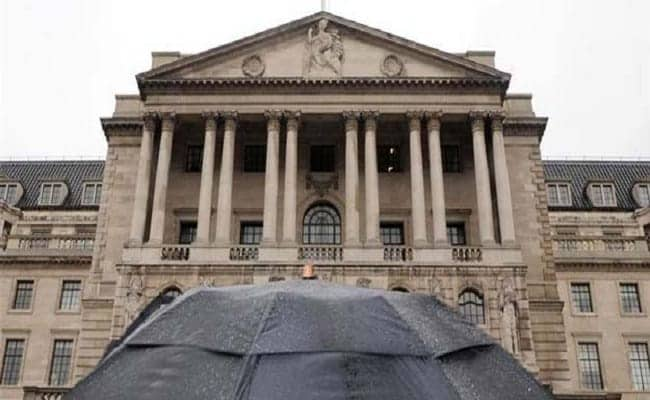
London: The Bank of England looks set to keep interest rates at a record low once again on Thursday with investors looking for signs that, faced with Brexit, it is getting nearer to raising rates for the first time in a decade. When they last met in June, Governor Mark Carney and his fellow rate-setters voted by a narrow 5-3 margin to keep Bank Rate at 0.25 per cent. The surprisingly close decision pushed up sterling and British government bond yields as investors pulled forward their expectations of a rate hike.
Chief Economist Andy Haldane said soon after that he was close to voting for a hike too, adding to speculation that the BoE might soon be ready to follow the lead of the Federal Reserve and raise borrowing costs.
With unemployment at a four-decade low and inflation above the Bank's target, the case had seemed to be growing for the BoE to at least reverse the emergency rate cut it made after last year's shock decision by voters to leave the European Union.
But since June, data has shown the economy had its slowest growth since 2012 in the first half of this year, that inflation has dipped and that growth in wages remains weak.
Furthermore, divorce talks between Britain and the rest of the EU had a stumbling start, leaving many firms nervous about the risk of a damaging Brexit in 2019.
"Given it looks like the economy might be slowing now, it seems like an odd time" to raise interest rates, former BoE deputy governor Charlie Bean said, speaking at a monetary policy conference held by Fathom Consulting on Wednesday.
He challenged the view of the MPC's rate-hike supporters that a pick-up in investment and exports was likely to offset the impact of weaker spending by consumers.
"At the current juncture it is not plausible to think that investment is going to, given the uncertainty about trade relationships in the future," Mr Bean said. Any meaningful rise in exports was likely to be more than two years away, he added.
Lower growth likely
After the weak start to the year for economy, the BoE is likely to lower its growth forecast for 2017 while edging up its inflation projections only slightly.
Further diminishing the chance of a vote for a rate hike on Thursday, one of June's three dissenters has left the BoE. Most economists expect a 6-2 vote, unless Haldane changes his vote to give another 5-3 result.
Rather than raise rates, the BoE might take a smaller step by not renewing the bank lending incentives that were part of its big stimulus after the Brexit vote shock.
Carney and his top officials are likely to want to keep the prospect of a rate hike on the radar, as a further fall in sterling would add to inflation which already looks set to hit 3 percent this year, above the Bank's 2 per cent target.
Low unemployment also increases the chance that wages might soon rise faster, creating an upward spiral of domestically generated inflation.
John Gieve, another former BoE deputy governor, said the Bank risked moving too late to stop the recent sharp rise inflation from becoming entrenched, especially as Britain's government might succumb to pressure to raise public-sector pay.
"I think fiscal policy has changed," Mr Gieve said. "The risk that the Bank will start tightening too late has changed."

-
Gold Is Rs 22,000 Cheaper Than A Month Ago. Should You Buy Amid The Wedding Season?

Gold's potential slide to $3,500 could save around Rs 4,700 per 10 grams, but a soft inflation print could just as easily push prices back up. One way to split the risk is to buy in parts, some now and the rest after the Fed's Dec. 9 decision.
-
AI Agents Are Gaining Power. Who Governs Them?
Artificial intelligence agents promise to transform productivity by moving machines from assisting decisions to executing them. But as organisations delegate greater authority to these AI-agents, they must first establish who controls that authority and who remains accountable when things go wrong.
-
Why Swapping Your Old Gold Can Trigger A Rs 5 Lakh Tax Bill, And How You Can Avoid It Legally
Swapping old gold for new is taxed as a sale and a fresh purchase. Getting your own gold remade can cut most of that bill, though it has its own costs.
-
The AI Trade is Done. The Real Opportunity for Investors Starts in 2027 | Unhedged Position
As pureplay AI stocks plunge and circular, capex-led financing unwinds, 2027 is set to be a year of reckoning for AI companies. Yet the bust clears the way for a better opportunity for investors in 2027 -- shifting the spotlight from AI builders to the companies using AI.
-
Leadership As Mission: Why The Age Of AI Demands More Human Leadership
Debjani Ghosh examines how AI is changing leadership, arguing that its success must be measured by its impact on people and the accountability of those guiding its use.
-
We May Need Another Tukaram Mundhe To Fight Air Pollution | The Reason Why
Developers may install basic measures such as sprinklers and green nets, resume work, and continue violating rules when this equipment stops working.
-
Extracting Value From Battery Scrap Could Be Challenging For India | The Reason Why
A discarded lithium-ion battery still contains valuable materials such as lithium, nickel and cobalt. These can be recovered and reused. When such batteries are crushed and shredded, they produce a dark powder called black mass.
-
One El Nino, India Can Handle. Two Could Break The Granary
India's grain stocks can absorb one bad year, but a second El Nino could drain the buffer in two to three years, economists say.
-
India's Troika Of Good Luck | Joining The Dots
As Jensen Huang's exit drags Nvidia down, a cooling AI trade and resilient earnings have revived investor interest in India. A likely RBI rate hike looms.
-
Talking Points This Week: Leadership Shock At Nvidia, Earnings Strength, And The Fog Over Hormuz
The Anthropic IPO pricing and first trading day, Nvidia's upcoming earnings, and any fresh signals from Iran will set the tone for the following week.









