Axis Bank CFO Jairam Sridharan Resigns
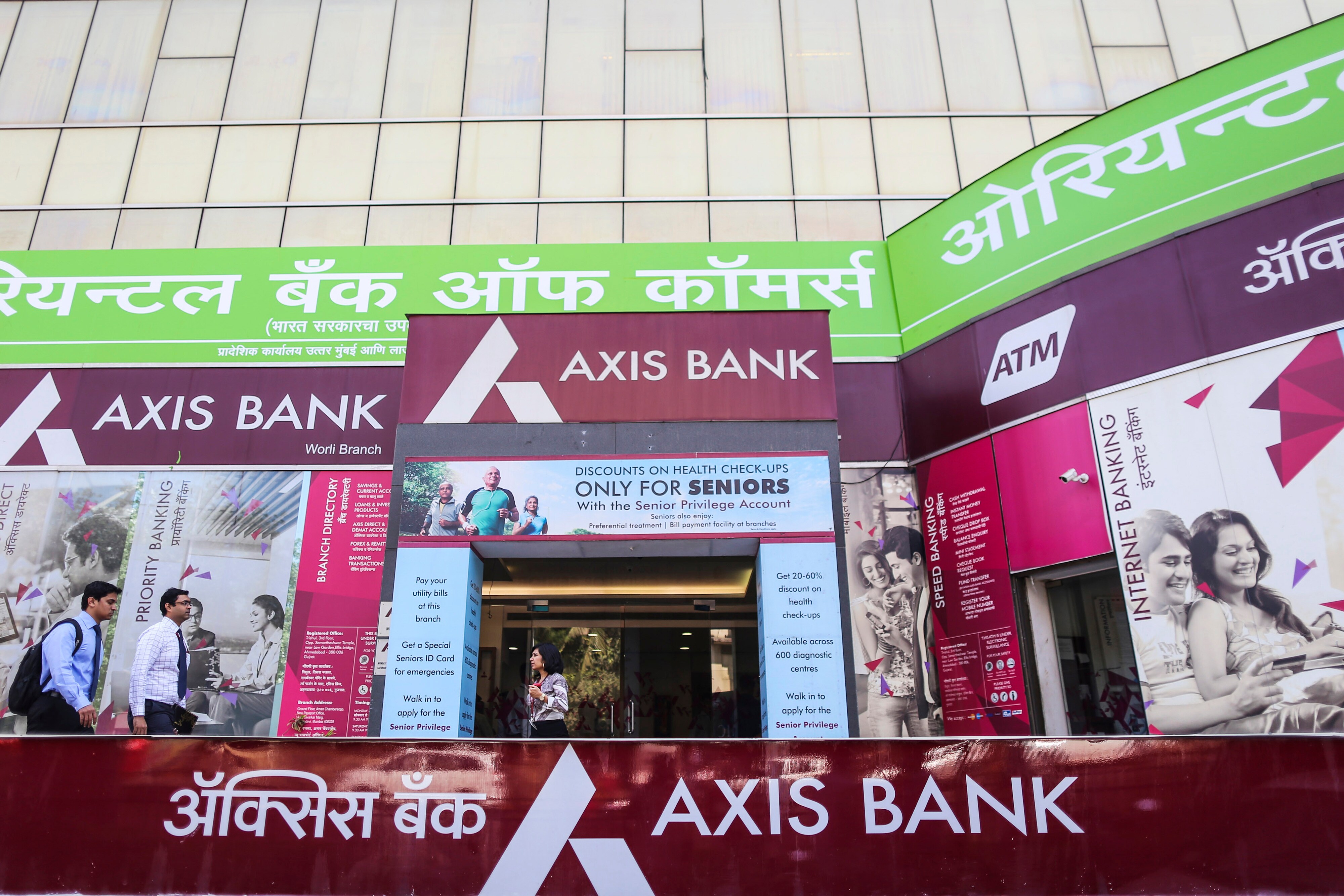
After over four years, Axis Bank Ltd.'s Chief Financial Officer Jairam Sridharan has tendered his resignation and will vacate the position after serving a three-month notice period.
In a stock exchange disclosure on Dec. 6, the bank said that Sridharan had resigned from his post as group executive and CFO of the private sector bank as he would like to pursue other career opportunities. He was appointed as CFO in October 2015.
Further, “under guidance from Nomination and Remuneration Committee and the Audit Committee of Board,” the bank said it “has initiated the succession plan for the said post and a suitable candidate will be appointed in due course and we will keep you posted on the same”.
Sridharan had joined the bank in June 2010 after a stint with Capital One Financial, a consumer bank in the U.S. Prior to this he worked in ICICI Bank Ltd.'s retail lending business.
He was the president of retail lending and payments at Axis Bank, before taking over the CFO roles where he handled the finance, strategy and business intelligence functions.
This is the third high-profile exit from Axis Bank's earlier management team. On Dec. 31, 2018, the bank's erstwhile chief executive officer Shikha Sharma had resigned. Sharma had held that position since June 2009. V Srinivasan, deputy managing director at Axis Bank, quit around the same time.
In July 2017, Sharma was granted a fourth term by the bank's board starting from June 1, 2018 but the Reserve Bank of India stepped in and asked the board to reconsider the reappointment.
Thereafter, she curtailed her last term, paving the way for Amitabh Chaudhry to take over as CEO from Jan. 1 this year. Chaudhry was a seasoned banker and at the time was leading HDFC Life Insurance Ltd. for nine years.
Axis Bank faced the ire of markets and of the RBI the when in late 2015 the central bank conducted an asset quality review of all banks. The RBI's review revealed large divergences between the non-performing assets reported by the bank and those estimated by the regulator.
By the end of March 2016, Axis Bank's gross NPA ratio stood at over 2 percent and jumped to 5.28 percent within a year. Gross bad loans at the bank ballooned from Rs 915 crore, when Sharma took over, to Rs 25,000 crore, by the time she left.
This was followed by another year of divergence, where the difference between the RBI's estimates and the bank's asset quality disclosure stood at Rs 5,632 crore. The RBI thereafter imposed a Rs 3 crore fine on the bank on Feb. 27, 2018 due to non-compliance with its rules on classification of loans.
Since Chaudhury has taken over, the bank has been on a clean-up mission and its performance has turned around.
The bank posted a net loss of Rs 112 crore for the quarter ended September compared to a net profit of Rs 790 crore in the corresponding quarter of the previous fiscal. This was due to a one-time deferred tax assets adjustment of Rs 2,138 crore.
Profit before tax stood at Rs 2,433 crore in the second quarter, up by 109 percent from the corresponding quarter of the previous fiscal. The bank's operating profit grew 45 percent to Rs 5,952 crore, up from Rs 4,094 in the corresponding quarter of the previous fiscal.
Gross NPAs stood at 5.03 percent for the quarter ended September compared to 5.25 percent in the preceding quarter. The bank's gross NPA ratio stood at 5.96 percent for the September 2018 quarter.

-
The Economic Imperative: Analysing The Material Driving Force Behind India-Canada Strategic Reset

This economic complementarity is further reinforced by deep institutional investment ties and talent mobility, which form the bedrock of the bilateral framework.
-
Medicine Pricing: Where Must Profit Stop?
India must confront excessive margins, hidden incentives and regulatory gaps that threaten the integrity of medicine.
-
Why Amazon And Flipkart Are Struggling To Beat Meesho In India's Smaller Cities
With 274 million users and lowest-cost logistics, Meesho is defending its value commerce crown against giants like Amazon and Flipkart.
-
High US Salaries, No Green Card Certainty: The Financial Calculation Facing Indian H-1B Families
The suspension of PERM processing at eight technology employers does not cancel existing H-1B visas. What it does is force a question many Indian families have been avoiding: is the US salary worth tying your career and family plans to one employer?
-
Swiggy vs Eternal: Food Delivery's Two Rivals Are No Longer In The Same Race
Eternal is building a private AI assistant, dark.ai. Swiggy is still working out how to make Instamart pay, with an operating loss of Rs 895 crore in the July-September quarter while Blinkit stayed profitable.
-
Where You Live Shapes How You Get To Work | The Reason Why
Two-wheelers are the most popular way to get to work in India, accounting for nearly 43% of workplace commutes.
-
Unhedged Position: Can India See An Indonesia-Style Time Correction?
The Nifty is trading below levels it first clocked in 2024. Is there, then, as I have suggested in the headline, potential that the current time correction drags on painfully for the next three-five, even ten years?
-
Navigating Friction And Energy Realities: An Analysis Of Marco Rubio's October Visit To India
Occurring at a critical juncture marked by stalled trade negotiations and escalating geopolitical pressures over global energy supplies, the visit offers a profound window into modern US-India relations.
-
India Exports Capital. Why Not Export Trusteeship?
The big question, then, is whether India can build an institution that global borrowers, investors, banks, and lawyers can trust, even without an Indian connection.
-
France's Economy & Politics Are In Crisis | The Reason Why
Let's look at how the French economy and politics evolved under Nicolas Sarkozy, Franois Hollande and Emmanuel Macron.










