Average Housing Prices Rise 5% In April-June Across 8 Cities: Report
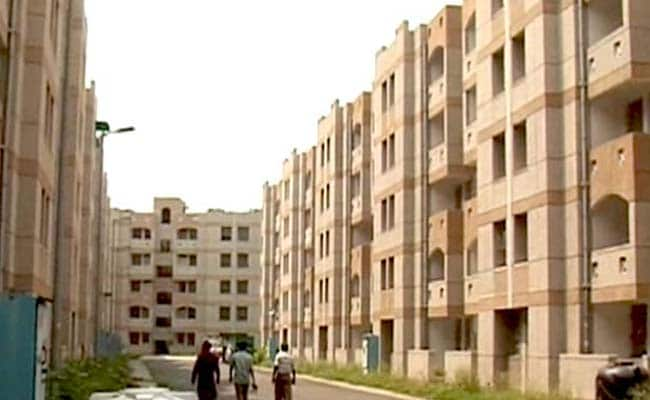
Revival in housing demand and rise in construction cost have led to a 5 per cent average annual increase in residential property prices across eight major cities during the April-June quarter, according to a report.
Delhi-NCR saw the maximum rise in housing prices at 10 per cent.
Realtors' apex body Credai, real estate consultant Colliers India and data analytic firm Liases Foras have come out with 'Housing Price-Tracker Report 2022' for eight major cities -- Delhi-NCR, Mumbai Metropolitan Region (MMR), Chennai, Kolkata, Bengaluru, Hyderabad, Pune and Ahmedabad.
"During Q2 (April-June) 2022, housing prices in India have surpassed pre-pandemic levels, indicating robust demand and supply that is well-aligned with the demand," the report said.
As per the data, housing prices in Ahmedabad rose 9 per cent year-on-year (y-o-y) to Rs 5,927 per square foot during the April-June quarter of this calendar year.
Bengaluru saw a 4 per cent price appreciation to Rs 7,848 per square foot, while Chennai witnessed only one per cent increase to Rs 7,129 per square foot.
Housing rates in Hyderabad stood at Rs 9,218 per square feet in April-June, up 8 per cent from the year-ago period.
Prices of residential properties in Kolkata too increased 8 per cent to Rs 6,362 per square foot.
MMR, the costliest real estate market, saw only a 1 per cent rise in housing prices at Rs 19,677 per square foot.
Housing prices in the Delhi-NCR property market saw the highest annual increase of 10 per cent to Rs 7,434 per square foot.
Pune reported a 5 per cent rise in housing prices to Rs 7,681 per square foot during the June quarter.
The prices are based on carpet area.
In the report, Pankaj Kapoor, Managing Director, Liases Foras, said prices would remain "range bound".
"With discounted EMI schemes, we see early signs of developers absorbing the impact of increasing interest rates. Sales volumes are likely to improve as we see growing new supply with festive offers," Kapoor said.
Credai National President Harsh Vardhan Patodia attributed the rise in housing prices to a hike in rates of key building materials as well as labour wages, besides some strong fundamentals.
He said there could be a marginal impact on demand due to a hike in interest rates on home loans but sales would continue to grow from September onwards.
Colliers India Chief Executive Officer Ramesh Nair said the upcoming festive season is likely to keep the market sentiment high, resulting in higher sales despite the hike in interest rates.
In Delhi-NCR, the report said that Golf course road in Gurugram saw the highest year-on-year price rise of 21 per cent followed by Noida Expressway.
"Housing prices in Ahmedabad highest in 3 years," the report said, adding that Gandhinagar Suburb saw the highest y-o-y increase at 13 per cent.
Prices in Central Chennai witnessed the steepest decline of about 13 per cent y-o-y whereas West Poonamallee saw the highest rise of 13 per cent.
Kolkata southwest and Howrah saw the highest surge in prices with a 13 per cent rise.
In the MMR market, Western suburbs (beyond Dahisar) saw the highest increase in prices at 12 per cent year-on-year.
Kothrud and Baner in the Pune market logged the maximum surge in housing prices at around 9-10 per cent range, the report said.
"Housing prices did not rise much in the last one decade. Builders have been operating at a very thin margin. With the rise in prices of key building materials, real estate developers have no option but to pass on the burden to customers. However, large and credible players are witnessing better demand than others, so they are commanding a premium in the market," Pankaj Pal, Group Executive Director, AIPL, said.
Established in 1999, the Confederation of Real Estate Developers' Associations of India (Credai) is the apex body of private real estate developers in India.
It represents over 13,000 developers across 221 city chapters in 21 states.
(This story has not been edited by NDTV staff and is auto-generated from a syndicated feed.)

-
AI Bias In Investing Cannot Be Eliminated, But It Can Be Governed

Framing is a particularly important example as identical financial information presented in terms of gains rather than losses can lead an LLM to reach a different assessment.
-
Joining The Dots | Dark Skies, Steady Diya: Why Hope Holds This Diwali
With war, a weak rupee and foreign outflows weighing on sentiment, policymakers at the NDTV World Summit and market veterans at NDTV Profit Ignite: Diwali Edition offered the same advice: stay invested and filter out the noise.
-
The Curious Case of Equitas Small Finance Bank And A CEO Who Quit For Stock
PN Vasudevan believes persistent investor concerns over a perceived conflict of interest had become a governance overhang on Equitas Small Finance Bank's stock, even as the lender improved profitability and asset quality.
-
Talking Points This Week: AI Cash Burn, A Tiger Comeback And An India That Still Finds Its Own Path
India is not immune to higher oil or tighter global liquidity, yet its earnings base is broader, its domestic policy levers are still available.
-
Foreign Investors Own Half Of HDFC Bank and ICICI Bank. An LTCG Cut Could Matter Most Here
Foreign portfolio investors have US$115 billion parked in HDFC Bank, ICICI Bank. If the government cuts long-term capital gains tax, Jefferies says returning foreign money could land here first.
-
'Never Seen This Level Of Negativity': Sandeep Tandon Says The Next Rally May Be Closer Than You Think
Veteran investor Sandeep Tandon says foreign selling is easing, large-caps are due a comeback and mid-caps are crowded, while he turns positive on gold, power and pharma this Diwali.
-
Indians Stay With Family, Not In Hotels | The Reason Why
India still lacks enough clean, reliable and affordable hotels for budget-conscious travellers.
-
The Economic Imperative: Analysing The Material Driving Force Behind India-Canada Strategic Reset
This economic complementarity is further reinforced by deep institutional investment ties and talent mobility, which form the bedrock of the bilateral framework.
-
Medicine Pricing: Where Must Profit Stop?
India must confront excessive margins, hidden incentives and regulatory gaps that threaten the integrity of medicine.
-
Why Amazon And Flipkart Are Struggling To Beat Meesho In India's Smaller Cities
With 274 million users and lowest-cost logistics, Meesho is defending its value commerce crown against giants like Amazon and Flipkart.










