Auto Component Makers Stare At 10 Lakh Job Cuts
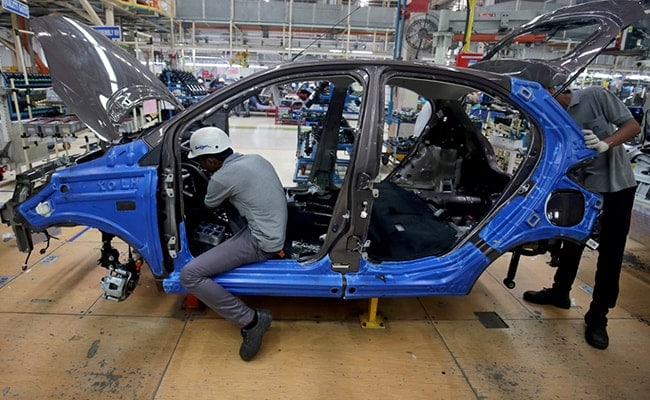
Even as the Indian auto component industry is managing the downturn without major job cuts, there will be job losses to the tune of about 10 lakh if the situation continues, said a top official of the Automotive Component Manufacturers Association of India (ACMA).
"Most of the auto component makers are managing the downturn by reducing the number of working days and retraining the workers. There are job losses. But that is being minimised as we know that getting back a trained worker is difficult," Ram Venkataramani, President, ACMA, told IANS.
According to him, the crisis in the automotive industry is unprecedented. The 15-20 per cent cut in production by vehicle makers has led to a crisis like situation in the auto component sector.
"If the trend continues, an estimated 10 lakh people could be laid-off," Mr Venkataramani said.
The automotive component industry contributes 2.3 per cent to India's gross domestic product (GDP), 25 per cent to its manufacturing GDP and provides employment to 50 lakh people.
Last fiscal year, the industry sales stood at Rs 3.95 lakh crore ($57 billion), logging a growth of 14.5 per cent over the previous year.
"This fiscal the industry may witness a flat growth," Mr Venkataramani said.
According to him, the industry players have made significant investments to roll out products for Bharat Stage VI (BS-VI) emission norm compliant vehicles.
"So, even a slight drop in sales results in huge impact on the bottomline," Mr Venkatramani added.
In Chennai, also called Detroit of India, and its surroundings, which are dotted with auto ancillaries, the downturn is so far being managed without major job losses.
Echoing Mr Venkataramani was S Kannan, president, Centre of Indian Trade Unions (CITU), Kancheepuram District.
"The vehicle and component makers are reducing their contract workers and shutting down production for some days to save costs. Few thousands of contract workers have lost their jobs in Chennai and its surrounding auto and auto component units. If the industry situation continues like this in the next quarter, there will be more job losses," Mr Kannan told IANS.
"The cost cutting measures are such that the office air conditioning systems are switched on at 8 am and turned off at 5 pm So, one cannot sit late in the office and sweat it out, literally. This is done to save power. Work from home is also encouraged," a senior official of an auto ancillary told IANS not wishing to be named.
Listed company Bosch Ltd recently announced five days shutdown at its Gangaikondan plant in Tamil Nadu.
While CITU's Mr Kannan said that the Renault Nissan alliance's car plant is cutting down on contract labour, a company official told IANS that the contracts which have expired are not being renewed though there is no plant shutdown.
"We are studying our distribution costs and seeing how it could be done in a more cost effective manner. Similarly, we are also looking at cutting down the administrative overheads," Gopal Mahadevan, whole-time director and chief financial officer, Ashok Leyland Ltd, recently told the media.
The company is planning to save about Rs 500 crore.
Asked whether reduction in administrative overheads would involve reduction in head count, Mr Mahadevan said instead of reducing the staff, the focus will be on increasing the productivity of each employee.
Production cuts will be on demand projections, he said.
An employee of Ford India told IANS that one night shift in a week has been done away with.
Apart from reduced orders, the auto component industry is also suffering from delayed money flow.
"The credit period for supplies has gone up to 90/120 days from the earlier 60 days. If payment has to be obtained early, a further discount of 2 per cent has to be given," said an industry official.
According to him, poaching of customers with aggressive pricing to increase volumes does not work as vehicle makers are likely to have two suppliers and more so during downturns so that they are not left in the lurch when the industry booms again.

-
Getting To Work Costs Women More | The Reason Why

It is not just about women paying more than men. It is about women paying much more in cities than in villages.
-
AI Bias In Investing Cannot Be Eliminated, But It Can Be Governed
Framing is a particularly important example as identical financial information presented in terms of gains rather than losses can lead an LLM to reach a different assessment.
-
Joining The Dots | Dark Skies, Steady Diya: Why Hope Holds This Diwali
With war, a weak rupee and foreign outflows weighing on sentiment, policymakers at the NDTV World Summit and market veterans at NDTV Profit Ignite: Diwali Edition offered the same advice: stay invested and filter out the noise.
-
The Curious Case of Equitas Small Finance Bank And A CEO Who Quit For Stock
PN Vasudevan believes persistent investor concerns over a perceived conflict of interest had become a governance overhang on Equitas Small Finance Bank's stock, even as the lender improved profitability and asset quality.
-
Talking Points This Week: AI Cash Burn, A Tiger Comeback And An India That Still Finds Its Own Path
India is not immune to higher oil or tighter global liquidity, yet its earnings base is broader, its domestic policy levers are still available.
-
Foreign Investors Own Half Of HDFC Bank and ICICI Bank. An LTCG Cut Could Matter Most Here
Foreign portfolio investors have US$115 billion parked in HDFC Bank, ICICI Bank. If the government cuts long-term capital gains tax, Jefferies says returning foreign money could land here first.
-
'Never Seen This Level Of Negativity': Sandeep Tandon Says The Next Rally May Be Closer Than You Think
Veteran investor Sandeep Tandon says foreign selling is easing, large-caps are due a comeback and mid-caps are crowded, while he turns positive on gold, power and pharma this Diwali.
-
Indians Stay With Family, Not In Hotels | The Reason Why
India still lacks enough clean, reliable and affordable hotels for budget-conscious travellers.
-
The Economic Imperative: Analysing The Material Driving Force Behind India-Canada Strategic Reset
This economic complementarity is further reinforced by deep institutional investment ties and talent mobility, which form the bedrock of the bilateral framework.
-
Medicine Pricing: Where Must Profit Stop?
India must confront excessive margins, hidden incentives and regulatory gaps that threaten the integrity of medicine.










