Auto Industry Bets Big On Scrappage Policy To Revive Demand
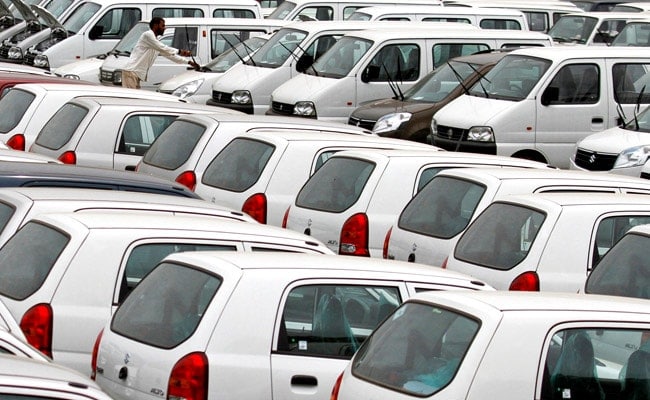
Faced with a massive sales downturn, India's automobile industry is betting big on a scrappage policy to revive demand for the already dented sector.
Accordingly, automobile industry's representatives have sought an 'End of Life' policy from the central government as a measure to arrest the falling sales.
The policy, if implemented, is expected to encourage customers to go in for new purchases which will be backed-up by government incentives in lieu of their old vehicles.
Significantly, the move is considered to be the most vital element in any stimulus package for the industry which has recorded an overall decline of 18.71 per cent in off-take for July, the highest monthly sales de-growth in the last 19 years.
At present, the sector has been impacted by a consumption slowdown which is a culmination of several factors like high GST rates, farm distress, stagnant wages and liquidity constraints.
Besides, inventory pile-up at the dealership level and stock management of unsold BS-IV vehicles have become a problem for the sector.
Consequently, the industry's production levels have also receded as demand plunged, eventually leading to job losses.
"A well defined and sustainable scrappage policy will play a significant role in adding to the demand for vehicles," Grant Thornton India partner Sridhar V told IANS.
"Typically, they should have an end of life in 10 to 15 years and if one were to look at the quantum it could add a few million new buys every year. Based on a recent study by CPCB, some nine million vehicles were obsolete in 2015 and this is expected to grow to 22 million."
Industry insiders opined that an India specific scrappage policy might include both commercial and passenger vehicles.
Apart from few country specific features, the policy is expected to be similar to the US government's program -- Cash for Clunkers -- that provided financial incentives for purchase of fuel-efficient vehicles in exchange for their old vehicles.
Interestingly, the original version of the Indian programme focused more on commercial vehicle segment.
"A limited period cash incentive for replacing old commercial vehicles can rejuvenate the commercial vehicle market and have positive impact on the volumes," said Kavan Mukhtyar, partner and leader - automotive, PwC India.
"Impact on passenger vehicles may vary based on the extent of incentive and nature of regulation."
According to Rahul Mishra from A.T. Kearney: "Globally, several countries have deployed the scrappage program. Germany, US and China introduced short-term programs, while France and England adopted regulation-based retirement to compliment voluntary schemes."
"Introduction of the much-awaited scrappage scheme in India will target the MHCVs and LCVs segments on priority. Therefore, given the state of the market, vehicle retirement will create a demand stimulus for these segments. Other segments are low on impact and have lower priority targets."
Recently, all major OEMs consisting of passenger, commercial, two- and three-wheeler manufacturers have reported a massive decline in domestic sales.
As per SIAM figures, domestic passenger car sales in July plunged by 35.95 per cent to 122,956 units against 191,979 units sold in July 2018.
Overall, passenger vehicle sales declined 30.98 per cent in July to 2,00,790 units against 2,90,931 units in the year-ago month. In the commercial vehicle segment, sales were down by 25.71 per cent to 56,866 units.
In case of two-wheelers, which include scooters, motorcycles and mopeds, the sale edged lower by 16.82 per cent to 15,11,692 units.

-
Getting To Work Costs Women More | The Reason Why

It is not just about women paying more than men. It is about women paying much more in cities than in villages.
-
AI Bias In Investing Cannot Be Eliminated, But It Can Be Governed
Framing is a particularly important example as identical financial information presented in terms of gains rather than losses can lead an LLM to reach a different assessment.
-
Joining The Dots | Dark Skies, Steady Diya: Why Hope Holds This Diwali
With war, a weak rupee and foreign outflows weighing on sentiment, policymakers at the NDTV World Summit and market veterans at NDTV Profit Ignite: Diwali Edition offered the same advice: stay invested and filter out the noise.
-
The Curious Case of Equitas Small Finance Bank And A CEO Who Quit For Stock
PN Vasudevan believes persistent investor concerns over a perceived conflict of interest had become a governance overhang on Equitas Small Finance Bank's stock, even as the lender improved profitability and asset quality.
-
Talking Points This Week: AI Cash Burn, A Tiger Comeback And An India That Still Finds Its Own Path
India is not immune to higher oil or tighter global liquidity, yet its earnings base is broader, its domestic policy levers are still available.
-
Foreign Investors Own Half Of HDFC Bank and ICICI Bank. An LTCG Cut Could Matter Most Here
Foreign portfolio investors have US$115 billion parked in HDFC Bank, ICICI Bank. If the government cuts long-term capital gains tax, Jefferies says returning foreign money could land here first.
-
'Never Seen This Level Of Negativity': Sandeep Tandon Says The Next Rally May Be Closer Than You Think
Veteran investor Sandeep Tandon says foreign selling is easing, large-caps are due a comeback and mid-caps are crowded, while he turns positive on gold, power and pharma this Diwali.
-
Indians Stay With Family, Not In Hotels | The Reason Why
India still lacks enough clean, reliable and affordable hotels for budget-conscious travellers.
-
The Economic Imperative: Analysing The Material Driving Force Behind India-Canada Strategic Reset
This economic complementarity is further reinforced by deep institutional investment ties and talent mobility, which form the bedrock of the bilateral framework.
-
Medicine Pricing: Where Must Profit Stop?
India must confront excessive margins, hidden incentives and regulatory gaps that threaten the integrity of medicine.










