New ATM Cash Withdrawal Rules Kick In. Pay Rs 21 Per Transaction From Today
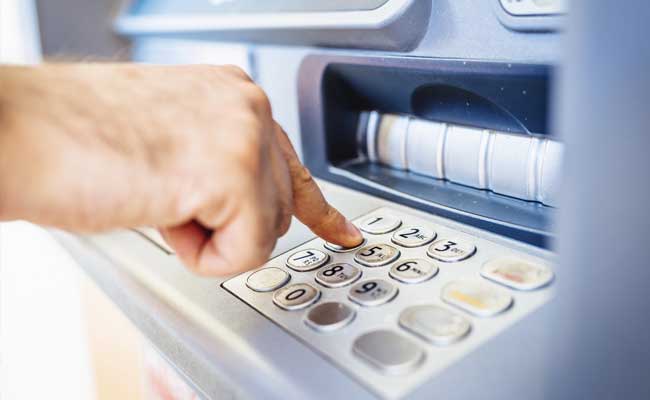
Using ATMs beyond the permissible free transactions for cash as well as non-cash purposes will cost more from Saturday. As per the Reserve Bank directive issued in June, the banking customers would be required to pay Rs 21 per transaction with effect from January 1, 2022 for transactions beyond the free permissible limit. Presently, banks are allowed to charge Rs 20 for such transactions through ATMs.
Customers would, however, continue to be eligible for five free transactions (inclusive of financial and non-financial transactions) every month from their own bank ATMs. They would also be eligible for three free transactions from other bank ATMs in metro centres and five in non-metro centres.
The RBI had earlier allowed banks to increase interchange fee per transaction from Rs 15 to Rs 17 for financial transactions and from Rs 5 to Rs 6 for non-financial transactions in all centres with effect from August 1, 2021.
The charges have been increased to meet the increasing cost of ATM deployment and expenses towards ATM maintenance incurred by banks/white label ATM operators, as also considering the need to balance expectations of stakeholder entities and customer convenience.
It may be noted here that the central bank had set up a committee in June 2019 under the Chairmanship of the Chief Executive, Indian Banks' Association to review the entire gamut of Automated Teller Machine (ATM) charges and fees with particular focus on interchange structure for ATM transactions.
There were 1,15,605 onsite ATMs and 97,970 off-site automated teller machines as on March 31, 2021. About 90 crore debit cards issued by different banks were outstanding at end-March 2021.
The first ATM in India was set up in 1987 by HSBC in Mumbai. In the following twelve years, about 1,500 ATMs were set up in India. In 1997, the Indian Banks' Association (IBA) set up Swadhan, the first network of shared ATMs which allowed interoperable transactions.

-
Signature Play: The Classic Cocktail Is Dead. Or Is It?

Classic cocktails are disappearing from India's cocktail menus. But they're still being ordered, taught to bartenders and borrowed from. So, who's really having the last drink?
-
A New Samvat Wishlist: Inclusive Prosperity And Human Development
India has strengthened its economic foundations through infrastructure, digital access and enterprise. Its next growth chapter must deepen productivity, create better livelihoods and widen participation in prosperity.
-
Love, Sex Aur Dhokha: The Audacious Plot To Spy On Jensen Huang
A Taipei dinner, a Singapore chip buyer and a suspected Chinese asset: inside the alleged spy operation that got close to NVIDIA's Jensen Huang.
-
Ten Things I Learnt This Samvat
Patience can be a trap. Cheap stocks can stay cheap. Leverage can wipe you out. What did Samvat 2082 teach us? Niraj Shah writes on 10 lessons from the year gone by.
-
Talking Points This Week: Tech Nerves, FII Buying, And A Faraway Banking Shock
The global markets are not shining this Diwali. The exception in the large markets is, India.
-
Midterm Rally Lasted A Day. The Hard Reality Of A Divided US May Last Two Years | Opinion
Between a contested AI boom, a debt ceiling that arrives in 2027 and a president with every incentive to act alone, the next two years may prove more volatile than the first day's rally suggests.
-
Blue Wave Will Derail the AI Trade but Won't Dismantle the AI Era | Unhedged Position
The Democrats' sweep of the US Congress will see politics collide with economic forces both over the long and short term.
-
It's Time To Take The GST Council's Bet On Trust Global
Payment records can prove India's services exports, and clear, proportionate rules can bring foreign digital sellers into the tax net.
-
Opinion | India at 38: From Innovation Overperformer to Innovation Powerhouse
India now has 453 VC-backed deep science startups, 18 of them late-stage, after 117 percent growth since 2020. Laurus Labs, at USD 9.3 billion, is the most valuable deep science company in any middle-income economy outside China.









