At Fed Conference, Trumponomics Draws A Not So Subtle Rebuttal
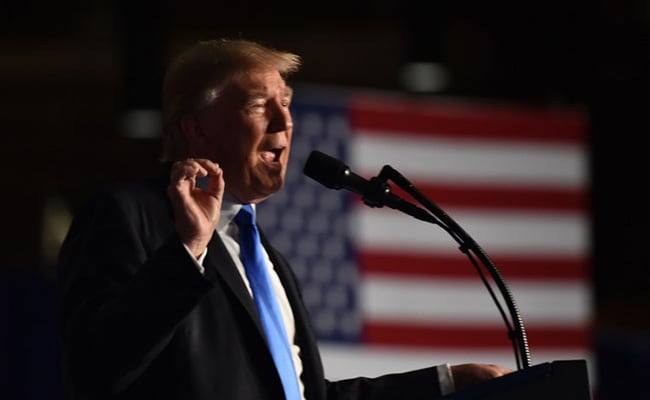
Jackson Hole, Wyoming: US President Donald Trump's name was rarely mentioned as top central bankers and economists spent Friday mulling the fate of the global economy at a mountain lodge here. But his presence loomed large at a Federal Reserve symposium, and even without citing the man in the White House, the presentations - from Fed Chair Janet Yellen, European Central Bank President Mario Draghi and a host of researchers - amounted to a broad rebuttal of many of the ideas that carried Mr Trump to office.
It was a day when the US President's calls for financial deregulation and "America First" economic nationalism were countered by Ms Yellen's reminder of how a deep financial crisis wrecked the economy a decade ago, and economic research arguing that China and Mexico are less to blame for job losses than forces like technology.
"For some, memories of this experience may be fading - memories of just how costly the financial crisis was and of why certain steps were taken," Ms Yellen said in arguing for only modest changes to existing regulations.
Ms Yellen is still in the running to be reappointed by Mr Trump to a new term.
Mr Draghi, travelling from Frankfurt and representing a group of US allies that the administration has sparred with over climate change, trade and other issues, gave a broad call for free trade and stronger multilateral institutions of the sort Mr Trump has criticized.
"A turn towards protectionism would pose a serious risk for continued productivity growth and potential growth in the global economy," Mr Draghi said in a lunch address that included a defence of the World Trade Organization, the Group of 20 and other global groups he felt should be strengthened.
The rise of Mr Trump, the vote by Britain to leave the European Union and the spread of opposition to globalisation have worried central bankers and many mainstream economists who feel that the problems associated with globalisation have overshadowed the benefits and morphed into broad opposition to it.
Remedies for these issues may be outside the immediate sphere of monetary policy, but they are concerned that new waves of protectionism or reckless deregulation could threaten an economic system that is currently stable and that has returned to growth across the world.
Scepticism About Trump Approach
In a panel on trade, there was more direct scepticism of Mr Trump's approach, even as economists and central bankers here agreed they had ignored for too long how difficult the adjustment would be for workers.
"We have lost the rhetoric on trade in terms of explaining to those who benefit why they do, such as cheaper products, while all of the focus has been on those who have lost," said Gita Gopinath, professor of international studies and economics at Harvard University and financial advisor to the chief minister of Kerala.
But they also agreed that Mr Trump's seemingly singular focus on trade agreements won't fix the problem.
"Renegotiating NAFTA and protectionist measures against China will not save jobs," University of Pennsylvania professor Ann Harrison said, arguing that the decline in manufacturing jobs was due to labour-saving management and technologies.
Policy, the economists here said, should be aimed at improving job skills, local capital investment and safety net programs for displaced workers, the sort of micro-level efforts that can be hard to organise and finance and take time to show results.
"It is so much easier to bash China," Ms Harrison said.

-
The Curious Case of Equitas Small Finance Bank And A CEO Who Quit For Stock

PN Vasudevan believes persistent investor concerns over a perceived conflict of interest had become a governance overhang on Equitas Small Finance Bank's stock, even as the lender improved profitability and asset quality.
-
Talking Points This Week: AI Cash Burn, A Tiger Comeback And An India That Still Finds Its Own Path
India is not immune to higher oil or tighter global liquidity, yet its earnings base is broader, its domestic policy levers are still available.
-
Foreign Investors Own Half Of HDFC Bank and ICICI Bank. An LTCG Cut Could Matter Most Here
Foreign portfolio investors have US$115 billion parked in HDFC Bank, ICICI Bank. If the government cuts long-term capital gains tax, Jefferies says returning foreign money could land here first.
-
'Never Seen This Level Of Negativity': Sandeep Tandon Says The Next Rally May Be Closer Than You Think
Veteran investor Sandeep Tandon says foreign selling is easing, large-caps are due a comeback and mid-caps are crowded, while he turns positive on gold, power and pharma this Diwali.
-
Indians Stay With Family, Not In Hotels | The Reason Why
India still lacks enough clean, reliable and affordable hotels for budget-conscious travellers.
-
The Economic Imperative: Analysing The Material Driving Force Behind India-Canada Strategic Reset
This economic complementarity is further reinforced by deep institutional investment ties and talent mobility, which form the bedrock of the bilateral framework.
-
Medicine Pricing: Where Must Profit Stop?
India must confront excessive margins, hidden incentives and regulatory gaps that threaten the integrity of medicine.
-
Why Amazon And Flipkart Are Struggling To Beat Meesho In India's Smaller Cities
With 274 million users and lowest-cost logistics, Meesho is defending its value commerce crown against giants like Amazon and Flipkart.
-
High US Salaries, No Green Card Certainty: The Financial Calculation Facing Indian H-1B Families
The suspension of PERM processing at eight technology employers does not cancel existing H-1B visas. What it does is force a question many Indian families have been avoiding: is the US salary worth tying your career and family plans to one employer?
-
Swiggy vs Eternal: Food Delivery's Two Rivals Are No Longer In The Same Race
Eternal is building a private AI assistant, dark.ai. Swiggy is still working out how to make Instamart pay, with an operating loss of Rs 895 crore in the July-September quarter while Blinkit stayed profitable.










