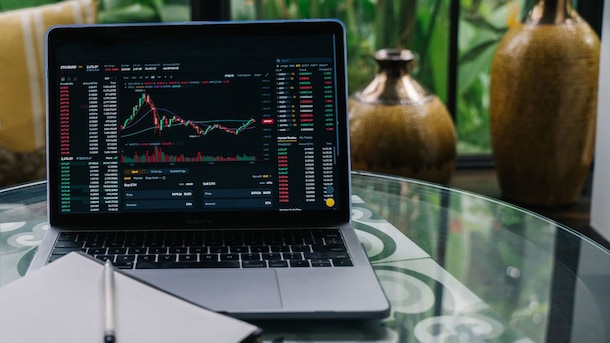
Asian Shares Slump As US Federal Reserve Chief Warns On Inflation
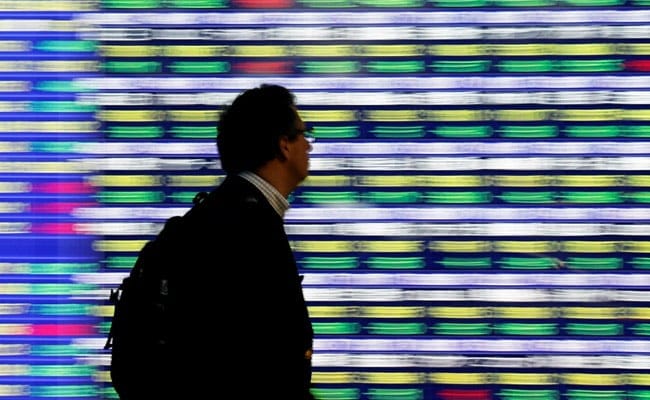
Asian shares fell to their lowest in more than 14 months, short-term U.S. yields rose to 23-month highs and the dollar strengthened on Thursday after the Federal Reserve's chairman signaled plans to steadily tighten policy.
At the same time, rising investor concerns over political tensions between Russia and Ukraine exacerbated worries over tight energy market supply, keeping oil prices elevated at multi-year highs.
In its latest policy update on Wednesday, the Fed indicated it is likely to raise U.S. interest rates in March, as has been widely expected, and reaffirmed plans to end its bond purchases that month before launching a significant reduction in its asset holdings.
But in the follow-up press conference, Powell warned that inflation remains above the Fed's long-run goal and supply chain issues may be more persistent than previously thought.
"There was a marked shift in terms of a relatively dovish statement and then a relatively hawkish press conference," said David Chao, global market strategist, Asia Pacific (ex-Japan) at Invesco.
"Powell (is) not committing to the size or the frequency of rate hikes and also the timing of the balance sheet reduction. I think that buys him a bit of wiggle room as to how quickly and with what velocity he wants to normalise monetary policy in the U.S. ... it's very data dependent and so we're certainly watching other economic data that's going to be released especially inflation data, inflation expectations data, which I think could trigger more aggressive monetary policy tightening."
Concerns that the Fed will increasingly prioritise fighting inflation walloped share markets, erasing a Wall Street rally.
Asian shares also tumbled, with MSCI's broad gauge of regional markets outside Japan down 1.6% in early trade on Thursday at its lowest level since early November 2020.
Hong Kong's Hang Seng index and Australian shares fell 2% and Chinese blue-chips were 0.2% lower.
In Tokyo, the Nikkei fell 1.9%, touching its lowest point since December 2020.
The policy-sensitive U.S. 2-year yield jumped amid expectations of Fed tightening, rising to a top of 1.1780% in morning trade in Asia, a level last reached in February 2020. The benchmark 10-year yield also ticked up from Wednesday's close, rising to 1.8548% from 1.846%.
The dollar rose on the back of higher yields, lifting the U.S. dollar index, which measures the greenback against major peers, to 96.557.
The yen edged slightly higher to 114.57, while the euro weakened to $1.1230.
Adding to global investor concerns, the United States said on Wednesday it had set out a diplomatic path to address sweeping Russian demands in eastern Europe, as Moscow held security talks with Western countries and intensified its military build-up near Ukraine with new drills.
Worries over tensions between Russia and Ukraine had lifted crude prices above $90 per barrel a day earlier, a level last seen in October 2014.
On Thursday, global benchmark Brent crude eased 0.2% but remained just below $90 per barrel at $89.75. U.S. West Texas Intermediate crude was down 0.2% at $87.18 per barrel.
U.S. officials say they are in talks with major energy-producing countries and companies worldwide over a potential diversion of supplies to Europe if Russia invades Ukraine, although the White House said it faces challenges finding alternative sources of energy supplies.
Spot gold slipped 0.1% to $1,816.42 an ounce on the firmer dollar.
(Except for the headline, this story has not been edited by NDTV staff and is published from a syndicated feed.)

-
Talking Points This Week: Tech Nerves, FII Buying, And A Faraway Banking Shock

The global markets are not shining this Diwali. The exception in the large markets is, India.
-
Midterm Rally Lasted A Day. The Hard Reality Of A Divided US May Last Two Years | Opinion
Between a contested AI boom, a debt ceiling that arrives in 2027 and a president with every incentive to act alone, the next two years may prove more volatile than the first day's rally suggests.
-
Blue Wave Will Derail the AI Trade but Won't Dismantle the AI Era | Unhedged Position
The Democrats' sweep of the US Congress will see politics collide with economic forces both over the long and short term.
-
It's Time To Take The GST Council's Bet On Trust Global
Payment records can prove India's services exports, and clear, proportionate rules can bring foreign digital sellers into the tax net.
-
Opinion | India at 38: From Innovation Overperformer to Innovation Powerhouse
India now has 453 VC-backed deep science startups, 18 of them late-stage, after 117 percent growth since 2020. Laurus Labs, at USD 9.3 billion, is the most valuable deep science company in any middle-income economy outside China.
-
Navigating Energy Crossroads: S Jaishankar's Call For Diversified Supply Chains At G20 Ministerial Meeting
As geopolitical fault lines continue to test maritime trade routes and commodity flows, Jaishankar's message remains pertinent: true economic resilience requires open markets, protected transit lines, and a genuine commitment to multilateral cooperation rather than coercion.
-
Indians Are Travelling, But Not Every Journey Is A Holiday | The Week In Whys
Pilgrims, patients and working women are the real travellers, and the system hasn't quite caught up with them.
-
Getting To Work Costs Women More | The Reason Why
It is not just about women paying more than men. It is about women paying much more in cities than in villages.
-
AI Bias In Investing Cannot Be Eliminated, But It Can Be Governed
Framing is a particularly important example as identical financial information presented in terms of gains rather than losses can lead an LLM to reach a different assessment.