Asian Shares Slide As SVB Contagion Worries Hit Banking Sector
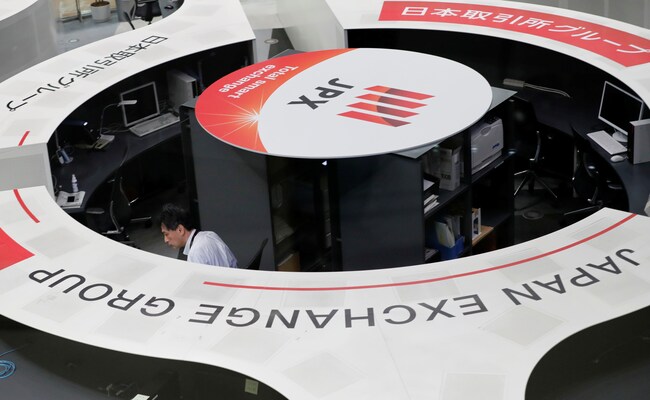
Asia's share markets slid on Tuesday, with Japan's financial stocks leading losses as fear of a U.S. banking crisis gripped investors ahead of crucial inflation data due later in the day.
Fallout from the collapse of U.S. lenders Silicon Valley Bank and Signature Bank widened overnight, despite government efforts to shore up confidence. Heavy selling hit U.S. regional bank stocks and traders raced headlong from bets on U.S. rate hikes, reckoning the Fed would now be thinking twice.
Two-year Treasuries had their biggest rally since 1987, and U.S. interest rate futures soared - with markets pricing out any chance of a 50 basis point rate hike next week and baking in nearly 70 bps of cuts by year end.
On Tuesday, MSCI's broadest index of Asia-Pacific shares outside Japan was down 0.5% in early trade, with financials in Australia dragging the most.
Japan's Nikkei dropped 2%. The Tokyo Stock Exchange's banks index fell 7.4% in early trade, putting it on course for its steepest drop in three years.
"Bank runs have started (and) interbank markets have become stressed," said Damien Boey, chief equity strategist at Sydney-based investment bank Barrenjoey.
"Arguably, liquidity measures should have stopped these dynamics but Main Street has been watching news and queues - not financial plumbing," he said. "Fear has started to feed on itself, and higher uncertainty by itself has triggered its own de-leveraging and de-risking dynamics."
Overnight the VIX volatility index, nicknamed Wall Street's "fear gauge", shot higher and other indicators of market stress showed early signs of strain. The S&P Banking Index fell 7%, its largest one-day percentage drop since June 2020.
Big bank shares including J.P. Morgan, Citigroup, and Wells Fargo all lost ground, but regionals were hit hardest with First Republic Bank down 62%, Western Alliance down 47% and PacWest down 21%.
In Tokyo, Resona Holdings led losses with a 9% slide, followed by Sumitomo Mitsui Financial Group, down 8%.
President Joe Biden sought to reassure depositors by vowing to ensure the safety of the U.S. banking system and the Fed on Sunday announced a new funding mechanism to help banks find ready cash.
Banks can now borrow against the par value - and not the lower market value - of their bond portfolios.
Elsewhere, the dramatic re-pricing of U.S. rate expectations has knocked the U.S. dollar lower. [FRX/]
It was last hovering around 133.25 yen and $1.0718 per euro.
Nerves have capped oil prices, with Brent crude futures pinned near $80 a barrel.
U.S. inflation data due later in the day is likely to inject more volatility, even if investors see the Fed prioritising financial stability.
"The prospect for the market to 'look through' strong U.S. data in the current environment could reduce upside U.S. dollar risk through (the) CPI, which would mark a significant departure from the fully data-dependent environment in place as recently as a few days ago," said NatWest Markets strategist Jan Nevruzi.
(Except for the headline, this story has not been edited by NDTV staff and is published from a syndicated feed.)

-
Why Swapping Your Old Gold Can Trigger A Rs 5 Lakh Tax Bill, And How You Can Avoid It Legally

Swapping old gold for new is taxed as a sale and a fresh purchase. Getting your own gold remade can cut most of that bill, though it has its own costs.
-
The AI Trade is Done. The Real Opportunity for Investors Starts in 2027 | Unhedged Position
As pureplay AI stocks plunge and circular, capex-led financing unwinds, 2027 is set to be a year of reckoning for AI companies. Yet the bust clears the way for a better opportunity for investors in 2027 -- shifting the spotlight from AI builders to the companies using AI.
-
Leadership As Mission: Why The Age Of AI Demands More Human Leadership
Debjani Ghosh examines how AI is changing leadership, arguing that its success must be measured by its impact on people and the accountability of those guiding its use.
-
We May Need Another Tukaram Mundhe To Fight Air Pollution | The Reason Why
Developers may install basic measures such as sprinklers and green nets, resume work, and continue violating rules when this equipment stops working.
-
Extracting Value From Battery Scrap Could Be Challenging For India | The Reason Why
A discarded lithium-ion battery still contains valuable materials such as lithium, nickel and cobalt. These can be recovered and reused. When such batteries are crushed and shredded, they produce a dark powder called black mass.
-
One El Nino, India Can Handle. Two Could Break The Granary
India's grain stocks can absorb one bad year, but a second El Nino could drain the buffer in two to three years, economists say.
-
India's Troika Of Good Luck | Joining The Dots
As Jensen Huang's exit drags Nvidia down, a cooling AI trade and resilient earnings have revived investor interest in India. A likely RBI rate hike looms.
-
Talking Points This Week: Leadership Shock At Nvidia, Earnings Strength, And The Fog Over Hormuz
The Anthropic IPO pricing and first trading day, Nvidia's upcoming earnings, and any fresh signals from Iran will set the tone for the following week.
-
Signature Play: The Classic Cocktail Is Dead. Or Is It?
Classic cocktails are disappearing from India's cocktail menus. But they're still being ordered, taught to bartenders and borrowed from. So, who's really having the last drink?
-
A New Samvat Wishlist: Inclusive Prosperity And Human Development
India has strengthened its economic foundations through infrastructure, digital access and enterprise. Its next growth chapter must deepen productivity, create better livelihoods and widen participation in prosperity.









