Asian Shares Hit 2-Month High After Solid U.S. Job Growth
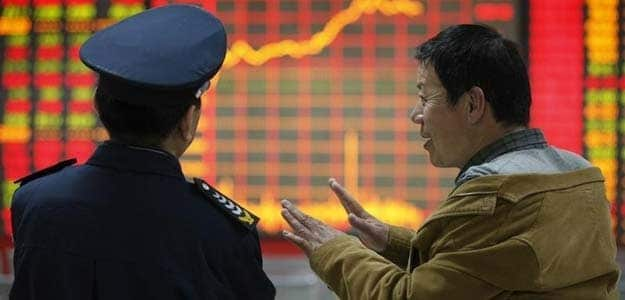
Tokyo: Asian shares hit two-month highs on Monday, extending sharp gains from last week, following upbeat U.S. jobs data and a rebound in oil and commodity prices.
MSCI's broadest index of Asia-Pacific shares outside Japan rose 0.6 per cent. It now recouped about 80 per cent of its losses since the start of 2016.
Japan's Nikkei slipped 0.4 per cent, with traders taking profits on concerns about a firmer yen and ahead of revised fourth-quarter GDP on Tuesday which is expected to show the economy contracted slightly more than initially estimated.
Chinese markets edged up slightly after Prime Minister Li Keqiang on Saturday spelled out a new five-year economic plan, which included an average economic growth target of 6.5-7 per cent and a moderate increase in the fiscal deficit to 3 per cent of GDP this year.
"Chinese investors weren't expecting big fiscal stimulus at all so there's no disappointment there. Talk of fiscal stimulus mainly came from foreigner investors," said Naoki Tashiro, president of TS China Research.
The Shanghai Composite index rose 0.5 per cent. The index of China's start-up market rose 4 percent after Prime Minister Li did not mention IPO liberalisation in his speech, Tashiro added.
MSCI's broadest gauge of the world's stock markets also hit a two-month high on Friday, posting its largest weekly gain since October.
U.S. nonfarm payrolls grew by 242,000 jobs last month, beating forecasts for 190,000 new jobs, while the participation rate rose for three months in a row.
The upbeat figures, coming after data last week showing some signs of recovery in the U.S. manufacturing sector, eased worries that the U.S. economy could be slipping into recession under the weight of low oil prices and a stronger dollar.
"The U.S. job data helped to push back excessive pessimism on the U.S. economy. A brightening U.S. economic outlook is underpinning various risk assets," said Masahiro Ichikawa, senior strategist at Sumitomo Mitsui Asset Management.
On the other hand, average U.S. hourly wages unexpectedly dipped by 0.1 per cent after a surprisingly strong 0.5 per cent increase in January. That suggested the Federal Reserve can afford to wait longer before raising interest rates again.
As a result, U.S. interest rate futures are now pricing in only one rate hike by the end of year, with virtually no chance seen of a rate hike in March.
The U.S. 10-year bond yield rose to a one-month high of 1.902 per cent on Friday but remained way below its levels of around 2.25 per cent in December when the Fed raised rates for the first time in almost a decade.
That limited the dollar's attraction against other currencies. The dollar's index against a basket of six major currencies dipped to near two-week low of 97.019 on Friday and last stood at 97.349.
The euro rose to one-week high of $1.1043 on Friday and last stood at $1.0992.
The common currency has been pressured by anticipation that the European Central Bank will expand its stimulus at a policy meeting on Thursday.
The yen was little changed at 113.88 to the dollar.
The commodity-linked Australian dollar shot up to a 5 1/2-month high of $0.7444 on Friday and last stood at $0.7414.
"AUD/USD eased modestly in early thin Asian trading following the weekend commencement of China's National People's Congress (NPC). There have been no major positive surprises from the NPC so far," Commonwealth Bank currency strategist Joseph Capurso wrote in a note to clients, referring to China's 12-day annual national parliament.
Premier Li Keqiang said on Saturday "we must be prepared for a tough battle" to keep the economy growing, while pushing hard to create more jobs and restructure inefficient industries.
Beijing's draft goal of running a fiscal deficit equivalent to 3 per cent of GDP was a rise from the previous year's target of 2.3 per cent. But some investors had hoped for higher deficit spending, estimating the actual figure in 2015 may have been around 3.5 percent.
Elsewhere, oil prices hit near-three-month highs, extending their gains of about 10 per cent last week as traders close short positions.
Benchmark Brent crude futures rose to as high as $39.50 per barrel, their highest since mid-December.
That is almost a third above its 12-year low hit in February.
(This story has not been edited by NDTV staff and is auto-generated from a syndicated feed.)

-
Gold Is Rs 22,000 Cheaper Than A Month Ago. Should You Buy Amid The Wedding Season?

Gold's potential slide to $3,500 could save around Rs 4,700 per 10 grams, but a soft inflation print could just as easily push prices back up. One way to split the risk is to buy in parts, some now and the rest after the Fed's Dec. 9 decision.
-
AI Agents Are Gaining Power. Who Governs Them?
Artificial intelligence agents promise to transform productivity by moving machines from assisting decisions to executing them. But as organisations delegate greater authority to these AI-agents, they must first establish who controls that authority and who remains accountable when things go wrong.
-
Why Swapping Your Old Gold Can Trigger A Rs 5 Lakh Tax Bill, And How You Can Avoid It Legally
Swapping old gold for new is taxed as a sale and a fresh purchase. Getting your own gold remade can cut most of that bill, though it has its own costs.
-
The AI Trade is Done. The Real Opportunity for Investors Starts in 2027 | Unhedged Position
As pureplay AI stocks plunge and circular, capex-led financing unwinds, 2027 is set to be a year of reckoning for AI companies. Yet the bust clears the way for a better opportunity for investors in 2027 -- shifting the spotlight from AI builders to the companies using AI.
-
Leadership As Mission: Why The Age Of AI Demands More Human Leadership
Debjani Ghosh examines how AI is changing leadership, arguing that its success must be measured by its impact on people and the accountability of those guiding its use.
-
We May Need Another Tukaram Mundhe To Fight Air Pollution | The Reason Why
Developers may install basic measures such as sprinklers and green nets, resume work, and continue violating rules when this equipment stops working.
-
Extracting Value From Battery Scrap Could Be Challenging For India | The Reason Why
A discarded lithium-ion battery still contains valuable materials such as lithium, nickel and cobalt. These can be recovered and reused. When such batteries are crushed and shredded, they produce a dark powder called black mass.
-
One El Nino, India Can Handle. Two Could Break The Granary
India's grain stocks can absorb one bad year, but a second El Nino could drain the buffer in two to three years, economists say.
-
India's Troika Of Good Luck | Joining The Dots
As Jensen Huang's exit drags Nvidia down, a cooling AI trade and resilient earnings have revived investor interest in India. A likely RBI rate hike looms.
-
Talking Points This Week: Leadership Shock At Nvidia, Earnings Strength, And The Fog Over Hormuz
The Anthropic IPO pricing and first trading day, Nvidia's upcoming earnings, and any fresh signals from Iran will set the tone for the following week.









