Asian Shares, Bond Yields, Dollar Up After Trump Tax Plan
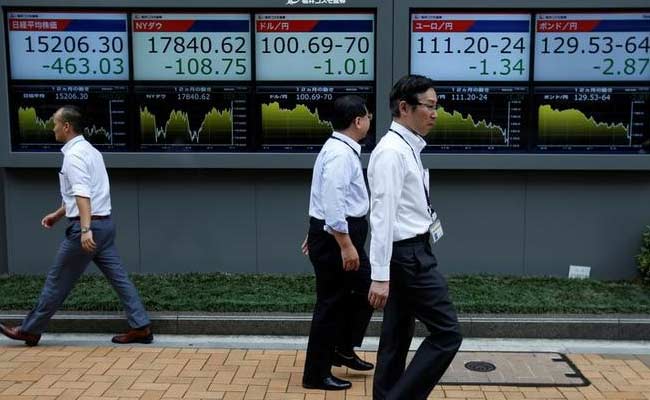
Tokyo: Asian shares were firm on Thursday while U.S. bond yields and the dollar held sizable gains made the previous day after President Donald Trump proposed the biggest U.S. tax overhaul in three decades.
The dollar also drew support from strong U.S. durable goods orders data that cemented expectations the Federal Reserve is on course to raise interest rates for the third time this year in December.
Japan's Nikkei rose 0.5 percent while MSCI's broadest index of Asia-Pacific shares outside Japan was little changed in early trade.
On Wall Street, small-cap shares, seen as benefiting the most from the proposed tax cuts, soared.
Russel 2000 small-cap index notched a record high, rising 1.9 percent for its biggest one-day gain in almost six months.
The Dow Jones Industrial Average rose 0.25 percent while the S&P 500 gained 0.41 percent.
"The fact that Trump made the tax proposal was seen as a step forward," said Hirokazu Kabeya, chief global strategist at Daiwa Securities.
Trump offered to lower corporate income tax rates, cut taxes for small businesses and reduce the top income tax rate for individuals.
The proposal faces an uphill battle in Congress, however, with Trump's own party divided, and the plan already prompting criticism that it favours the rich and companies and could add trillions of dollars to the deficit.
"It is hard to expect this proposal to pass the Congress smoothly. We have to pay attention to how the Republicans will view this," said Takafumi Yamawaki, chief fixed income strategist at J.P. Morgan Securities.
"It is possible that the net fiscal deficit spending will be smaller than what the stock markets expect," he added.
In the currency market, as the dollar broadly gained, the euro hit a six-week low of $1.1717 on Wednesday and last traded at $1.1752, having shed 1.7 percent so far this week.
The dollar also shot up to a 2-1/2-month high of 113.26 yen the previous day and was last fetching 112.78 yen.
The Canadian dollar extended its losses, suffering its biggest drop in eight months on Wednesday, after Bank of Canada Governor Stephen Poloz dampened expectations for further interest rate hikes this year.
The Canadian unit fell to C$1.2484 to the U.S. dollar, its lowest in a month.
The dollar strengthened against many other emerging market currencies while gold hit a one-month low of $1,281.5 per ounce.
U.S. bond yields also jumped with two-year notes yield rising to a nine-year high of 1.483 percent in anticipation of a rate hike in December.
Comments from Fed Chair Janet Yellen that the Fed needs to continue with gradual rate hikes have cemented expectations for a year-end policy tightening.
New orders for key U.S.-made capital goods increased more than expected in August, helping to boost optimism on the U.S. economy.
Yields on longer-dated bonds also soared as Trump's tax proposal stoked worries about fiscal deterioration. U.S. municipal bonds were also sold for the same reason.
The 10-year yield rose to 2.316 percent, its highest in almost two months compared with 2.229 percent late on Tuesday while the 30-year bond yield climbed 9 basis points, the biggest one-day rise in almost seven months, to 2.87 percent.
Oil prices hovered a tad below their peaks hit earlier this week as the market consolidated after a strong rally this month.
Brent futures traded at $57.71 a barrel, down from Tuesday's 26-month peak of $59.49.
U.S. West Texas Intermediate crude (WTI) fetched $52.11 per barrel, just below Tuesday's five-month high of $52.43 after oil stockpiles in the world's top consumer unexpectedly drew down, with refiners coming back online following Hurricane Harvey last month.
(This story has not been edited by NDTV staff and is auto-generated from a syndicated feed.)

-
Getting To Work Costs Women More | The Reason Why

It is not just about women paying more than men. It is about women paying much more in cities than in villages.
-
AI Bias In Investing Cannot Be Eliminated, But It Can Be Governed
Framing is a particularly important example as identical financial information presented in terms of gains rather than losses can lead an LLM to reach a different assessment.
-
Joining The Dots | Dark Skies, Steady Diya: Why Hope Holds This Diwali
With war, a weak rupee and foreign outflows weighing on sentiment, policymakers at the NDTV World Summit and market veterans at NDTV Profit Ignite: Diwali Edition offered the same advice: stay invested and filter out the noise.
-
The Curious Case of Equitas Small Finance Bank And A CEO Who Quit For Stock
PN Vasudevan believes persistent investor concerns over a perceived conflict of interest had become a governance overhang on Equitas Small Finance Bank's stock, even as the lender improved profitability and asset quality.
-
Talking Points This Week: AI Cash Burn, A Tiger Comeback And An India That Still Finds Its Own Path
India is not immune to higher oil or tighter global liquidity, yet its earnings base is broader, its domestic policy levers are still available.
-
Foreign Investors Own Half Of HDFC Bank and ICICI Bank. An LTCG Cut Could Matter Most Here
Foreign portfolio investors have US$115 billion parked in HDFC Bank, ICICI Bank. If the government cuts long-term capital gains tax, Jefferies says returning foreign money could land here first.
-
'Never Seen This Level Of Negativity': Sandeep Tandon Says The Next Rally May Be Closer Than You Think
Veteran investor Sandeep Tandon says foreign selling is easing, large-caps are due a comeback and mid-caps are crowded, while he turns positive on gold, power and pharma this Diwali.
-
Indians Stay With Family, Not In Hotels | The Reason Why
India still lacks enough clean, reliable and affordable hotels for budget-conscious travellers.
-
The Economic Imperative: Analysing The Material Driving Force Behind India-Canada Strategic Reset
This economic complementarity is further reinforced by deep institutional investment ties and talent mobility, which form the bedrock of the bilateral framework.
-
Medicine Pricing: Where Must Profit Stop?
India must confront excessive margins, hidden incentives and regulatory gaps that threaten the integrity of medicine.










