Asian Shares Edge Higher, But Wary Of Fed Words; Indian Markets Closed
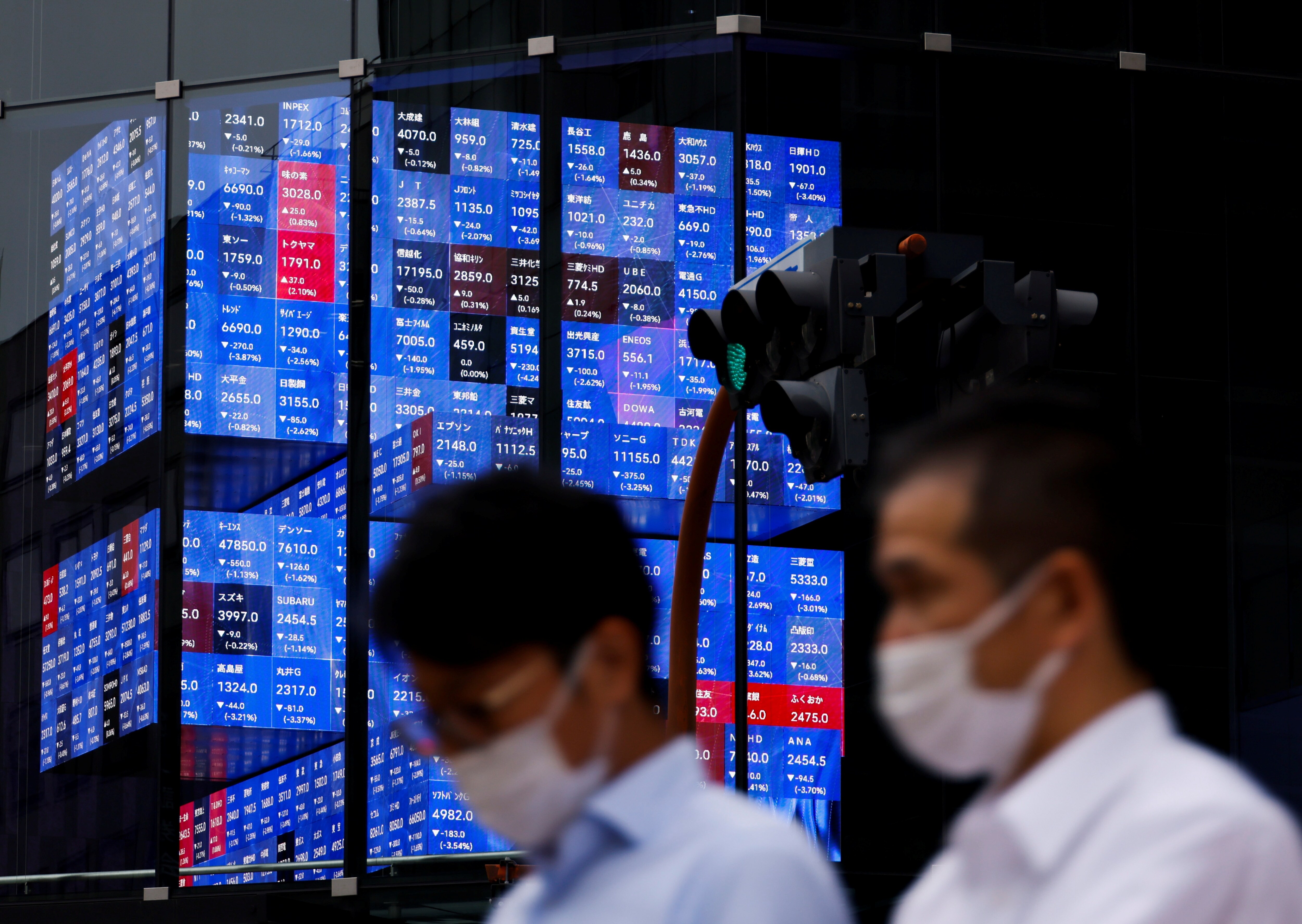
Asian shares inched higher on Monday with investors anxious to see if Wall Street can sustain its rally as hopes US inflation has peaked will be tested by likely hawkish commentary from the Federal Reserve this week.
"The FOMC Minutes on Wednesday should reinforce the hawkish tones from recent Fed speakers of being nowhere near being done on rates and inflation," warned Tapas Strickland, a director of economics at NAB.
Markets are still implying around a 50 per cent chance the Fed will hike by 75 basis points in September and that rates will rise to around 3.50-3.75 per cent by the end of the year.
Hopes for a soft economic landing will also get a health check from US retail sales data that is expected to show a sharp slowdown in spending in July.
There is also a risk earnings from major retailers, including Walmart and Target, could be laced with warnings about a downturn in demand.
Asian markets have to navigate data on China's retail sales and industrial output for July due later on Monday, which should show some pick up as coronavirus rules were relaxed.
However, figures already out showed new bank lending in China tumbled more than expected in July.
Geopolitical risks also remain high with a delegation of U.S. lawmakers in Taiwan for a two-day trip.
Early Monday, MSCI's broadest index of Asia-Pacific shares outside Japan firmed 0.1 per cent, having bounced 0.9 per cent last week.
Japan's Nikkei edged up 0.5 per cent as data showed the economy grew an annualised 2.2 per cent in the second quarter, a touch under estimates.
S&P 500 futures and Nasdaq futures were both down around 0.2 per cent. The S&P index is almost 17 per cent above its mid-June lows and only 11 per cent from all-time highs amid bets the worst of inflation is past, at least in the United States.
Peak Inflation
"The leading indicators we observe provide support for moderation with easing supply pressures, weakening demand, collapsing money supply, declining prices and falling expectations," said analysts at BofA.
"Key components of headline inflation, including food and energy are also at an inflection point. Both Wall Street and Main Street now expect inflation to moderate."
The bond market still seems to doubt the Fed can manufacture a soft landing, with the yield curve still deeply inverted. Two-year yields at 3.26 per cent are 42 basis points above those for 10-year notes.
Those yields have underpinned the US dollar, though it did slip 0.8 per cent against a basket of currencies last week as risk sentiment improved.
The euro was holding at $1.0259, having bounced 0.8% last week, though it shied away from resistance around $1.0368. Against the yen, the dollar steadied at 133.36 after losing 1 per cent last week.
"Our sense remains that the dollar rally will resume before too long," argued Jonas Goltermann, a senior economist at Capital Economics.
"It will take a lot more good news on inflation before the Fed changes tack. The minutes from the last FOMC meeting and the Jackson Hole conference may well push back further against the notion that the Fed is 'pivoting'."
The pullback in the dollar provided something of a reprieve for gold which was up at $1,799 an ounce, having gained 1 per cent last week.
Oil prices eased early on Monday with traders cautious in case progress was made on a possible European-brokered nuclear deal with Iran.
Brent slipped 43 cents to $97.72, while US crude fell 36 cents to $91.73 per barrel.

-
The Economic Imperative: Analysing The Material Driving Force Behind India-Canada Strategic Reset

This economic complementarity is further reinforced by deep institutional investment ties and talent mobility, which form the bedrock of the bilateral framework.
-
Medicine Pricing: Where Must Profit Stop?
India must confront excessive margins, hidden incentives and regulatory gaps that threaten the integrity of medicine.
-
Why Amazon And Flipkart Are Struggling To Beat Meesho In India's Smaller Cities
With 274 million users and lowest-cost logistics, Meesho is defending its value commerce crown against giants like Amazon and Flipkart.
-
High US Salaries, No Green Card Certainty: The Financial Calculation Facing Indian H-1B Families
The suspension of PERM processing at eight technology employers does not cancel existing H-1B visas. What it does is force a question many Indian families have been avoiding: is the US salary worth tying your career and family plans to one employer?
-
Swiggy vs Eternal: Food Delivery's Two Rivals Are No Longer In The Same Race
Eternal is building a private AI assistant, dark.ai. Swiggy is still working out how to make Instamart pay, with an operating loss of Rs 895 crore in the July-September quarter while Blinkit stayed profitable.
-
Where You Live Shapes How You Get To Work | The Reason Why
Two-wheelers are the most popular way to get to work in India, accounting for nearly 43% of workplace commutes.
-
Unhedged Position: Can India See An Indonesia-Style Time Correction?
The Nifty is trading below levels it first clocked in 2024. Is there, then, as I have suggested in the headline, potential that the current time correction drags on painfully for the next three-five, even ten years?
-
Navigating Friction And Energy Realities: An Analysis Of Marco Rubio's October Visit To India
Occurring at a critical juncture marked by stalled trade negotiations and escalating geopolitical pressures over global energy supplies, the visit offers a profound window into modern US-India relations.
-
India Exports Capital. Why Not Export Trusteeship?
The big question, then, is whether India can build an institution that global borrowers, investors, banks, and lawyers can trust, even without an Indian connection.
-
France's Economy & Politics Are In Crisis | The Reason Why
Let's look at how the French economy and politics evolved under Nicolas Sarkozy, Franois Hollande and Emmanuel Macron.










