Asia’s Factories Grapple With Rising Costs Amid Israel-Hamas War
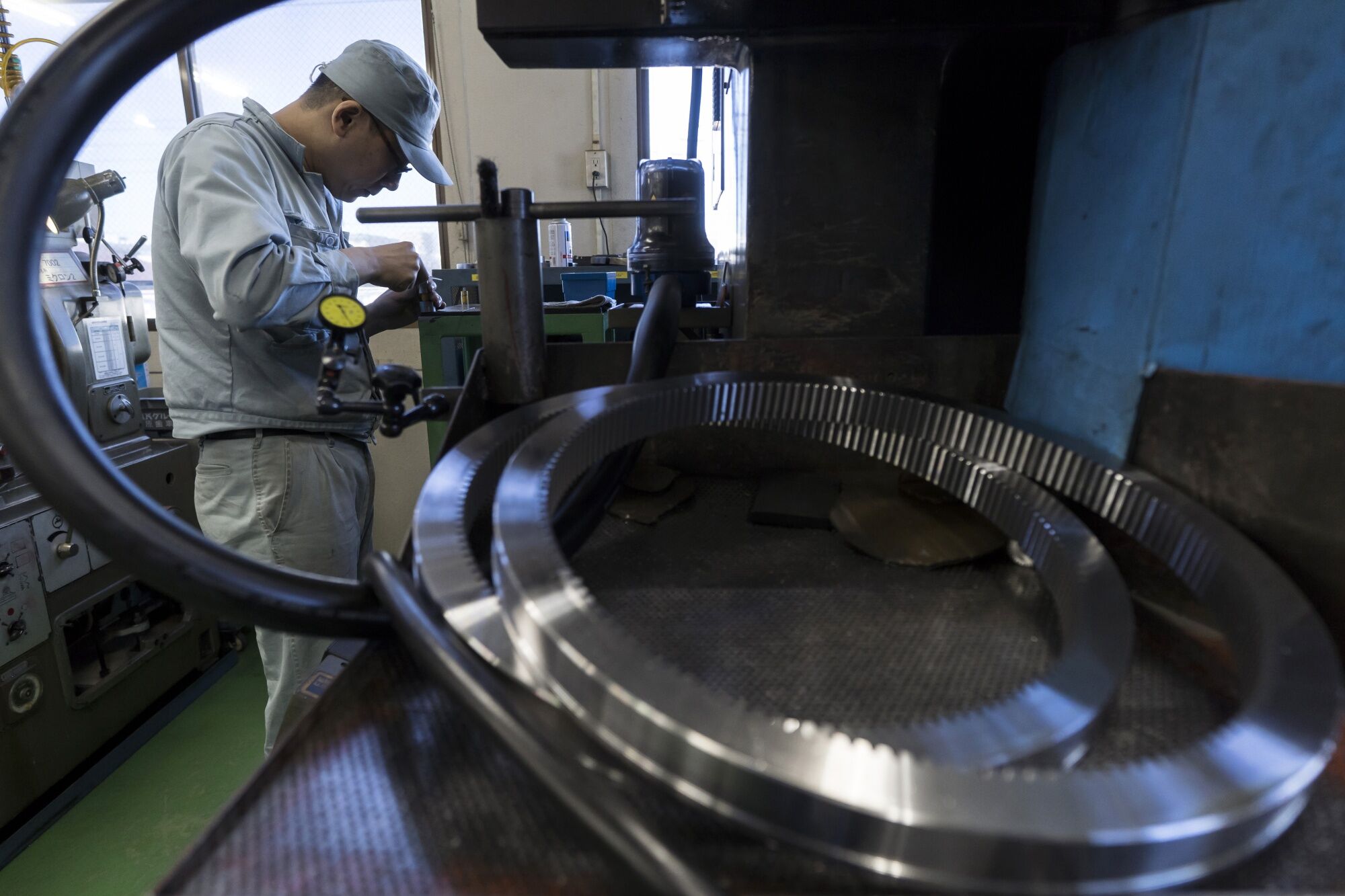
(Bloomberg) -- Manufacturing activity in Asia slumped again in October as conflict in the Middle East drove oil prices higher, costs rose and global demand remained under pressure.
Most countries across the region reported pressures from cost inflation, shrinking output and new orders, according to manufacturing purchasing managers' indexes published Wednesday by S&P Global and au Jibun Bank. Japan and South Korea remained in contraction at 48.7 and 49.8, respectively, little changed from the prior month.
A reading above 50 indicates an expansion in activity, while anything below suggests contraction.

“The rate of inflation was robust and the strongest seen in the year to date amid reports of higher raw material prices, notably those linked to oil,” said Usamah Bhatti, economist at S&P Global Market Intelligence, in a statement accompanying the South Korean data.
Bhatti also noted that firms had mentioned unfavorable exchange rates as their currencies came under pressure, leading to higher input costs.
The latest data are a discouraging sign for a global economy that has been trying to recover from the worst of its downturn. Asia — which makes much of the world's goods — has struggled to ramp up production this year amid patchy demand from economies including the US, Europe and China.
While oil prices are beginning to cool again, the conflict between Israel and Hamas led to volatility in crude over the month — just as many Asian factories had begun to enjoy cooling inflation and widening profit margins. Crude costs may surge further this quarter if a broader conflict erupts in the Middle East. Elevated interest rates — or ones that climb even higher — would crimp any plans to expand manufacturing activity.
Most of Southeast Asia — which has typically been able to rely on the strength of its domestic markets to power growth — was in contraction in October. PMIs for Vietnam, Myanmar and Thailand deteriorated, while Malaysia was unchanged. Only Indonesia managed to expand in October from the prior month, though the rate of growth was slower.
Trade bellwether Taiwan — which has seen PMI contract for more than a year — recorded a reading of 47.6 in October. The best reading in seven months suggested that the decline in activity in the economy is becoming less severe.
The stop-start recovery is also evident in China, where an official gauge this week showed factory activity shrank in October, reversing September's return to expansion. While that partly reflected seasonal factors from a stretch of public holidays, it also suggested market demand is still weak.
More stories like this are available on bloomberg.com
©2023 Bloomberg L.P.

-
Talking Points This Week: Leadership Shock At Nvidia, Earnings Strength, And The Fog Over Hormuz

The Anthropic IPO pricing and first trading day, Nvidia's upcoming earnings, and any fresh signals from Iran will set the tone for the following week.
-
Signature Play: The Classic Cocktail Is Dead. Or Is It?
Classic cocktails are disappearing from India's cocktail menus. But they're still being ordered, taught to bartenders and borrowed from. So, who's really having the last drink?
-
A New Samvat Wishlist: Inclusive Prosperity And Human Development
India has strengthened its economic foundations through infrastructure, digital access and enterprise. Its next growth chapter must deepen productivity, create better livelihoods and widen participation in prosperity.
-
Love, Sex Aur Dhokha: The Audacious Plot To Spy On Jensen Huang
A Taipei dinner, a Singapore chip buyer and a suspected Chinese asset: inside the alleged spy operation that got close to NVIDIA's Jensen Huang.
-
Ten Things I Learnt This Samvat
Patience can be a trap. Cheap stocks can stay cheap. Leverage can wipe you out. What did Samvat 2082 teach us? Niraj Shah writes on 10 lessons from the year gone by.
-
Talking Points This Week: Tech Nerves, FII Buying, And A Faraway Banking Shock
The global markets are not shining this Diwali. The exception in the large markets is, India.
-
Midterm Rally Lasted A Day. The Hard Reality Of A Divided US May Last Two Years | Opinion
Between a contested AI boom, a debt ceiling that arrives in 2027 and a president with every incentive to act alone, the next two years may prove more volatile than the first day's rally suggests.
-
Blue Wave Will Derail the AI Trade but Won't Dismantle the AI Era | Unhedged Position
The Democrats' sweep of the US Congress will see politics collide with economic forces both over the long and short term.
-
It's Time To Take The GST Council's Bet On Trust Global
Payment records can prove India's services exports, and clear, proportionate rules can bring foreign digital sellers into the tax net.
-
Opinion | India at 38: From Innovation Overperformer to Innovation Powerhouse
India now has 453 VC-backed deep science startups, 18 of them late-stage, after 117 percent growth since 2020. Laurus Labs, at USD 9.3 billion, is the most valuable deep science company in any middle-income economy outside China.









