As Rupee Tumbles, Bonds Lose Their Charm For Foreign Investors
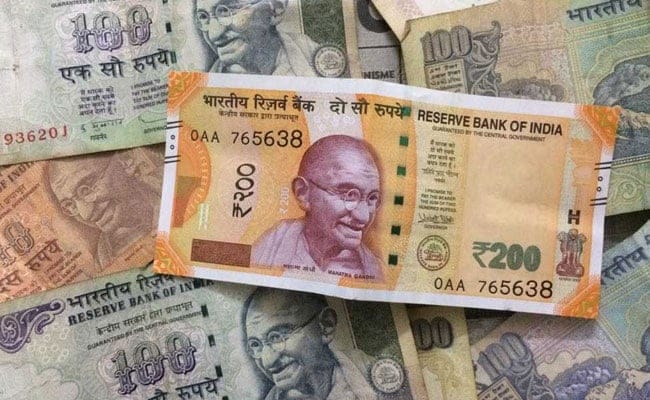
Mumbai: After betting strongly on Indian bonds last year, foreign investors are cutting their holdings as a tumbling rupee erodes their returns and economic risks cloud the outlook of a once-hot emerging market play.
With only three trading sessions left in March, foreign investors have sold a net $1.12 billion in Indian debt, the strongest monthly outflow since December 2016, and are now on the verge of turning net sellers for the year so far.
Overseas investors had previously proven remarkably resilient, helping support debt markets at a time when tumbling bond prices had spooked domestic players, with the benchmark 10-year yield up around 110 basis points since the end of July.
But a near 2 percent fall in the rupee this year is now starting to erode returns for foreign investors at a time when emerging markets continue to lose favour as rising U.S. interest rates narrow the yield differentials.
More problematically for India, foreign investors say outflows also reflect rising economic concerns.
Chief among those concerns is inflation, which has stayed above the Reserve Bank of India's 4 percent target for five consecutive months, feeding fears the central bank could hike its policy rate as early as this year.
Rising energy prices are widening India's trade and current account deficits, while the government has also loosened its fiscal deficit targets to finance increased spending ahead of general elections due by 2019.
Ashley Perrott, head of pan-Asia fixed income at UBS Asset Management in Singapore, is one cautious foreign investor holding back from adding investments.
"India has had a few negative aspects circling around, besides bonds and currency moves," he said.
"There are some signs sentiment is improving, but I expect we will wait to see if this increase in confidence and stability in the market continues over the next few weeks or months before deciding to add exposure."
This reduced confidence comes after foreign funds had bought $26.3 billion in Indian bonds in 2017, as a nearly 6 percent rise in the rupee helped deliver returns of around 7 percent, one of the highest in Asia.
Those flows had led foreign investors to use up almost all of the allocation of Indian government debt to foreign investors, which is capped at 5 percent of total outstanding securities, or around $40 billion.
But returns on Indian bonds have turned a negative 2 percent since the start of 2018, traders said, the second-worst performance for Asian bonds after the Philippines, as the weak rupee erodes returns.
The rupee has also turned more temperamental, with an overnight implied volatility of 6.6 percent, up from 4.9 percent at the same period last year, according to traders.
Such performance gauges are leading even long-time India bulls to seek opportunities elsewhere.
Kenneth Akintewe, head of Asian Sovereign Debt at Aberdeen Standard Investments in Singapore, says his team continues to be bullish on India, which remains a key overweight position, but are also looking at other opportunities around the region given the recent rise in market volatility.
"With higher volatility we have seen opportunities opening up elsewhere, such as Indonesia, Philippines and even China," he said.
"There have been markets that performed better like Thailand, which has seen strong currency performance, supported by its robust current account fundamentals."
(Except for the headline, this story has not been edited by NDTV staff and is published from a syndicated feed.)

-
We May Need Another Tukaram Mundhe To Fight Air Pollution | The Reason Why

Developers may install basic measures such as sprinklers and green nets, resume work, and continue violating rules when this equipment stops working.
-
Extracting Value From Battery Scrap Could Be Challenging For India | The Reason Why
A discarded lithium-ion battery still contains valuable materials such as lithium, nickel and cobalt. These can be recovered and reused. When such batteries are crushed and shredded, they produce a dark powder called black mass.
-
One El Nino, India Can Handle. Two Could Break The Granary
India's grain stocks can absorb one bad year, but a second El Nino could drain the buffer in two to three years, economists say.
-
India's Troika Of Good Luck | Joining The Dots
As Jensen Huang's exit drags Nvidia down, a cooling AI trade and resilient earnings have revived investor interest in India. A likely RBI rate hike looms.
-
Talking Points This Week: Leadership Shock At Nvidia, Earnings Strength, And The Fog Over Hormuz
The Anthropic IPO pricing and first trading day, Nvidia's upcoming earnings, and any fresh signals from Iran will set the tone for the following week.
-
Signature Play: The Classic Cocktail Is Dead. Or Is It?
Classic cocktails are disappearing from India's cocktail menus. But they're still being ordered, taught to bartenders and borrowed from. So, who's really having the last drink?
-
A New Samvat Wishlist: Inclusive Prosperity And Human Development
India has strengthened its economic foundations through infrastructure, digital access and enterprise. Its next growth chapter must deepen productivity, create better livelihoods and widen participation in prosperity.
-
Love, Sex Aur Dhokha: The Audacious Plot To Spy On Jensen Huang
A Taipei dinner, a Singapore chip buyer and a suspected Chinese asset: inside the alleged spy operation that got close to NVIDIA's Jensen Huang.
-
Ten Things I Learnt This Samvat
Patience can be a trap. Cheap stocks can stay cheap. Leverage can wipe you out. What did Samvat 2082 teach us? Niraj Shah writes on 10 lessons from the year gone by.
-
Talking Points This Week: Tech Nerves, FII Buying, And A Faraway Banking Shock
The global markets are not shining this Diwali. The exception in the large markets is, India.









