Notes Ban Zapped 86% Cash But Impact Was "Much Less": Arvind Subramanian
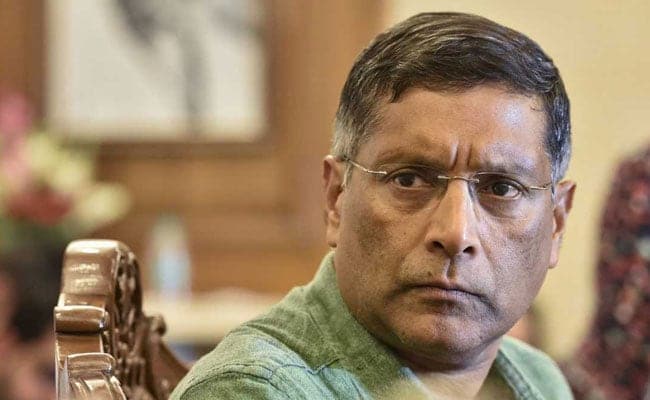
Drawing the link between demonetisation and GDP numbers, former Chief Economic Advisor Arvind Subramanian has said the puzzle thrown up by the note ban has a dual aspect - whether its impact as seen in the GDP (gross domestic product) numbers reflects a resilient economy, and whether the growth figures pose questions about the official data collection process itself. Speaking on his new book, titled 'Of Counsel: The Challenges of the Modi-Jaitley Economy', Mr Subramanian said he is drawing attention to "the big puzzle" of 86 per cent reduction in cash after the notes ban leading to a "much less" impact on the economy.
In an interaction with news agency IANS, Mr Subramanian, currently teaching at Harvard Kennedy School, and here for the launch of his book, referred to the chapter 'The Two Puzzles of Demonetisation -- Political and Economic'.
"Through my new book, I am drawing attention to the puzzle, the big puzzle of 86 per cent reduction in cash after demonetisation, and yet the impact on the economy was much less," he said.
"The puzzles essentially spring from the fact of why the measure was politically successful, and why GDP was affected in such smaller measure... Is it because we're not measuring GDP correctly, not measuring the informal sector, or is it the underlying resilience in the economy?" he said.
"In the six quarters before demonetisation, growth averaged 8 per cent and in the seven quarters after, it averaged about 6.8 per cent (with a four-quarter window, the relevant numbers are 8.1 per cent before and 6.2 per cent after)," Mr Subramanian writes in his book.
"The key to this would lie in a comprehensive understanding of both the polity and economy of India, about how people vote, for instance."
He referred to the ongoing controversy on the NITI Aayog's presence at the release of the GDP back series data by the Central Statistics Office (CSO) with a change of base year, lowering the country's economic growth rate during the previous UPA rule.
"I think the calculation of GDP is a very technical task and technical experts should do the job...institutions that don't have technical expertise should not be involved in this," he said.
"Economists would naturally raise questions when the parameters vary so much and yet growth remains similar. It is not so much about credibility of the data as about the data generating process itself and of the institutions that carry it out," he added.
Asked whether he was a participant in the decision-making process on demonetisation, the former chief economic advisor said: "As I've said in the book, it is not a kiss and tell memoir...that is for gossip columnists."
Asked about the recent tiff between the government and the Reserve Bank of India (RBI), Mr Subramanian said the autonomy of the central bank must be protected because the country will benefit by having strong institutions.
"I have myself advocated that RBI should play a pro-active role, but its surplus funds should not go towards routine financing of spending and deficit financing -- that would amount to raiding the RBI," he said.
The government's differences with the RBI centres on four issues -- the former wants liquidity support to head off any credit freeze risk, a relaxation in capital requirements for lenders, relaxing the Prompt Corrective Action rules for banks struggling with accumulated NPAs (non-performing assets), or bad loans, and support for micro, small and medium enterprises.
Central to the liquidity issue was the government's demand that the RBI hand over its surplus reserves by making changes to the "economic capital framework".
On the RBI board, which has a majority of government nominees, he said: "I think that part of maintaining a real autonomy is not to politicise the board. The board should not be politicised. Not only it must not be done, it must not be seen to be done either."
On the other puzzle of domestic divergences in development, he said the reasons could be historical in the form of the unequal impact of British colonialism in different regions of the country.

-
AI Bias In Investing Cannot Be Eliminated, But It Can Be Governed

Framing is a particularly important example as identical financial information presented in terms of gains rather than losses can lead an LLM to reach a different assessment.
-
Joining The Dots | Dark Skies, Steady Diya: Why Hope Holds This Diwali
With war, a weak rupee and foreign outflows weighing on sentiment, policymakers at the NDTV World Summit and market veterans at NDTV Profit Ignite: Diwali Edition offered the same advice: stay invested and filter out the noise.
-
The Curious Case of Equitas Small Finance Bank And A CEO Who Quit For Stock
PN Vasudevan believes persistent investor concerns over a perceived conflict of interest had become a governance overhang on Equitas Small Finance Bank's stock, even as the lender improved profitability and asset quality.
-
Talking Points This Week: AI Cash Burn, A Tiger Comeback And An India That Still Finds Its Own Path
India is not immune to higher oil or tighter global liquidity, yet its earnings base is broader, its domestic policy levers are still available.
-
Foreign Investors Own Half Of HDFC Bank and ICICI Bank. An LTCG Cut Could Matter Most Here
Foreign portfolio investors have US$115 billion parked in HDFC Bank, ICICI Bank. If the government cuts long-term capital gains tax, Jefferies says returning foreign money could land here first.
-
'Never Seen This Level Of Negativity': Sandeep Tandon Says The Next Rally May Be Closer Than You Think
Veteran investor Sandeep Tandon says foreign selling is easing, large-caps are due a comeback and mid-caps are crowded, while he turns positive on gold, power and pharma this Diwali.
-
Indians Stay With Family, Not In Hotels | The Reason Why
India still lacks enough clean, reliable and affordable hotels for budget-conscious travellers.
-
The Economic Imperative: Analysing The Material Driving Force Behind India-Canada Strategic Reset
This economic complementarity is further reinforced by deep institutional investment ties and talent mobility, which form the bedrock of the bilateral framework.
-
Medicine Pricing: Where Must Profit Stop?
India must confront excessive margins, hidden incentives and regulatory gaps that threaten the integrity of medicine.
-
Why Amazon And Flipkart Are Struggling To Beat Meesho In India's Smaller Cities
With 274 million users and lowest-cost logistics, Meesho is defending its value commerce crown against giants like Amazon and Flipkart.










