Arun Jaitley Clarifies On New Rs 5,000 Deposit Rule
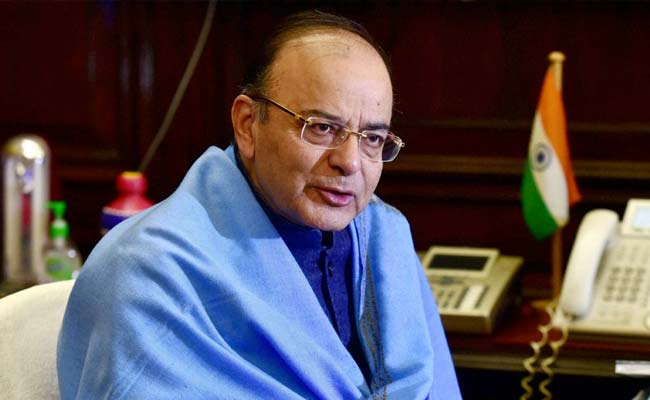
New Delhi: After tightening rules for depositing old Rs 500 and Rs 1,000 notes, Finance Minister Arun Jaitley on Monday night said no questions will be asked if any amount of the junked currency is deposited in one go but repeated deposits may raise queries.
With nearly Rs 13 lakh crore out of the Rs 15.4 lakh crore worth of Rs 500 and Rs 1,000 junked already deposited in banks, the government has changed rules to mandate that individuals can deposit over Rs 5,000 in old currency bills only once until December 30 and that too after explaining why it had not been done so far. (Read: Old notes above Rs 5,000 can be deposited only once)
Explaining the rationale behind the move, the finance minister said all exemptions to certain sectors and utilities, which had been allowed to accept the banned currency post-demonetisation, ended last week and all those in possession of the old notes are supposed to deposit them with banks.
"Anyone who has old currency notes is not allowed to trade in them. He can only go and deposit them with banks," he said.
With a view to curtail queues at banks, holders are encouraged to deposit the entire holding in one go, rather than going repeatedly.
"If they go and deposit with bank any amount of currency no questions are going to be asked to them and therefore the 5000 rupee limit does not apply to them if they go and deposit it once."
"But if they are going to go everyday and deposit some currency, same person, that gives rise to suspicion that where is he acquiring this currency from. In that event a person may have something to worry about. Therefore everyone is advised whatever old currency you have please go and deposit it now," Mr Jaitley said.
Since there is no scope now for earning any old currency because all exemptions have been waived, it makes sense to go deposit all the holding in one go, Mr Jaitley further said.
"This is the objective of the order passed today."
After banning old Rs 500 and Rs 1,000 notes on November 8, the government had allowed all of the cash holdings with any person to be deposited in bank accounts till December 30.
There was no limit on the quantity or value of the junked notes that could be deposited.
However, the government on December 17 issued a gazette notification putting restrictions on deposits henceforth.
"The deposits of old notes of Rs 500 and Rs 1,000 denominations have been reviewed by the government from time to time. Already more than five weeks have elapsed since the time of the announcement of the cancellation of the legal tender character of these notes. It is expected that, by now, most of the people would have deposited such old notes in their possession," an official statement said.
With a view to "reduce the queues in the banks", the government said it has now been decided that "amounts exceeding Rs 5,000 in old notes can be deposited only once between now and December 30, 2016".
"The banks have been advised to conduct due diligence regarding the reasons for not depositing these notes earlier," the statement said.
Amounts of Rs 5,000 or less may continue to be deposited with banks in the customer's account, at present.
"However, cumulative deposits exceeding Rs 5,000 between December 19 and December 30, 2016 will be as per the procedures advised by the RBI in respect of deposits exceeding Rs 5,000," it said.
The Reserve Bank of India (RBI) too came out with a deposits guideline stipulating that restrictive conditions will also apply on the cumulative deposit of such notes in a single account when it exceeds Rs 5,000.
However, the defunct currency up to any amount can be deposited under the new black money amnesty scheme, PMGKY.

-
Indians Are Travelling, But Not Every Journey Is A Holiday | The Week In Whys

Pilgrims, patients and working women are the real travellers, and the system hasn't quite caught up with them.
-
Getting To Work Costs Women More | The Reason Why
It is not just about women paying more than men. It is about women paying much more in cities than in villages.
-
AI Bias In Investing Cannot Be Eliminated, But It Can Be Governed
Framing is a particularly important example as identical financial information presented in terms of gains rather than losses can lead an LLM to reach a different assessment.
-
Joining The Dots | Dark Skies, Steady Diya: Why Hope Holds This Diwali
With war, a weak rupee and foreign outflows weighing on sentiment, policymakers at the NDTV World Summit and market veterans at NDTV Profit Ignite: Diwali Edition offered the same advice: stay invested and filter out the noise.
-
The Curious Case of Equitas Small Finance Bank And A CEO Who Quit For Stock
PN Vasudevan believes persistent investor concerns over a perceived conflict of interest had become a governance overhang on Equitas Small Finance Bank's stock, even as the lender improved profitability and asset quality.
-
Talking Points This Week: AI Cash Burn, A Tiger Comeback And An India That Still Finds Its Own Path
India is not immune to higher oil or tighter global liquidity, yet its earnings base is broader, its domestic policy levers are still available.
-
Foreign Investors Own Half Of HDFC Bank and ICICI Bank. An LTCG Cut Could Matter Most Here
Foreign portfolio investors have US$115 billion parked in HDFC Bank, ICICI Bank. If the government cuts long-term capital gains tax, Jefferies says returning foreign money could land here first.
-
'Never Seen This Level Of Negativity': Sandeep Tandon Says The Next Rally May Be Closer Than You Think
Veteran investor Sandeep Tandon says foreign selling is easing, large-caps are due a comeback and mid-caps are crowded, while he turns positive on gold, power and pharma this Diwali.
-
Indians Stay With Family, Not In Hotels | The Reason Why
India still lacks enough clean, reliable and affordable hotels for budget-conscious travellers.
-
The Economic Imperative: Analysing The Material Driving Force Behind India-Canada Strategic Reset
This economic complementarity is further reinforced by deep institutional investment ties and talent mobility, which form the bedrock of the bilateral framework.










