Arm Is Set for US IPO Pricing in Test to AI Hype, China Risk
(Bloomberg) -- Arm Holdings Plc's long-anticipated initial public offering is set to price Wednesday and investors will be watching to see how owner SoftBank Group Corp. fares in what is set to be the largest listing of the year — and whether it helps reignite equity capital markets.
The IPO touches on an array of hot-button issues for tech investors, including potentially excess enthusiasm related to artificial intelligence, as well as geopolitical risks involving China and its role in the chip wars. The offering even includes the world's most valuable semiconductor company, Nvidia Corp., as a participant.
If all goes well, the debut could boost the reputation of Masayoshi Son, SoftBank's founder, chairman and chief executive officer. Despite Son's bold proclamations of having a centuries-long investment horizon, nearer-term success has often eluded him, with many of the IPOs his firm has backed stumbling.
SoftBank, which acquired Arm seven years ago for $32 billion, has helped grow the chip designer and change its business model. The firm's investment in Arm hasn't been all smooth sailing, though.
Failed Sale
In 2020, SoftBank tried and failed to sell the company to Nvidia for $40 billion. That move angered customers who didn't want to see Arm, which supplies the foundational technology used by the mobile-phone industry, fall into the hands of a single buyer.
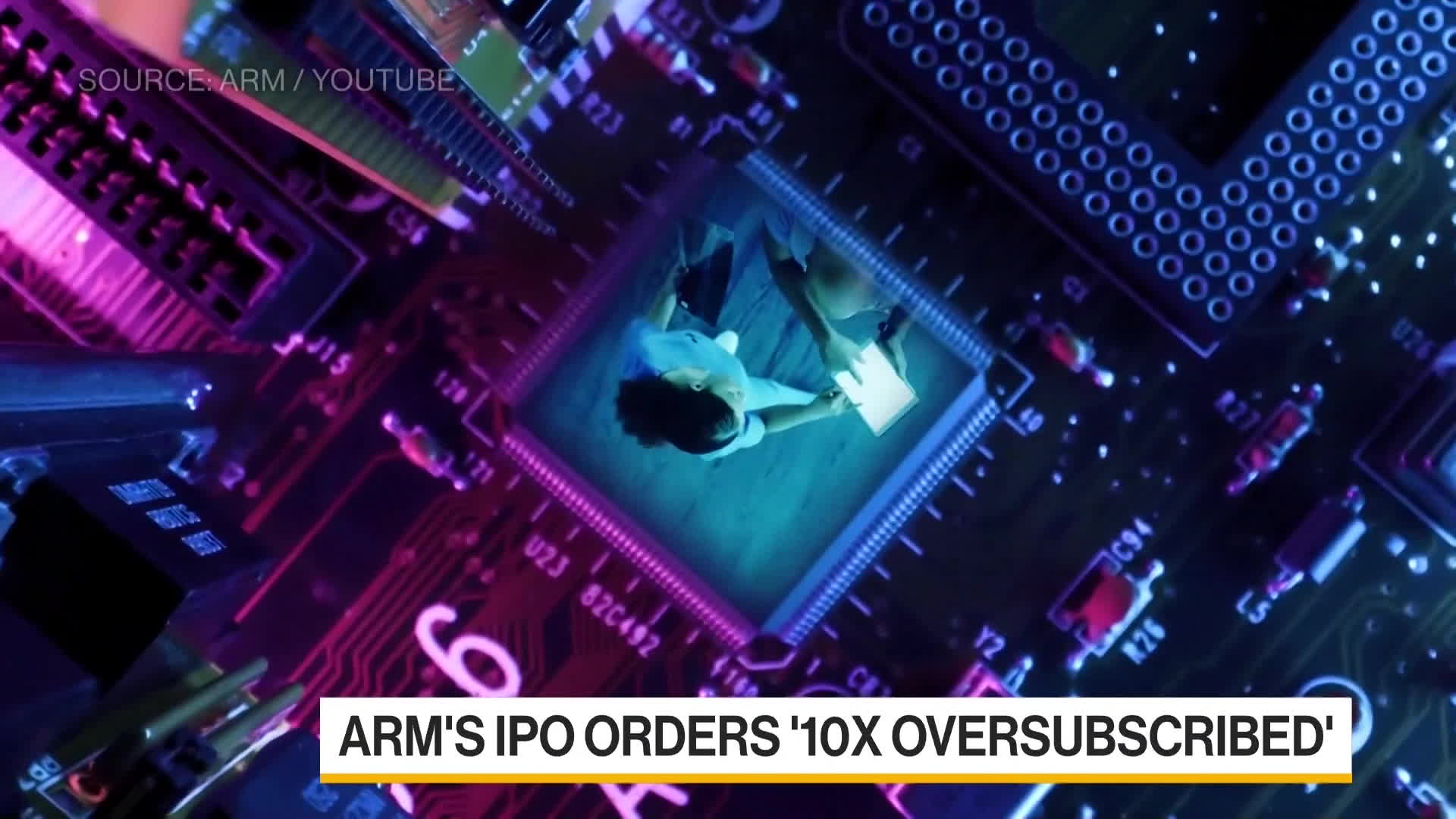
With that deal off the table, Arm pivoted to an IPO with a plan to raise $4.87 billion and be valued at up to $54.5 billion, a 70% markup to the 2016 purchase price. Arm is now looking to exceed that fundraising goal by pricing the IP0 shares a dollar or more above the $47 to $51 target range, Bloomberg News reported.
The IPO's design has been both unconventional and conservative at the same time. SoftBank is only looking to float up to 10% of the shares, which could cause a scramble by investors to get their hands on the stock.
In another uncommon move, it's spreading underwriting fees evenly among the four investment banks leading the offering: Barclays Plc, Goldman Sachs Group Inc., JPMorgan Chase & Co. and Mizuho Financial Group Inc. Raine Group LLC, which SoftBank owns a stake in, is also advising the company. This model was used by Alibaba Group Holding Ltd. almost a decade ago.
Scaling Back
The company initially sought to raise as much as $10 billion and secure a higher valuation, Bloomberg News has reported, but dialed back those plans after SoftBank decided to buy the roughly 25% stake held by its own Vision Fund and to keep the float smaller. The shares that changed hands in that deal put Arm's value at $64 billion, almost $10 billion more than at the top end of the IPO range.
Arm is setting aside more than $700 million of the stock in the IPO to be bought by some of its biggest customers, including Intel Corp., Apple Inc., Nvidia, Samsung Electronics Co. and Taiwan Semiconductor Manufacturing Co.
With only $14 billion raised in US IPOs this year compared with $244 billion at this point in a record-setting 2021, arranging anchor investments ahead of a listing is proving popular with other IPO candidates, too. Instacart Inc. and Klaviyo Inc. also are bringing on investors in advance of their listings.
The participation of anchor investors, combined with the smaller float, could deter funds from flipping shares for a quick sale once they start trading on Nasdaq.
If Arm's listing and those by Instacart and Klaviyo go smoothly, others such as software company Rubrik Inc. and car-sharing platform Turo Inc. could follow, Bloomberg News has reported. Bankers and other IPO watchers say successful debuts by those firms or others this year could spur a fuller IPO comeback in the first half of 2024.
--With assistance from Ian King.
More stories like this are available on bloomberg.com
©2023 Bloomberg L.P.

-
We May Need Another Tukaram Mundhe To Fight Air Pollution | The Reason Why

Developers may install basic measures such as sprinklers and green nets, resume work, and continue violating rules when this equipment stops working.
-
Extracting Value From Battery Scrap Could Be Challenging For India | The Reason Why
A discarded lithium-ion battery still contains valuable materials such as lithium, nickel and cobalt. These can be recovered and reused. When such batteries are crushed and shredded, they produce a dark powder called black mass.
-
One El Nino, India Can Handle. Two Could Break The Granary
India's grain stocks can absorb one bad year, but a second El Nino could drain the buffer in two to three years, economists say.
-
India's Troika Of Good Luck | Joining The Dots
As Jensen Huang's exit drags Nvidia down, a cooling AI trade and resilient earnings have revived investor interest in India. A likely RBI rate hike looms.
-
Talking Points This Week: Leadership Shock At Nvidia, Earnings Strength, And The Fog Over Hormuz
The Anthropic IPO pricing and first trading day, Nvidia's upcoming earnings, and any fresh signals from Iran will set the tone for the following week.
-
Signature Play: The Classic Cocktail Is Dead. Or Is It?
Classic cocktails are disappearing from India's cocktail menus. But they're still being ordered, taught to bartenders and borrowed from. So, who's really having the last drink?
-
A New Samvat Wishlist: Inclusive Prosperity And Human Development
India has strengthened its economic foundations through infrastructure, digital access and enterprise. Its next growth chapter must deepen productivity, create better livelihoods and widen participation in prosperity.
-
Love, Sex Aur Dhokha: The Audacious Plot To Spy On Jensen Huang
A Taipei dinner, a Singapore chip buyer and a suspected Chinese asset: inside the alleged spy operation that got close to NVIDIA's Jensen Huang.
-
Ten Things I Learnt This Samvat
Patience can be a trap. Cheap stocks can stay cheap. Leverage can wipe you out. What did Samvat 2082 teach us? Niraj Shah writes on 10 lessons from the year gone by.
-
Talking Points This Week: Tech Nerves, FII Buying, And A Faraway Banking Shock
The global markets are not shining this Diwali. The exception in the large markets is, India.









