Are Courts Choosing Hurried Injustice Over Real Justice?
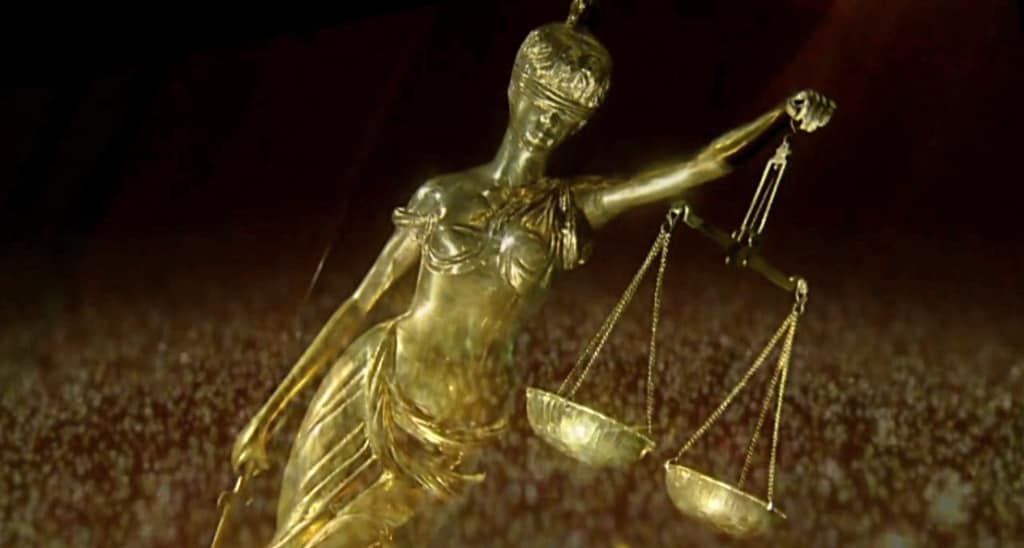
My formative years were spent in the strong belief that we live in the best period of human history, the most peaceful, most just and the most scientific and liberal period. The world wars were over, the imperialist regimes history, and liberty and freedom on the forefront. In the existence of complacency and calm, applying oneself to professional and personal excellence was the aim of our individualistic lives.
But suddenly, these beliefs are now being violently challenged and shaken by the new world order, which has gleefully put all these beliefs and convictions in a complete spin. The new world order and institutions today seem to be manned by persons with huge egos, a false sense of self-worth, and a strong sense of “alternate-truths”.
In the very opening lines of the preface to his book, “The Idea of Justice”, Amartya Sen says:
“What moves us, reasonably enough, is not therealization that the world falls short of being completely just – which few ofus expect –but that there are clearly remediable injustices around us which wewant to eliminate.”
Amartya Sen in his book accepts that the world is full of injustices, but it is our theory of justice that eventually gives the belief that injustices can be redressed, and thus gave strength to revolutionaries and reformists to challenge existing injustices.
Of What Good Is Rough And Ready Justice?
All political societies, including ours, which emerged from the experiences of acute subjugation and injustices, strove to build the strongest bastions of justice institutions which would uphold our principles of justice no matter how severe the attack of authoritarians, majoritarians, bigotry, or greedy capitalism would be. Today, the challenge is of a heavily burdened justice system responding to injustices faced by its people, justly and expeditiously, without sacrificing either to the altar of the other.
Besides upholding the larger principles of liberty, equality, and fraternity, our justice system is also required to hand over the results of applying these principles to real cases, to real individuals who complain of either private or public disputes. The sorest point of all litigants in our India has been the asthmatic and labourious process of churning out decisions by its court, impaled by long delays and queues.
Surely, justice delayed is justice denied, but is rough and ready justice the answer to this anathema?
Dismissal At The Threshold!
The judges manning Indian courts, and especially the superior courts appear to have taken a fancy to cut short litigation by finding novel means, the most novel being of gagging the petitioner by simply not engaging in her complaint! Dismissal at the threshold! Brilliant!
I remember being familiarized with the idea of not arguing in terrorem, but I had never come across a lawyer's arguments being curtailed in terrorem, especially with the threat of imposition and increase of costs for every minute of argument. Let us not confuse the acceptability of enforcing discipline in law courts with a judge nipping the arguments of a lawyer due to his false sense of being all-knowing and in a hurry to clear the docket of the day.
The essential feature which sets apart a legal and justice system from a tyrannical knee jerk justice regime is the strict application of principles of natural justice coupled with statutory dictates. Legal principles have distilled from centuries of experience, and are the only weapon against impulsive decisions. We hold a full-fledged trial of a man who has already been declared guilty by all media and the world. Why? To make sure that the circumstances (which usually lie) against him are scrutinized under the magnifying glass of legal principles to ensure that they don't wrongly point towards his guilt. This is the reason that we prefer persons trained in legal sciences to judge us, over the jury which is staffed with persons steeped in biases and prejudices.
It is for this reason that I feel that a strong adherence to legal concepts and procedures is a strong safeguard to arbitrariness and personal beliefs and convictions of a judge. The error rate of a judge will be hugely minimized as long as she follows the guidance of law. She will find the correct path and will be able to discern when she needn't be shackled by technicalities of law, and when to follow the dictate of law.
“The Hurrier I Go, The Behinder I Get”
My heart has been truly gladdened on reading the opening lines of a recent judgment of the division bench of the Delhi High Court, where the learned judge penning the judgment quoted Lewis Carroll from “Alice in Wonderland” to say: “the hurrier I go, the behinder I get”.
The bench was reviewing the judgment of a single judge who had hurriedly, unceremoniously, and on basis of personal opinion, thrown out the grievance of a commercial concern without even examining its grievance against the touchstone of the procedure prescribed to examine such claims. The justification of the action was that the judge was empowered under the new commercial law to dismiss a suit at the threshold, which was bolstered with his personal enigma of docket explosion, and thus the desire to “weed out such suits which on the reading of the plaint and the documents filed therewith do not show any right in favour of the plaintiffs.”
What the judge totally ignored was process of law which compelled him to factor in certain parameters before coming to this conclusion. The law abhorres the induction of personal views in the decision-making process. The non-newspaper reading judges of the old times strictly trained their minds not to be clouded by their perceptions.
The division bench was categorical in ticking-off the single judge who had “returned certain findings on his own research without the opportunity of rebuttal having been given to the appellants/plaintiffs.” They clearly said that “the court is never an adversary in a dispute between parties”, and it was thus most improper for the judge to have become a witness himself in the litigation by importing his personal knowledge for deciding the case.
It has been heartening to read the concluding lines of the division bench which emphasized that:
“Our endeavor must never be to deny justice to anyone in our over zealousness to dispose cases.”
In my view, the malady of pending work will surely tire out the most brilliant and arduous judge, but it surely cannot shroud us from expecting a decision which is arrived at justly. We are fortunate to have our justice system manned by a large number of brilliant men and women. My hope and prayer to these men and women is to be wary of falling into the trap of high estimation of their self-worth, ignorant of final ends that justice seeks to achieve.
Vibha Datta Makhija is a Senior Advocate practicing in the Supreme Court of India.
The views expressed here are those of the author's and do not necessarily represent the views of BloombergQuint or its editorial team.

-
One El Nino, India Can Handle. Two Could Break The Granary

India's grain stocks can absorb one bad year, but a second El Nino could drain the buffer in two to three years, economists say.
-
India's Troika Of Good Luck | Joining The Dots
As Jensen Huang's exit drags Nvidia down, a cooling AI trade and resilient earnings have revived investor interest in India. A likely RBI rate hike looms.
-
Talking Points This Week: Leadership Shock At Nvidia, Earnings Strength, And The Fog Over Hormuz
The Anthropic IPO pricing and first trading day, Nvidia's upcoming earnings, and any fresh signals from Iran will set the tone for the following week.
-
Signature Play: The Classic Cocktail Is Dead. Or Is It?
Classic cocktails are disappearing from India's cocktail menus. But they're still being ordered, taught to bartenders and borrowed from. So, who's really having the last drink?
-
A New Samvat Wishlist: Inclusive Prosperity And Human Development
India has strengthened its economic foundations through infrastructure, digital access and enterprise. Its next growth chapter must deepen productivity, create better livelihoods and widen participation in prosperity.
-
Love, Sex Aur Dhokha: The Audacious Plot To Spy On Jensen Huang
A Taipei dinner, a Singapore chip buyer and a suspected Chinese asset: inside the alleged spy operation that got close to NVIDIA's Jensen Huang.
-
Ten Things I Learnt This Samvat
Patience can be a trap. Cheap stocks can stay cheap. Leverage can wipe you out. What did Samvat 2082 teach us? Niraj Shah writes on 10 lessons from the year gone by.
-
Talking Points This Week: Tech Nerves, FII Buying, And A Faraway Banking Shock
The global markets are not shining this Diwali. The exception in the large markets is, India.
-
Midterm Rally Lasted A Day. The Hard Reality Of A Divided US May Last Two Years | Opinion
Between a contested AI boom, a debt ceiling that arrives in 2027 and a president with every incentive to act alone, the next two years may prove more volatile than the first day's rally suggests.
-
Blue Wave Will Derail the AI Trade but Won't Dismantle the AI Era | Unhedged Position
The Democrats' sweep of the US Congress will see politics collide with economic forces both over the long and short term.









