Apple’s AI Is Proving It’s Anything But Intelligent
(Bloomberg Opinion) -- A couple of days after the iPhone 5 was announced in 2012, I met with Apple Inc. for one of the off-the-record briefings the company likes to give tech journalists after a new device launch. We were in London, sitting upstairs in the company's gleaming Covent Garden store.
Apple had just decided to remove Google Maps from its iOS operating system and replace it with a maps app it had built in-house. It was a fine strategy, were it not for the fact that Apple's app didn't know much about where anything was. Towns, suburbs, roads — all missing. And from our vantage point, I was able to point out that the famous pub that could been seen out the window didn't exist in Apple Maps.
The company would not be drawn into any criticisms whatsoever. That stance remained for around eight days until ridicule reached such a level that Tim Cook, who had been chief executive officer for just a little more than a year, took the rare step of issuing an apology. In a letter posted on Apple's website, he said he was “extremely sorry for the frustration” caused by the app. (The letter has since been deleted.)
I'm bringing this up to give some context around what is happening today with Apple Intelligence, over which Apple has so far been similarly tongue-tied.
If you've seen any of Apple's marketing lately, you'll know the latest iPhone is billed as the first “built for Apple Intelligence.” The “for” in that sentence is doing a great deal of work. It couldn't be “with” because Apple's AI features weren't ready when the device came out, and some are still yet to be released. The first were added to devices in iOS version 18.1, which came out in Oct.
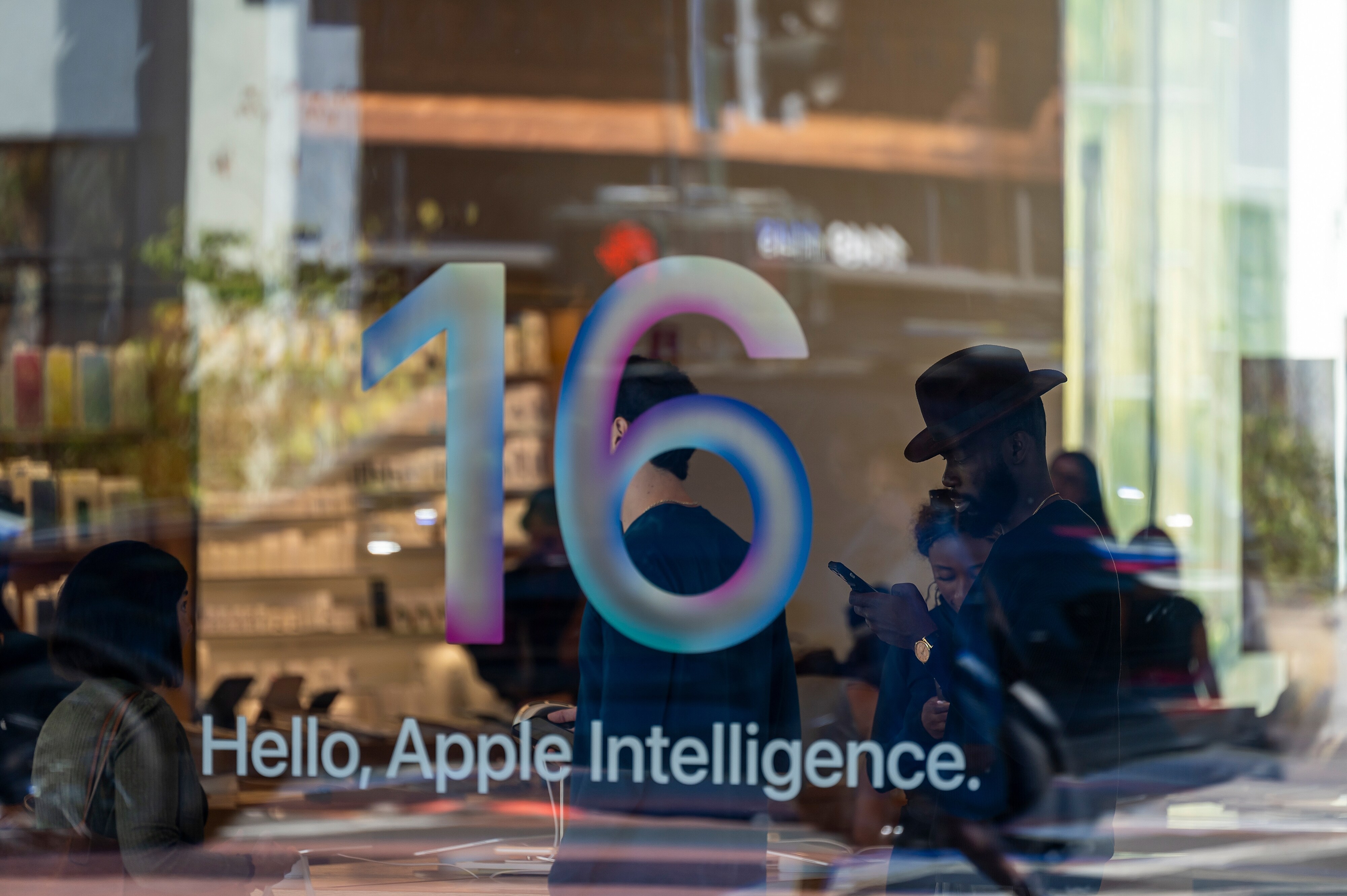
These AI bells and whistles require users to physically opt in, and Apple has deemed the product in “beta” despite marketing it as the main reason to buy its latest device. “Hello, Apple Intelligence” is the message greeting visitors to Apple.com today. If you go into a store, it's what the sales representatives push most excitedly.
But just like the Maps fiasco, Apple's AI isn't ready for the real world. Complaints and ridicule have been mounting. In December, a BBC notification was rewritten by Apple Intelligence to state falsely that Luigi Mangione, who has been charged in the killing of United Healthcare CEO Brian Thompson, had turned a gun on himself. Last week, a summary crowned a darts champion before the match had started. Later the same evening, an alert falsely stated that Rafael Nadal had come out as gay.
It's not just the BBC that's experiencing this issue. A New York Times headline was rewritten to suggest Israeli Prime Minister Benjamin Netanyahu had been arrested. “Nikki Glaser killed at Golden Globes,” read another false summary. The mistakes have prompted the nonprofit Reporters Without Borders to call for Apple to “act responsibly” and remove the feature.
For weeks, Apple had refused to respond publicly to the BBC's complaints that the errors were damaging trust in its reporting. On Monday, a statement finally emerged. Apple has promised to update its AI in the “coming weeks” to clarify when Apple's software has written summaries. There was no acknowledgment of its errors other than to say Apple was making “continuous improvements.”
The BBC quite rightly doesn't feel it goes far enough. “These AI summarisations by Apple do not reflect — and in some cases completely contradict — the original BBC content,” it said after Apple announced its changes. “It is critical that Apple urgently addresses these issues as the accuracy of our news is essential in maintaining trust.” Like any news organisation worth users' time, the BBC would much prefer it if Apple left its headlines alone.
These flubs might seem comical or inconsequential, particularly because it's unclear how many people see errors or how often. Summarisation happens on the device, so there's no way of knowing who sees what — different users will see different text depending on various factors unique to them and their phones.
But it would be a mistake to write the problems off as trivial, especially if you're an Apple investor. The shared experience of Apple users when it comes to the company's much-hyped AI is that it is, for a large part, an annoyance. Not only are users still being flooded with notifications, they are now flooded with notifications that are wrong. This is not progress even if, as Apple said in its response, “the original content is a quick tap away.”
Just as annoying for users as bungled news summaries are the other day-to-day errors Apple's summaries make. One viral example showed how one mother's text saying a “hike almost killed me!” was shortened to say “attempted suicide, but recovered.” Recently, Apple Intelligence told me my Amazon package was defying time and space, at once being “eight stops away, delivered, and will be delivered tomorrow.” (Which, come to think of it, isn't a bad metaphor for AI hype.)
Last year, I wrote about how Apple didn't need to rush AI. Its iPhone is dominant, and customers are still making purchase decisions based on factors like battery life and camera — not AI. Sure, Apple can't rely on that forever, but it's hardly on the brink of becoming the next Nokia.
If Apple's AI capabilities were so poor, the best thing would have been to wait. Instead, it now risks having users turn off Apple Intelligence and lose confidence for who knows how long. You would think Apple had already learned this lesson — according to a study from Marketwatch, Google Maps is still comfortably the preferred maps app despite billions of dollars of investment in Apple Maps and its home advantage as the iPhone's default.
It's a tired cliche, but I'd love to know what Steve Jobs would have made of Apple Intelligence and the position in which Apple finds itself. Perhaps he would have seen the AI trend coming sooner, or he would have had the spine to resist Wall Street pressure to make an AI play before the company was ready.
Maybe, as Jobs once told iPhone customers annoyed at a sudden price drop, he would have said that glitchy AI “is the price of living in the technology lane” — though I doubt it. Apple's AI is about as far from the mantra of “it just works” as it gets. Perhaps another apology letter is in order, though probably best not to let Apple Intelligence write it.

-
Talking Points This Week: Leadership Shock At Nvidia, Earnings Strength, And The Fog Over Hormuz

The Anthropic IPO pricing and first trading day, Nvidia's upcoming earnings, and any fresh signals from Iran will set the tone for the following week.
-
Signature Play: The Classic Cocktail Is Dead. Or Is It?
Classic cocktails are disappearing from India's cocktail menus. But they're still being ordered, taught to bartenders and borrowed from. So, who's really having the last drink?
-
A New Samvat Wishlist: Inclusive Prosperity And Human Development
India has strengthened its economic foundations through infrastructure, digital access and enterprise. Its next growth chapter must deepen productivity, create better livelihoods and widen participation in prosperity.
-
Love, Sex Aur Dhokha: The Audacious Plot To Spy On Jensen Huang
A Taipei dinner, a Singapore chip buyer and a suspected Chinese asset: inside the alleged spy operation that got close to NVIDIA's Jensen Huang.
-
Ten Things I Learnt This Samvat
Patience can be a trap. Cheap stocks can stay cheap. Leverage can wipe you out. What did Samvat 2082 teach us? Niraj Shah writes on 10 lessons from the year gone by.
-
Talking Points This Week: Tech Nerves, FII Buying, And A Faraway Banking Shock
The global markets are not shining this Diwali. The exception in the large markets is, India.
-
Midterm Rally Lasted A Day. The Hard Reality Of A Divided US May Last Two Years | Opinion
Between a contested AI boom, a debt ceiling that arrives in 2027 and a president with every incentive to act alone, the next two years may prove more volatile than the first day's rally suggests.
-
Blue Wave Will Derail the AI Trade but Won't Dismantle the AI Era | Unhedged Position
The Democrats' sweep of the US Congress will see politics collide with economic forces both over the long and short term.
-
It's Time To Take The GST Council's Bet On Trust Global
Payment records can prove India's services exports, and clear, proportionate rules can bring foreign digital sellers into the tax net.
-
Opinion | India at 38: From Innovation Overperformer to Innovation Powerhouse
India now has 453 VC-backed deep science startups, 18 of them late-stage, after 117 percent growth since 2020. Laurus Labs, at USD 9.3 billion, is the most valuable deep science company in any middle-income economy outside China.









