Apple Hails Latest Watch As Its First Carbon Neutral Product
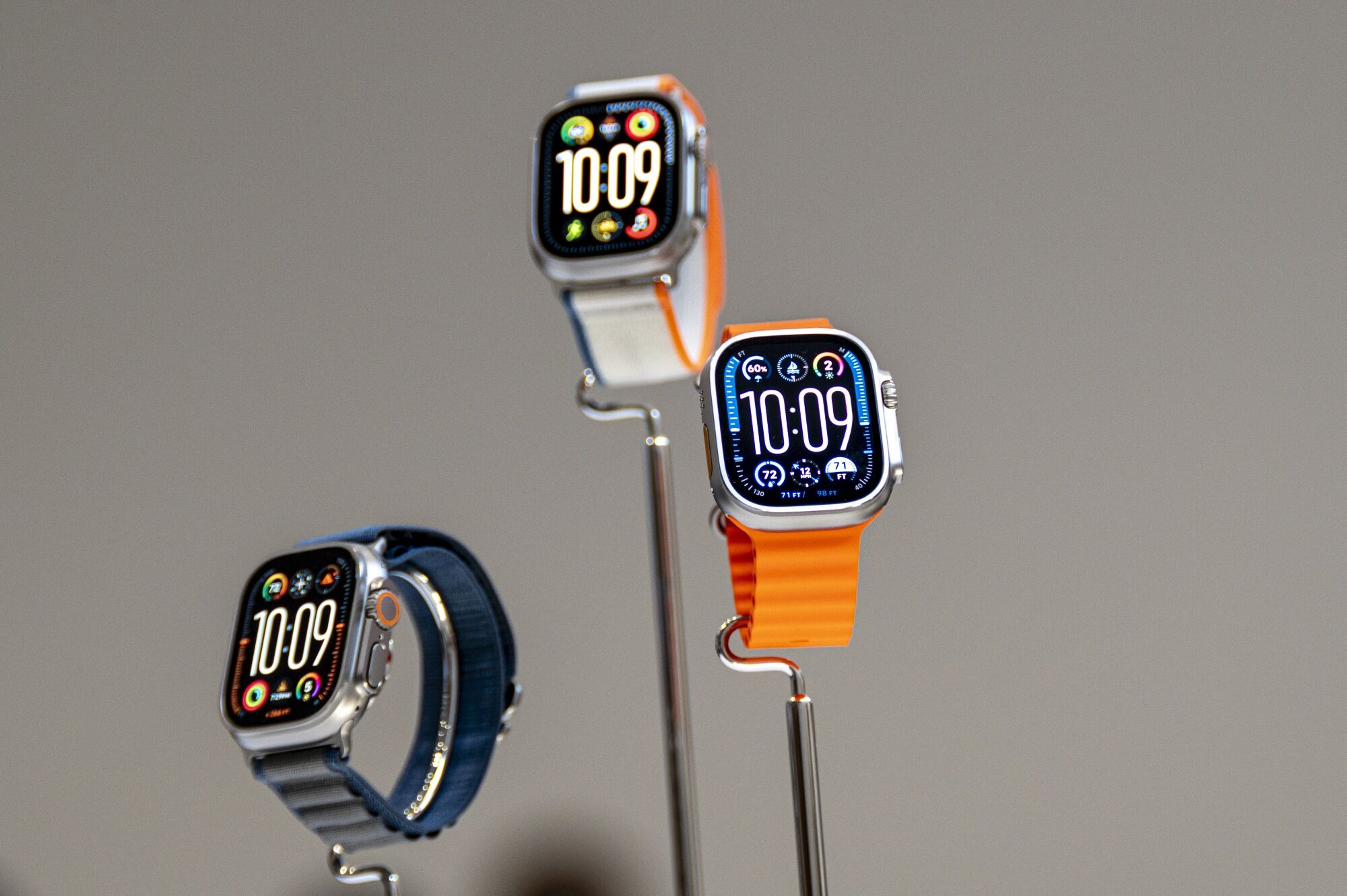
(Bloomberg) -- Apple Inc. unveiled a new smartwatch lineup that the company described as a major environmental milestone: its first carbon neutral products.
The Apple Watch Series 9 and a second-generation version of the high-end Ultra model are manufactured with clean energy and use more eco-friendly bands, the company said during a presentation Tuesday. They also have a faster S9 processor and come in colors such as pink, gold and black. The new chip represents the first speed increase for the watch in three years.
As part of the green push, Apple is eliminating leather watchbands. The latest watches will also process Siri voice assistant requests on the device, making it more responsive. And they'll support a new hand gesture — the double-tapping of a user's fingers — that can trigger various tasks.

The hardware of the new watches is little changed from last year's models. That means they're unlikely to spur upgrades among users who own a first-generation Apple Watch Ultra or a Series 7 or 8 model. But the watches could bring in defectors from rivals like Samsung Electronics Co.
Apple is also looking to draw new people into the smartwatch market. It has touted that about two-thirds of recent Apple Watch buyers are new to the category.
The watch is a major part of Apple's wearables, home and accessories segment, which generates about 10% of annual revenue — about $40 billion a year. However, the company's market share fell in the first quarter this year to 26% from 32%, according to Counterpoint Research. The data provider said that was the first time first-quarter shipments of the Apple Watch dropped below 10 million units in three years.
The watches start at $399 for the Series 9 and $799 for the Ultra, similar to last year's prices. They go on sale Tuesday and will be available Sept. 22.
The company also unveiled its new iPhone 15, which features a USB-C charging port and camera improvements. It's not unusual for Apple shares to fall during its big product announcements, and Tuesday was no different. The stock fell 1.7% to $176.30 in New York.
Though it wasn't announced during the presentation, Apple is also testing a new 3D-printing-based manufacturing process for device enclosures, starting with the case of the stainless steel Apple Watch Series 9, Bloomberg News has reported. Apple plans to bring this process to the Ultra model next year and eventually to more products, including the iPhone.
Read More: Apple Tests Using 3D Printers to Make Devices in Major Shift
Apple is making the screens on the new watches brighter as well. Measured in nits — a gauge of candlepower — the Series 9 will jump to 2,000 from 1,000, and the Ultra screen will increase to 3,000 from 2,000. The watches also get a new wireless chip to improve the Find My feature and the ability to locate a missing iPhone.
The company's new watchOS 10 software — which will be available for older models as well — will offer updated widgets, new app designs, and enhanced features for bikers and hikers.
The latest models don't add any new health-tracking features, but the on-device Siri feature can be used to access health information, such as how long a user slept the previous night.
The Apple Watch Ultra is getting new band colors, including an orange Ocean Band and blue, olive and indigo options. The Series 9 bands are switching from leather to a material Apple calls FineWoven, which will go into straps like the Modern Buckle and Magnetic Link Bracelet. The Ultra also gets a new watch face that can show up to eight pieces of information.
The Apple Watch Ultra continues to only come in a natural titanium color, while the Series 9 models are also available in midnight, starlight, silver and red.
(Updates with more product details starting in 10th paragraph.)
More stories like this are available on bloomberg.com
©2023 Bloomberg L.P.

-
Getting To Work Costs Women More | The Reason Why

It is not just about women paying more than men. It is about women paying much more in cities than in villages.
-
AI Bias In Investing Cannot Be Eliminated, But It Can Be Governed
Framing is a particularly important example as identical financial information presented in terms of gains rather than losses can lead an LLM to reach a different assessment.
-
Joining The Dots | Dark Skies, Steady Diya: Why Hope Holds This Diwali
With war, a weak rupee and foreign outflows weighing on sentiment, policymakers at the NDTV World Summit and market veterans at NDTV Profit Ignite: Diwali Edition offered the same advice: stay invested and filter out the noise.
-
The Curious Case of Equitas Small Finance Bank And A CEO Who Quit For Stock
PN Vasudevan believes persistent investor concerns over a perceived conflict of interest had become a governance overhang on Equitas Small Finance Bank's stock, even as the lender improved profitability and asset quality.
-
Talking Points This Week: AI Cash Burn, A Tiger Comeback And An India That Still Finds Its Own Path
India is not immune to higher oil or tighter global liquidity, yet its earnings base is broader, its domestic policy levers are still available.
-
Foreign Investors Own Half Of HDFC Bank and ICICI Bank. An LTCG Cut Could Matter Most Here
Foreign portfolio investors have US$115 billion parked in HDFC Bank, ICICI Bank. If the government cuts long-term capital gains tax, Jefferies says returning foreign money could land here first.
-
'Never Seen This Level Of Negativity': Sandeep Tandon Says The Next Rally May Be Closer Than You Think
Veteran investor Sandeep Tandon says foreign selling is easing, large-caps are due a comeback and mid-caps are crowded, while he turns positive on gold, power and pharma this Diwali.
-
Indians Stay With Family, Not In Hotels | The Reason Why
India still lacks enough clean, reliable and affordable hotels for budget-conscious travellers.
-
The Economic Imperative: Analysing The Material Driving Force Behind India-Canada Strategic Reset
This economic complementarity is further reinforced by deep institutional investment ties and talent mobility, which form the bedrock of the bilateral framework.
-
Medicine Pricing: Where Must Profit Stop?
India must confront excessive margins, hidden incentives and regulatory gaps that threaten the integrity of medicine.










