Apple iPhone Makers May Be Gainers In $6.6 Billion India Plan: Report
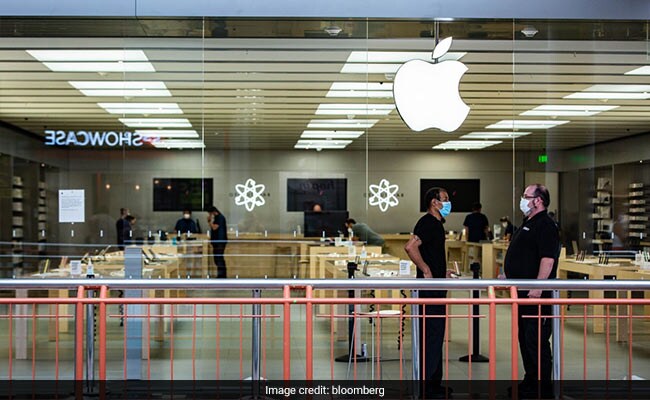
Apple Inc.'s major iPhone assemblers are among the companies expected to win approval to participate in a $6.6 billion stimulus program to bring manufacturing to India, according to people familiar with the matter, a potentially seismic shift as the world's most valuable company diversifies beyond China.
At a cabinet meeting on Wednesday, the government is expected to approve a plan aimed at bringing $150 billion in mobile-phone production over the next five years, said people, asking not to be identified because the matter is private. Among the dozen phone makers already cleared by a high-powered government committee are Apple's primary supplier Foxconn Technology Group, which had submitted two applications, and peers Wistron Corporation and Pegatron Corporation, the people said. The three companies make virtually every iPhone sold globally in sprawling factories currently located mainly in China.
Under the Production Linked Incentive program, or PLI as it's called, manufacturing incentives will rise each year in an ongoing effort to entice the world's biggest smartphone brands to make their products in India and export to the world. Besides the Apple contractors, Samsung Electronics is the only other applicant for the five slots allotted to foreign companies. China's largest phone makers Huawei Technologies and BBK Group, which manufactures brands such as Oppo and Vivo, are conspicuous by their absence.
Amid rising trade and political tensions between the U.S. and China, India is betting that many global brands will be keen to reduce their dependence on China. If successful, the program could set in motion a shift in electronics manufacturing in the next five years.
"It's a thoughtful move by the government aimed at wooing Apple to bring significant iPhone manufacturing to India because, when the iPhone maker shifts, an entire ecosystem follows," said Hari Om Rai, chairman and founder of Lava International Ltd., India's largest homegrown phone maker. "The next five years will be dramatic, and India could become the new China in phone manufacturing."
Lava, based in the New Delhi suburbs, is among the Indian phone makers applying for manufacturing incentives, along with Karbonn Mobiles and Dixon Technologies India Ltd.
To receive the incentives, foreign manufacturers including Foxconn, Wistron and Samsung must commit to specific investment and production targets of devices that sell for at least Rs 15,000 ($200); Indian phone makers will have no such restrictions. Last month, Ravi Shankar Prasad, minister for electronics and information technology, told reporters that Apple accounts for 37 per cent and Samsung 22 per cent of global sales revenue share from mobile phones. The incentive scheme would "increase their manufacturing base manifold in the country," the ministry said in a statement.
Apple did not respond to requests for comment.
Pegatron, the second-largest iPhone assembler after Foxconn with a number of factories in China, said in July that it would set up a plant in India. Apple accounts for more than half of Pegatron's business. If approved, Pegatron's first India factory would be eligible for PLI, the people said.
In the next five years, India could attract an additional 10 per cent of global handset production, Credit Suisse said in a recent note. And though the country is the world's second-largest handset market with plenty of room for domestic sales growth, the government's clear aim is to eventually become a global manufacturing colossus to rival China. Almost two-thirds of the stimulus program is targeted at the export market, the people said.
Pankaj Mohindroo, chairman of India Cellular and Electronics Association, a trade group that represents leading phone makers including Apple, Oppo and Xiaomi, said incoming handset makers will be accompanied by a host of smaller sub-assemblers and component makers, expanding the sector to seven times its current size in the next five or so years.
"India's incentive scheme will be a game-changer that will make the country No. 1 mobile in mobile manufacturing, or at least a close No. 2 by 2025," Mr Mohindroo said.

-
Extracting Value From Battery Scrap Could Be Challenging For India | The Reason Why

A discarded lithium-ion battery still contains valuable materials such as lithium, nickel and cobalt. These can be recovered and reused. When such batteries are crushed and shredded, they produce a dark powder called black mass.
-
One El Nino, India Can Handle. Two Could Break The Granary
India's grain stocks can absorb one bad year, but a second El Nino could drain the buffer in two to three years, economists say.
-
India's Troika Of Good Luck | Joining The Dots
As Jensen Huang's exit drags Nvidia down, a cooling AI trade and resilient earnings have revived investor interest in India. A likely RBI rate hike looms.
-
Talking Points This Week: Leadership Shock At Nvidia, Earnings Strength, And The Fog Over Hormuz
The Anthropic IPO pricing and first trading day, Nvidia's upcoming earnings, and any fresh signals from Iran will set the tone for the following week.
-
Signature Play: The Classic Cocktail Is Dead. Or Is It?
Classic cocktails are disappearing from India's cocktail menus. But they're still being ordered, taught to bartenders and borrowed from. So, who's really having the last drink?
-
A New Samvat Wishlist: Inclusive Prosperity And Human Development
India has strengthened its economic foundations through infrastructure, digital access and enterprise. Its next growth chapter must deepen productivity, create better livelihoods and widen participation in prosperity.
-
Love, Sex Aur Dhokha: The Audacious Plot To Spy On Jensen Huang
A Taipei dinner, a Singapore chip buyer and a suspected Chinese asset: inside the alleged spy operation that got close to NVIDIA's Jensen Huang.
-
Ten Things I Learnt This Samvat
Patience can be a trap. Cheap stocks can stay cheap. Leverage can wipe you out. What did Samvat 2082 teach us? Niraj Shah writes on 10 lessons from the year gone by.
-
Talking Points This Week: Tech Nerves, FII Buying, And A Faraway Banking Shock
The global markets are not shining this Diwali. The exception in the large markets is, India.
-
Midterm Rally Lasted A Day. The Hard Reality Of A Divided US May Last Two Years | Opinion
Between a contested AI boom, a debt ceiling that arrives in 2027 and a president with every incentive to act alone, the next two years may prove more volatile than the first day's rally suggests.









