Apart From PM CARES What Other Options Are There With Centre to Combat Covid-19: Know Here
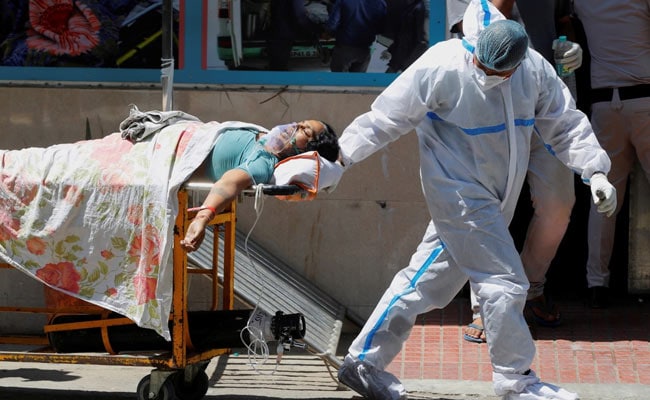
While the nation is combating the lethal second wave of the Corona pandemic amid spiralling requirement for oxygen as thousands have succumbed to the deadly virus during the fortnight, many owing to the precious gas' unavailability, the Centre has announced that it would help set up 551 dedicated oxygen plants by funding them through its PM CARES fund. This would augment oxygen's supply.
The Centre had set up the fund in March 2020 to deal with the situation arising out of the pandemic and as per the account statement which was put out by the fund in September last year, there were Rs 3,076 crore as on March 31, 2020 in terms of closing balance in it.
Incidentally, the Prime Minister's National Relief Fund is also there, but it is primarily used for tackling natural calamities, riots and meeting medical expenses for heart ailments, cancer treatment and burn injuries. As on December 2019, there were Rs 3,800 crore in the fund.
Now as the situation seems to be taking a turn for the worse, the health infrastructure of the country is facing its ultimate challenge, and the need for funds has become all the more acute.
Let's therefore see that what all are the financial options available with the Government of India apart from the PM CARES fund, to fall back upon in order to fight this medical emergency. Read on.
World Bank Loan Worth $2.5 Billion:
Last year India had received loans worth $2.5 billion from the World Bank in three instalments to fight the pandemic. These were provided under three classifications – health, social protection and economic stimulus.
Minister of State for Finance Anurag Thakur had informed the Rajya Sabha during the Monsoon session last year that the World Bank gave three loans for health ($1 billion), for social protection (0.75 billion) and for economic stimulus ($0.75 billion). These loans were disbursed to the Government of India between April and July 2020.
Amount Saved After Effecting Cuts In Salaries And Allowances Of Members of Parliament:
In April 2020, the Government brought an ordinance to cut down monthly salaries and allowances of MPs by 30%. The Salaries and Allowances of Ministers (Amendment) Ordinance, 2020 was introduced to amend the Salaries and Allowances of Ministers Act 1952, which administers the expenses of lawmakers. This cut was applicable for the financial year 2020-21, i.e. till March 31, 2021.
The salary of an MP is Rs 1 lakh while they also get a constituency allowance which is Rs 70,000 per month. A 30% cut meant that the monthly salary of a lawmaker came down to Rs 70,000 and the constituency allowance was reduced to Rs 49,000 a month.
There are 543 Lok Sabha and 245 Rajya Sabha MPs, which means there are a total of 788 MPs.
A Rs 30,000 cut for each MP from the monthly salary translated to an addition of Rs 2,36,40,000 crore in the Government's kitty. A Rs 21,000 reduction in the constituency allowance for each MP led to Rs 1,65,48,000 crore going to the exchequer.
Thus a total of Rs 4,01,88,000 crore was deposited in Government's coffers after these cuts were affected.
Suspension Of MPLADs Fund Of All MPs For 2 Years:
With the clamping of the nation-wide lockdown on March 24, 2020 to restrict spread of Corona virus, the Government apart from cutting down on salaries and allowances of MPs, had also suspended the allotment of MPLADs funds for two years, i.e. 2020-21 and 2021-22.
The total consolidated amount for these two years translated to Rs 7,900 crore, which is in the Centre's coffers after the scheme's suspension.

-
We May Need Another Tukaram Mundhe To Fight Air Pollution | The Reason Why

Developers may install basic measures such as sprinklers and green nets, resume work, and continue violating rules when this equipment stops working.
-
Extracting Value From Battery Scrap Could Be Challenging For India | The Reason Why
A discarded lithium-ion battery still contains valuable materials such as lithium, nickel and cobalt. These can be recovered and reused. When such batteries are crushed and shredded, they produce a dark powder called black mass.
-
One El Nino, India Can Handle. Two Could Break The Granary
India's grain stocks can absorb one bad year, but a second El Nino could drain the buffer in two to three years, economists say.
-
India's Troika Of Good Luck | Joining The Dots
As Jensen Huang's exit drags Nvidia down, a cooling AI trade and resilient earnings have revived investor interest in India. A likely RBI rate hike looms.
-
Talking Points This Week: Leadership Shock At Nvidia, Earnings Strength, And The Fog Over Hormuz
The Anthropic IPO pricing and first trading day, Nvidia's upcoming earnings, and any fresh signals from Iran will set the tone for the following week.
-
Signature Play: The Classic Cocktail Is Dead. Or Is It?
Classic cocktails are disappearing from India's cocktail menus. But they're still being ordered, taught to bartenders and borrowed from. So, who's really having the last drink?
-
A New Samvat Wishlist: Inclusive Prosperity And Human Development
India has strengthened its economic foundations through infrastructure, digital access and enterprise. Its next growth chapter must deepen productivity, create better livelihoods and widen participation in prosperity.
-
Love, Sex Aur Dhokha: The Audacious Plot To Spy On Jensen Huang
A Taipei dinner, a Singapore chip buyer and a suspected Chinese asset: inside the alleged spy operation that got close to NVIDIA's Jensen Huang.
-
Ten Things I Learnt This Samvat
Patience can be a trap. Cheap stocks can stay cheap. Leverage can wipe you out. What did Samvat 2082 teach us? Niraj Shah writes on 10 lessons from the year gone by.
-
Talking Points This Week: Tech Nerves, FII Buying, And A Faraway Banking Shock
The global markets are not shining this Diwali. The exception in the large markets is, India.









