Foreign Media On Anil Ambani And India's Mountain Of Bad Debt
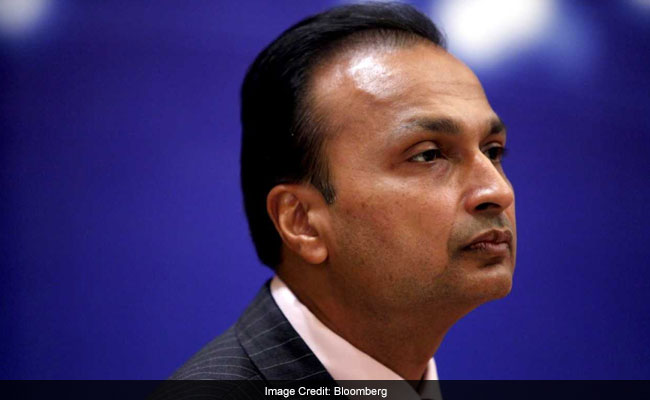
In a remarkable warning to India's elite, the nation's top court said it will put one of the country's most prominent business executives behind bars unless his group pays its dues.
It's the latest twist in a dispute that helped push billionaire Anil Ambani's mobile-phone carrier into bankruptcy proceedings and cast an unflattering light on the Indian mogul, who's the younger brother of Asia's richest man.
Supreme Court said Wednesday that Mr Ambani disobeyed its earlier order for one of his companies, Reliance Communications Ltd., to pay Rs 550 crore ($77 million) to Ericsson AB's Indian unit. If payments aren't made within four weeks, the 59-year-old tycoon will be jailed for three months, the court said. Mr Ambani's group said it will comply.
The threat shows India is upping the ante when it comes to tackling a mountain of bad debt that's among the worst in the world. A $190 billion pile of soured and stressed debt has put the future of some Indian lenders in doubt and curbed investment just as the country is preparing for general elections.
Strong Message
The court ruling "definitely sends a very strong message to defaulting companies and managements that contractual dues need to be paid," said Manmeet Singh, a New Delhi-based partner at local law firm L&L Partners. "This will certainly give more confidence to foreign investors regarding enforcement of contracts in India."
Noting that the Ambani group had "willfully not paid" the money owed to Ericsson, the court said that it "clearly demonstrates cavalier attitude" towards the "highest court of the land."
India's banking regulator, law makers and courts have been cracking down on delinquent borrowers armed with a two-year-old bankruptcy law to tackle the overhang of bad debt. India has surpassed Italy in having the worst non-performing loan ratio among the world's major economies.
The concerted crackdown on defaulters has given banks more bargaining power as founders and controlling shareholders can no longer hope to walk away from their dues without major consequences, irrespective of how storied their business families might be.
Dodge Arrest
It's rare for billionaires to go to prison in India. Subrato Roy, founder of the Sahara Group who was sent to custody in 2014 for his group's failure to comply with regulator's order for a $3.9 billion refund to depositors, was an exception. Most others, including Vijay Mallya, founder of defunct Kingfisher Airlines Ltd, have managed to dodge arrest.
That's changing. Last year, the government empowered state-run banks to prevent so-called willful defaulters from fleeing the country and enacted a new law against fugitive economic offenders.
The dispute with Ericsson began when the Swedish telecommunications equipment maker sought to collect Rs 1,600 crore in dues from Reliance Communications, or RCom. The Indian company settled the dispute with Ericsson in May last year, but failed to meet the payment deadlines, prolonging the row.
RCom decided to enter bankruptcy proceedings earlier this year after struggling to repay about $6.3 billion in debt. Ironically for Mr Ambani, his extraordinary reversal of fortune in the telecommunications industry came after his older brother stormed into the market with a new outfit called Reliance Jio Infocomm Ltd., igniting a price war by offering free calls.
The tycoon's older brother is Mukesh Ambani, chairman of oil-and-telecom giant Reliance Industries Ltd. He overtook Chinese e-commerce titan Jack Ma as Asia's richest man last year. Mr Anil's fortunes meanwhile have dwindled to $1.2 billion, according to Bloomberg Billionaires Index.
Wednesday's ruling, which included fines levied on three of Mr Ambani's companies, reverberated across his business empire. Shares of Reliance Communications fell 4.2 per cent, Reliance Capital Ltd slipped 4.3 per cent and Reliance Infrastructure Ltd slumped 2.2 per cent. Reliance Power Ltd also declined.
RCom had agreed to sell its airwaves, towers, fiber and other telecom assets to Reliance Jio in December 2017 for Rs 17,300 crore to fend off creditors. But regulatory and legal hurdles stalled the closing of the deal, frustrating RCom's attempts to repay lenders.
The telecom operator, which had $113.6 million in cash and equivalents as of September 30, may have to rely on the group for paying these dues.
"It'll be very difficult for RCom to meet the ordered payment and the group companies might be utilized to pay the dues through inter-corporate loans," said Sameer Kalra, president at Mumbai-based advisory Target Investing. "This risks group companies as well."
Disclaimer: NDTV has been sued for 10,000 crores by Anil Ambani's Reliance Group for its coverage of the Rafale deal

-
Indians Are Travelling, But Not Every Journey Is A Holiday | The Week In Whys

Pilgrims, patients and working women are the real travellers, and the system hasn't quite caught up with them.
-
Getting To Work Costs Women More | The Reason Why
It is not just about women paying more than men. It is about women paying much more in cities than in villages.
-
AI Bias In Investing Cannot Be Eliminated, But It Can Be Governed
Framing is a particularly important example as identical financial information presented in terms of gains rather than losses can lead an LLM to reach a different assessment.
-
Joining The Dots | Dark Skies, Steady Diya: Why Hope Holds This Diwali
With war, a weak rupee and foreign outflows weighing on sentiment, policymakers at the NDTV World Summit and market veterans at NDTV Profit Ignite: Diwali Edition offered the same advice: stay invested and filter out the noise.
-
The Curious Case of Equitas Small Finance Bank And A CEO Who Quit For Stock
PN Vasudevan believes persistent investor concerns over a perceived conflict of interest had become a governance overhang on Equitas Small Finance Bank's stock, even as the lender improved profitability and asset quality.
-
Talking Points This Week: AI Cash Burn, A Tiger Comeback And An India That Still Finds Its Own Path
India is not immune to higher oil or tighter global liquidity, yet its earnings base is broader, its domestic policy levers are still available.
-
Foreign Investors Own Half Of HDFC Bank and ICICI Bank. An LTCG Cut Could Matter Most Here
Foreign portfolio investors have US$115 billion parked in HDFC Bank, ICICI Bank. If the government cuts long-term capital gains tax, Jefferies says returning foreign money could land here first.
-
'Never Seen This Level Of Negativity': Sandeep Tandon Says The Next Rally May Be Closer Than You Think
Veteran investor Sandeep Tandon says foreign selling is easing, large-caps are due a comeback and mid-caps are crowded, while he turns positive on gold, power and pharma this Diwali.
-
Indians Stay With Family, Not In Hotels | The Reason Why
India still lacks enough clean, reliable and affordable hotels for budget-conscious travellers.
-
The Economic Imperative: Analysing The Material Driving Force Behind India-Canada Strategic Reset
This economic complementarity is further reinforced by deep institutional investment ties and talent mobility, which form the bedrock of the bilateral framework.










