And Thus Ends The Tale Of HDFC Ltd.
On Wednesday, the Housing Development Finance Corp. Ltd. stock traded one last time on the bourses, before being delisted on Thursday. The scrip of India's largest housing finance company closed at Rs 2,729.95 per share, marginally lower by 0.62%. And with it, the last symbol of HDFC's presence as an independent entity came to an end.
On July 1, the company was merged with HDFC Bank Ltd., India's largest private sector lender. As the HDFC chapter draws to a close, BQ Prime brings you the story of the 46-year-old mortgage lender.
Genesis
At some point in 1977, as Hasmukhbhai Thakordas Parekh—fondly remembered as HTP—was set to retire as chairman of Industrial Credit and Investment Corp. of India Ltd., he wondered what he would do next. He had lost his wife in 1970 and was sharing a rented home at Rasik Niwas in Mumbai's tony Marine Drive area. His roommate was his nephew, a young chartered accountant named Deepak Parekh.
In his last few months at ICICI, HTP was keen on founding a mortgage lending company, on the same model as companies which existed in the U.K. and the U.S. He took the proposal to then Finance Minister of India, HM Patel, and immediately got a thumbs up. This new company would be a private mortgage lender funding middle class and affluent Indians to build new homes, without any government commitment necessary.
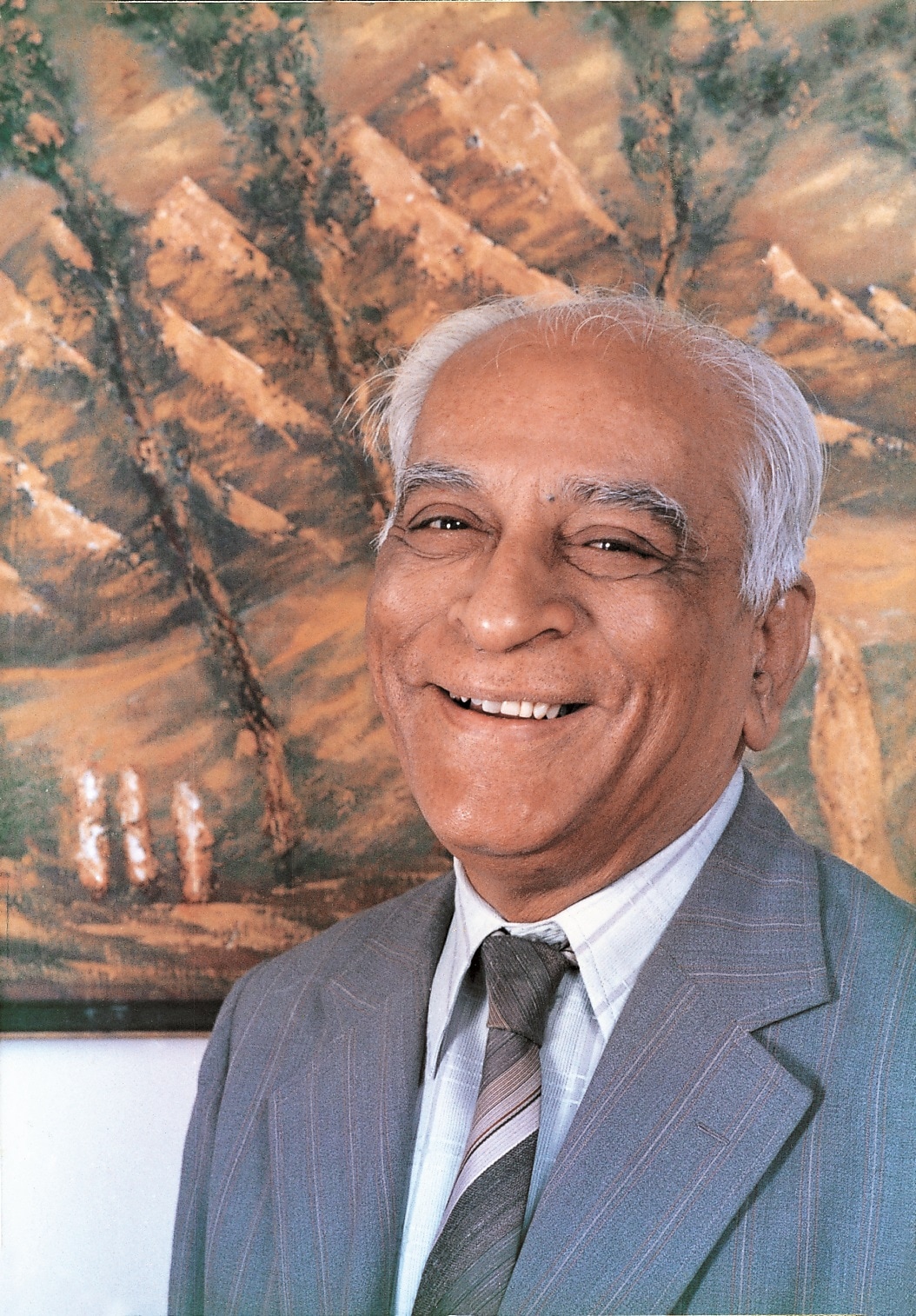
HT Parekh, founder, HDFC Ltd.
The company was christened Housing Development Finance Corp. Ltd. and HTP's office was set up at Ramon House in Mumbai.
The younger Parekh, who was already privy to HTP's thoughts on mortgage lending over nights of rummy and beer, had a career decision to make. In 1977, his employer Chase Manhattan Bank was moving him from the Mumbai office to Saudi Arabia. Parekh chose to leave the well-paying job and join his uncle in building HDFC in 1978.
"I recall that he (HTP) never coerced or never pressurised me in taking the decision of joining HDFC, the startup. And that, too, at a 50% paycut," Parekh says, in a recorded message which currently plays at the HT Parekh Legacy Centre, which was inaugurated on June 28.
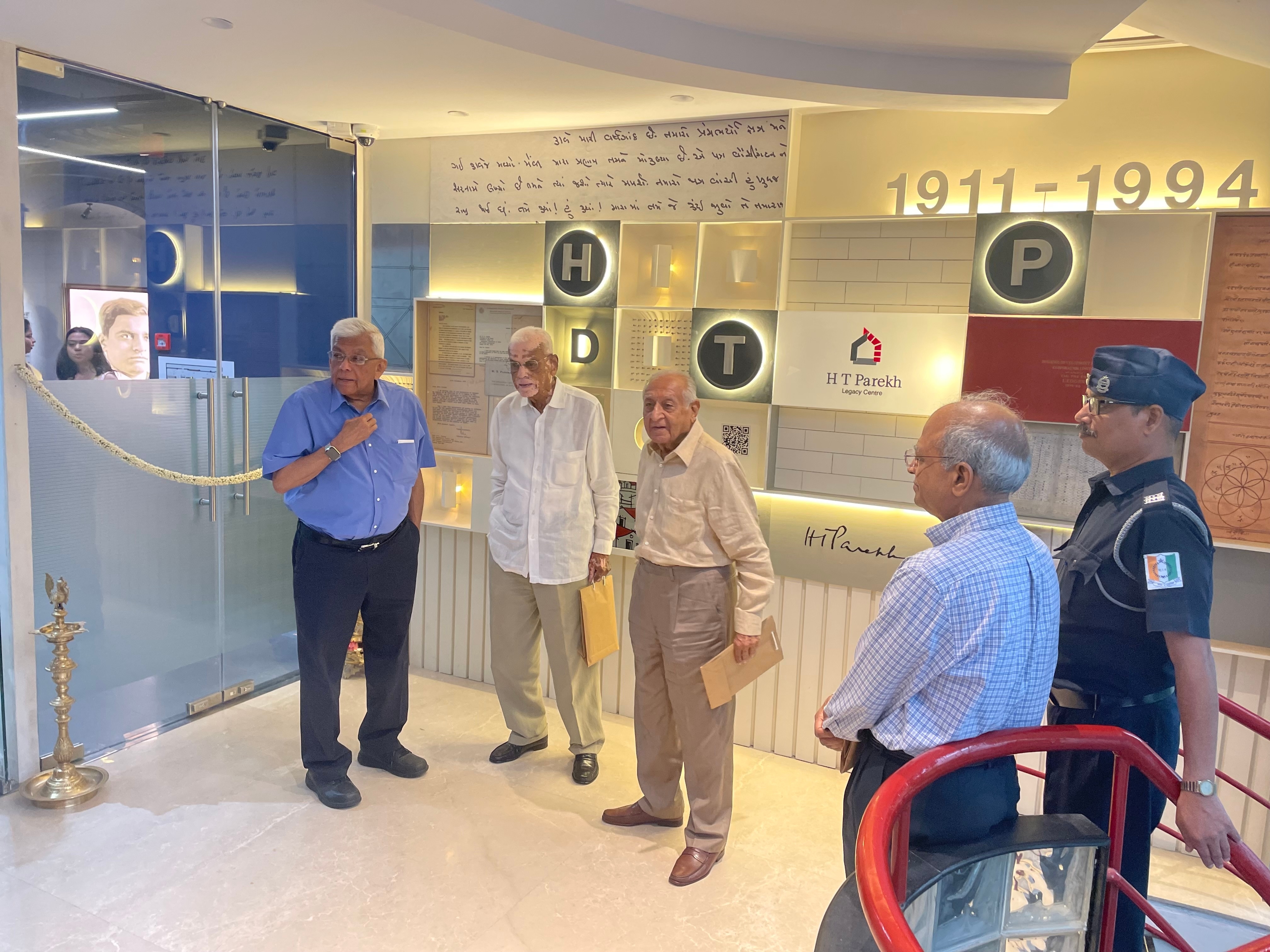
Deepak Parekh at the inauguration of HT Parekh Legacy centre, Ramon House, Mumbai. On June 28, 2023. (Source: BQ Prime)
Building A Giant
As there was no government contribution to HDFC's equity, the company had to quickly go public and raise funds. In 1978, as the initial public offering debuted, there were not many takers. The IPO failed as not many people were familiar with the mortgage lending concept and brokers had to salvage it.
On the business front as well, challenges continued. While funding was tight, customers were also sceptical about borrowing money to build a house—which was an alien concept at the time.
"When we started, actually people laughed at our then chairman HT Parekh, saying nobody is going to give you back your money as there were no foreclosure laws. He bet on the goodness of the Indian middle class," Renu Sud Karnad, managing director of HDFC, told BQ Prime in an exclusive interview.
But the scepticism that people held ended when DB Remedios, a resident of the Malad suburb of Western Mumbai, became HDFC's first home loan borrower in 1978. Remedios borrowed a Rs 30,000 loan at a fixed rate of 10.5% from the mortgage lender.
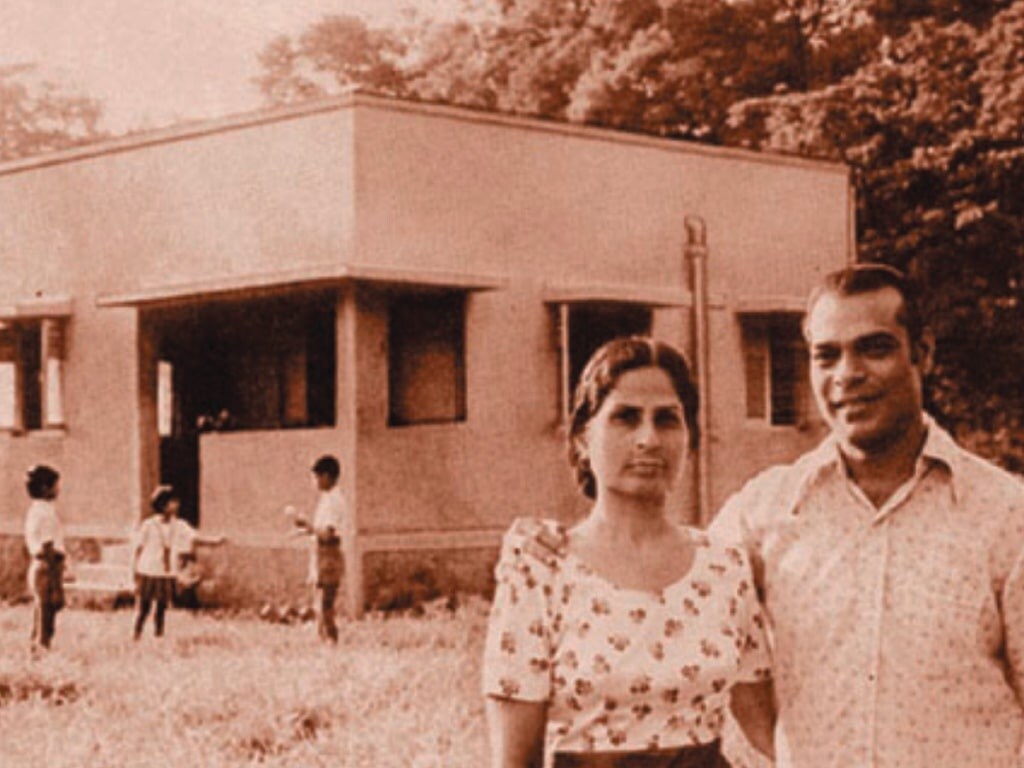
DB Remedios, HDFC's first home loan borrower, photographed in front of his newly built home in Malad, Mumbai. (Source: HDFC)
As far as funding goes, things started easing after HDFC got a line of credit from the World Bank. This line eased a lot of things for the company as now other lenders were willing to extend money, Karnad said.
In the years that followed, HDFC grew rapidly as India's only mortgage lender, outside the banking system. Due to its rapid rise and its developmental nature, it was also instrumental in creating foreclosure laws in India. Apart from that, HDFC was tasked with creating other housing finance companies for the banking system.
"We started seeing competition get into the business sometime around the 90s. In fact, we created our own competition," Keki Mistry, vice chairman and chief executive officer, HDFC, told BQ Prime in an exclusive interview.
Canara Bank, State Bank of India and a couple of other public sector banks approached HDFC seeking equity infusion and advice to create their own housing finance companies, which the mortgage lender readily agreed to.
HDFC did that because the housing finance market was large then, as it is today, Mistry said. India's penetration of housing finance as a ratio of the gross domestic product is at 11%, indicating a significant headroom for growth.
By the mid-90s another thought entered the minds of the leadership at HDFC. India, fresh from economic liberalisation, was starting to see the growth of affluent Indians. While funding home loans was okay, there was a need to provide other lending products like vehicle loans, business loans, consumption loans, credit cards, etc. This was not something the mortgage lender could do internally.
In 1994, HDFC applied for a banking licence and got it. Thus was born HDFC Bank. A dashing and ambitious banker from Citibank, Aditya Puri, was chosen to lead the effort, with HDFC merely playing the role of a watchful parent. Over the decades, HDFC Bank rose to become India's largest private bank under Puri. He retired in 2020, handing over the baton to Sashidhar Jagdishan, who now is the managing director and chief executive officer of the bank.
A few years after HTP passed away, Deepak Parekh took over as non-executive chairman of HDFC in 1997.
Competition Rises
By the 2000s, competition in the housing finance segment became fierce. Under the leadership of its then CEO KV Kamath, ICICI Bank Ltd. started aggressively chasing the retail lending growth in India, with housing being a major focus. Other lenders like SBI, too, were steadily ramping up their mortgage book.
But HDFC's pole position remained untouched.
In 2009, then SBI Chairman OP Bhatt introduced a teaser loan product, to shake up the housing finance market. Under the product, new borrowers would get a significantly fixed low loan rate for the first one or two years and then the rate would be floating and linked to the market. This was a runaway success for SBI initially, vaulting it into direct contest with HDFC for market share.
Bhatt's move had caused widespread awe, where even regulator Reserve Bank of India was in a tizzy. While the products were completely legal, they could potentially expose borrowers to unexpectedly high loan rates after the initial fixed period ends. Parekh, at the time, had criticised such a product, but eventually HDFC had to introduce it, to be competitive.
By 2011, the RBI had raised the provisioning requirement for such teaser loans, which prompted both SBI and HDFC to withdraw their products from the market. While lenders did try to experiment with such products in later years, they never found favour with the market. Eventually, the RBI linked all new retail loan rates by banks to an external benchmark in 2019.
As of March 31, the outstanding home loans extended by the banking system was Rs 19.36 lakh crore, with SBI alone contributing Rs 6.4 lakh crore. HDFC is the only other lender with a large retail home loan book of Rs 4.99 lakh crore at the end of the last fiscal, with total outstanding loans of Rs 6.2 lakh crore.
The Merger
On April 4, 2022, speaking to a group of stunned reporters in Mumbai, Parekh announced the merger of HDFC and HDFC Bank. The father was to merge with the child, to create India's second largest bank by miles.
The merger made "imminent sense", according to Parekh, since the RBI had raised the level of regulatory scrutiny on large non-bank lenders. Those at HDFC's scale would be treated as top layer lenders, who would be regulated as closely as banks, sharply cutting the regulatory arbitrage these companies enjoyed.
The merger was finally concluded on June 30, after the respective boards of HDFC and HDFC Bank cleared it. Now, HDFC Bank's total loan book has reached Rs 22.45 lakh crore, according to a provisional estimate by the lender. Its deposit portfolio, too, rose to Rs 20.63 lakh crore. It stands after only SBI, which had a loan book of Rs 34.69 lakh crore as of March 31, while also increasing the gap with number three ICICI Bank.
By market capitalisation, HDFC Bank will become the fourth largest lender in the world, according to a Bloomberg estimate.
The merger also allows HDFC Bank to finally enter the mortgage loan market, aided by its over 8,000 branches and the approximately 4,000 housing finance experts who will move into the bank from its parent.
The merger is still in the initial phase of implementation. However, the bank's CEO Jagdishan expects that it has what it takes to build a new HDFC Bank every four years.
In the months to come, India will witness the rise of a new banking behemoth. What remains to be seen is if this elephant can truly dance.
Watch | Making of a banking behemoth

-
Gold Is Rs 22,000 Cheaper Than A Month Ago. Should You Buy Amid The Wedding Season?

Gold's potential slide to $3,500 could save around Rs 4,700 per 10 grams, but a soft inflation print could just as easily push prices back up. One way to split the risk is to buy in parts, some now and the rest after the Fed's Dec. 9 decision.
-
AI Agents Are Gaining Power. Who Governs Them?
Artificial intelligence agents promise to transform productivity by moving machines from assisting decisions to executing them. But as organisations delegate greater authority to these AI-agents, they must first establish who controls that authority and who remains accountable when things go wrong.
-
Why Swapping Your Old Gold Can Trigger A Rs 5 Lakh Tax Bill, And How You Can Avoid It Legally
Swapping old gold for new is taxed as a sale and a fresh purchase. Getting your own gold remade can cut most of that bill, though it has its own costs.
-
The AI Trade is Done. The Real Opportunity for Investors Starts in 2027 | Unhedged Position
As pureplay AI stocks plunge and circular, capex-led financing unwinds, 2027 is set to be a year of reckoning for AI companies. Yet the bust clears the way for a better opportunity for investors in 2027 -- shifting the spotlight from AI builders to the companies using AI.
-
Leadership As Mission: Why The Age Of AI Demands More Human Leadership
Debjani Ghosh examines how AI is changing leadership, arguing that its success must be measured by its impact on people and the accountability of those guiding its use.
-
We May Need Another Tukaram Mundhe To Fight Air Pollution | The Reason Why
Developers may install basic measures such as sprinklers and green nets, resume work, and continue violating rules when this equipment stops working.
-
Extracting Value From Battery Scrap Could Be Challenging For India | The Reason Why
A discarded lithium-ion battery still contains valuable materials such as lithium, nickel and cobalt. These can be recovered and reused. When such batteries are crushed and shredded, they produce a dark powder called black mass.
-
One El Nino, India Can Handle. Two Could Break The Granary
India's grain stocks can absorb one bad year, but a second El Nino could drain the buffer in two to three years, economists say.
-
India's Troika Of Good Luck | Joining The Dots
As Jensen Huang's exit drags Nvidia down, a cooling AI trade and resilient earnings have revived investor interest in India. A likely RBI rate hike looms.
-
Talking Points This Week: Leadership Shock At Nvidia, Earnings Strength, And The Fog Over Hormuz
The Anthropic IPO pricing and first trading day, Nvidia's upcoming earnings, and any fresh signals from Iran will set the tone for the following week.









