‘An Absolute Privilege,’ TCS CEO Rajesh Gopinathan Says In Farewell Letter
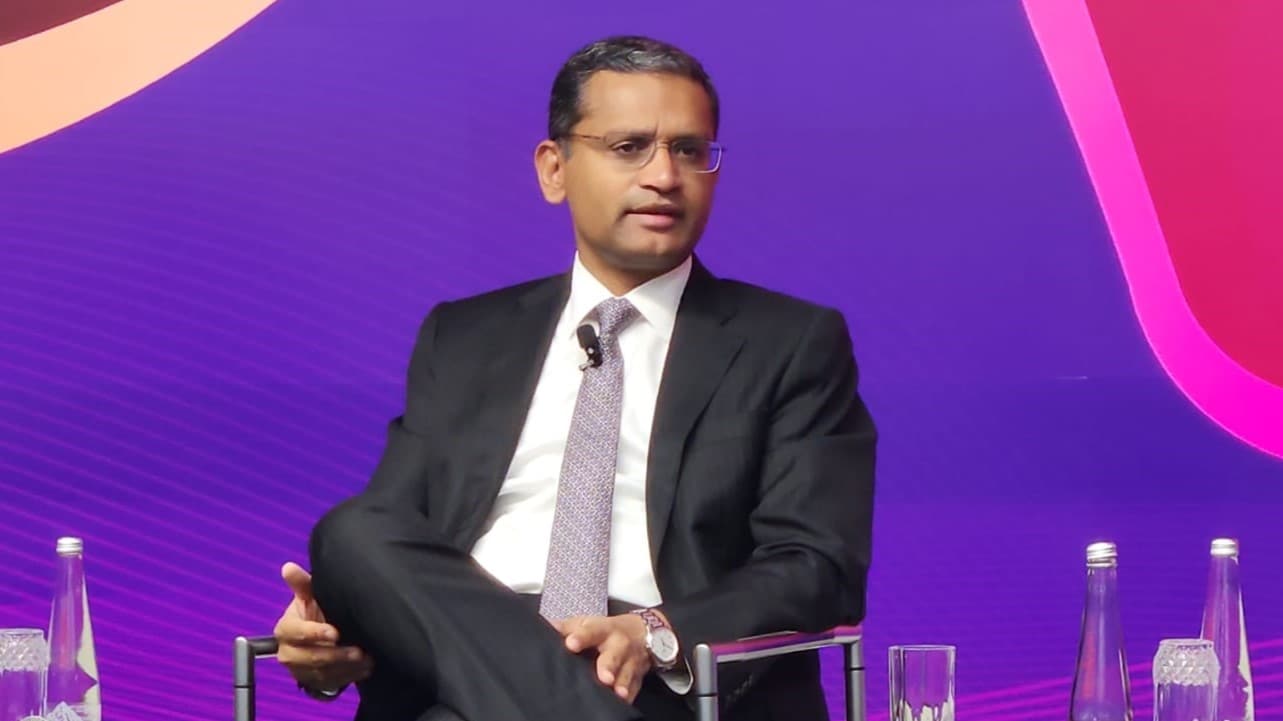
"An absolute privilege." That's how Rajesh Gopinathan has described his journey at Tata Consultancy Services Ltd., as he relinquishes the helm and exits the company he joined fresh out of college.
"This week marks the culmination of my two-decade-long journey with TCS. I will step down from my role as CEO and MD on May 31, 2023," Gopinathan said in a letter to employees on Tuesday. "It has been an absolute privilege to lead our company in the last six years, which have been a period of tremendous growth and transformation for all of us."
BQ Prime has seen a copy of the letter.
On March 16, the information technology bellwether announced Gopinathan had resigned in a surprise move that was to become effective in September.
Krithi Krithivasan, president and global head of TCS's BFSI vertical, was appointed as the CEO designate. He was to go through a transition with Gopinathan and then take over in the fiscal that started on April 1. However, on April 12, TCS announced that Krithivasan would take the helm on June 1—more than three months earlier than planned.
The transition is over, Gopinathan said at a press conference to announce the software services provider's fourth-quarter earnings. He will continue to remain with the IT major till Sept. 15—the previously announced date for Krithivasan's takeover as the CEO.
A Punctuated Tenure
Gopinathan, 52, had taken the helm of India's largest IT services firm in February 2017, after his predecessor, Natarajan Chandrasekaran, was elevated as Chairman of the group parent Tata Sons Pvt.
Under his leadership, TCS revamped its organisational structure, with specialised groups targeted to help startups as well as large global firms, eyeing revenues of up to $50 billion before 2030. TCS generated sales of $25.7 billion in the year through March 2022.
"During this time, we accelerated TCS' digital transformation, positioning the company as a leader in digital services," Gopinathan said in the letter. "We strategically focused on the cloud opportunity and helped TCS emerge as a top global partner of all three leading cloud providers [Amazon Web Services, Google Cloud, and Microsoft Azure]."
That helped the IT services company grow its customer base and increase the number of $100 million-plus clients from 35 to 60, he said.
"Our focus of operational rigour, strategic transformation, innovation, and profitable growth has helped TCS grow revenues from $17.5 billion in March 2017 to $27.9 billion in March 2023," he said. "During the same period, market capitalisation grew from $74 billion to $143 billion, and the company returned over Rs 2 trillion to shareholders through dividends and share buybacks."
"Most importantly, we went through a process of self-discovery and greater awareness of the wealth of contextual knowledge we possess and the value of work we do for our customers."
It's All About The People
That growth, Gopinathan said, wouldn't have been possible without the strength that India's biggest private employer derives from its over 6,00,000-strong staff.
During his tenure as CEO, TCS expanded the leadership by introducing a three-tier business unit—growing the pool of named business unit owners from 25 to 150. That also enabled the incubation of young leadership across the company.
TCS is also one of the largest employers of women in the technology sector, Gopinathan said, with nearly 2,20,000 women making up 35.7% of the company's workforce.
"Today, nearly 30% of our business development and delivery management leaders are women," Gopinathan said. "I have no doubt that the growing cohort of women leaders at TCS will be at the forefront of combining top-down drive with bottom-up support for uniform participation across the leadership pyramid."
Gopinathan signed off with a hat tip to those who came before him—Faqir Chand Kohli, Subramanian Ramadorai, and Natarajan Chandrasekaran—and his heir apparent.
"I'm grateful to have had the privilege to helm the TCS journey for the last six years and carry on the proud legacy of Kohli, Ram, and Chandra," he said. "I wish Krithi the very best as he takes over the TCS baton and charts the way forward to our $50 billion aspiration."
"I'm confident that TCS' best years are ahead, and I look forward to cheering all of you on and your continued success from outside."

-
'Never Seen This Level Of Negativity': Sandeep Tandon Says The Next Rally May Be Closer Than You Think

Veteran investor Sandeep Tandon says foreign selling is easing, large-caps are due a comeback and mid-caps are crowded, while he turns positive on gold, power and pharma this Diwali.
-
Indians Stay With Family, Not In Hotels | The Reason Why
India still lacks enough clean, reliable and affordable hotels for budget-conscious travellers.
-
The Economic Imperative: Analysing The Material Driving Force Behind India-Canada Strategic Reset
This economic complementarity is further reinforced by deep institutional investment ties and talent mobility, which form the bedrock of the bilateral framework.
-
Medicine Pricing: Where Must Profit Stop?
India must confront excessive margins, hidden incentives and regulatory gaps that threaten the integrity of medicine.
-
Why Amazon And Flipkart Are Struggling To Beat Meesho In India's Smaller Cities
With 274 million users and lowest-cost logistics, Meesho is defending its value commerce crown against giants like Amazon and Flipkart.
-
High US Salaries, No Green Card Certainty: The Financial Calculation Facing Indian H-1B Families
The suspension of PERM processing at eight technology employers does not cancel existing H-1B visas. What it does is force a question many Indian families have been avoiding: is the US salary worth tying your career and family plans to one employer?
-
Swiggy vs Eternal: Food Delivery's Two Rivals Are No Longer In The Same Race
Eternal is building a private AI assistant, dark.ai. Swiggy is still working out how to make Instamart pay, with an operating loss of Rs 895 crore in the July-September quarter while Blinkit stayed profitable.
-
Where You Live Shapes How You Get To Work | The Reason Why
Two-wheelers are the most popular way to get to work in India, accounting for nearly 43% of workplace commutes.
-
Unhedged Position: Can India See An Indonesia-Style Time Correction?
The Nifty is trading below levels it first clocked in 2024. Is there, then, as I have suggested in the headline, potential that the current time correction drags on painfully for the next three-five, even ten years?
-
Navigating Friction And Energy Realities: An Analysis Of Marco Rubio's October Visit To India
Occurring at a critical juncture marked by stalled trade negotiations and escalating geopolitical pressures over global energy supplies, the visit offers a profound window into modern US-India relations.










