Amul To Invest Rs 5,000 Crore To Set Up Milk Processing Plants
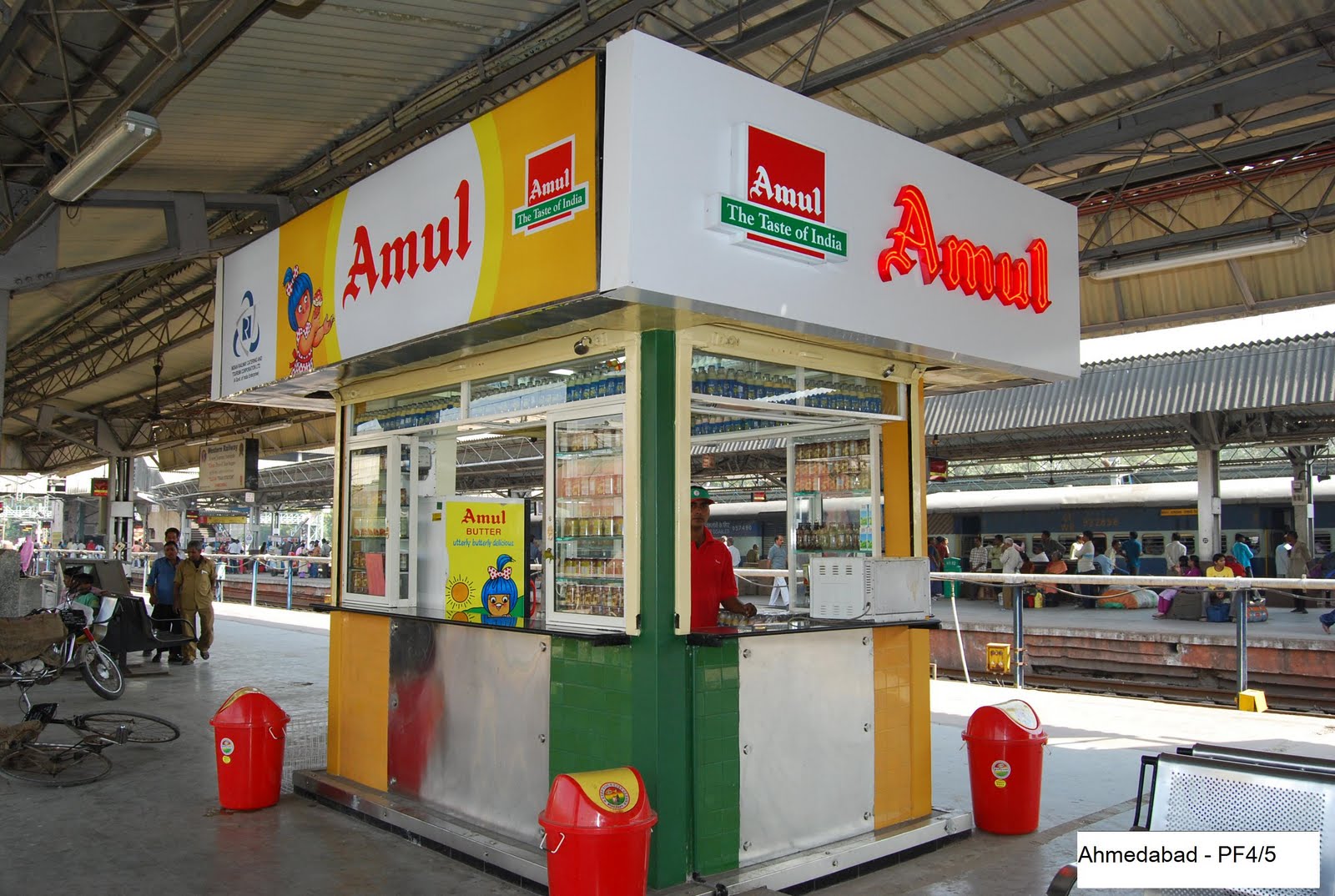
Gujarat Cooperative Milk Marketing Federation, which sells milk products under the Amul brand, will invest Rs 4,000-5,000 crore over the next two to three years, largely into milk processing plants across the country.
"We would be adding about 15-16 new plants, as we plan to go closer to the consumers," said Jayen Mehta, managing director at Amul.
The country's largest dairy brand is building a modern facility in its home state Gujarat's Rajkot district, which will produce 20 lakh litres of milk a day, Mehta told BQ Prime. It also plans to set up a plant each in two cities of Uttar Pradesh—Varanasi and Baghpat—to produce 10 lakh litres a day. "We are also looking at setting up new, modern plants in Kolkata and Pune," he said.
In all, it plans to add 80 lakh litres to its existing capacity of 420 lakh litres.
Of the total investment, Mehta said, the company has set aside Rs 1,000 crore for its ice-cream business, part of which is under the government's production-linked incentive scheme. The remaining will be utilised for capacity expansion, new products and upgrading of existing facilities.
The Gujrat-based dairy cooperative collects 300 lakh litres of milk every day, processes it through 98 dairy plants and then markets the product with the help of its 15,000-odd distributors and a million-plus retail outlets.
Even as the first quarter sales came in double-digits, it was short of expectations, Mehta said. "Consumption of summer products such as beverages, ice-creams, buttermilk were impacted during the quarter."
While inflation is a factor, the other sales dampener was unseasonal rains.
The company has increased retail prices by 5-6% in the last one year, as against an overall inflation of 8-10%, the MD said. The situation, however, is "pretty good" now, with milk production on the rise. "If the current situation persists, then we don't see any reason for more price hikes going ahead."
Mehta expects demand to remain "steady" during the rest of the year. "We are confident of growing at 18-20% in the ongoing fiscal too," he said.
The company has set a sales target of Rs 66,000 crore for FY24. At a group level, Mehta expects sales to cross Rs 80,000 crore by the end of the fiscal.
Besides, the huge expansion plan that is already underway will take care of GCMMF's anticipated growth target to achieve Rs 1 lakh crore turnover in the next couple of years, according to Mehta.
In FY23, the company registered a turnover of Rs 55,055 crore, indicating a growth of 18.5% over the previous year. The growth is attributed to higher demand for branded consumer products like curd, cheese, paneer, butter, cream, beverages and ghee. The group turnover of the 18-member union of Amul has crossed Rs 72,000 crore during the year ended March 2023.
Fresh milk consumption is increasing dramatically, especially post Covid, as health-conscious consumers shift from loose to branded products.
Amul derives about 50% of sales from fresh milk in pouches, said Mehta.
Besides, Amul is scaling up its non-dairy portfolio, eyeing every item in a kitchen. Its plan to build a consumer goods empire offers stiff competition to behemoths like Nestle, ITC Ltd., Britannia Industries Ltd., Coca Cola and even Reliance.
The company has identified a few new categories to fuel its next phase of growth. These are probiotics, proteins and organic food products.
Amul has already launched a few probiotic products such as ice-creams and yogurt and Mehta said that the company has now also converted its entire range of buttermilk pouches—30 lakh litres produced across its dairy plants every day—into probiotic buttermilk, to make it available as a mass market product. "One can get the benefits at Rs 30 a litre, which is otherwise available in expensive packs," Mehta said.
Protein is also a major focus area for Amul, the MD said.
"We are already India's largest manufacturer of cheese and paneer. Now, we are in the process of launching more protein-rich products like yogurt, ice-creams, cookies, milkshakes, snacking items, cereals, among others."
The company has also entered the organic food space last year and has launched a few products like organic atta, rice and pulses.
"We also plan to launch sugar, masalas, jaggery, tea, among others," said Mehta. The idea is to have every item found in a kitchen to be in an organic form.

-
The Economic Imperative: Analysing The Material Driving Force Behind India-Canada Strategic Reset

This economic complementarity is further reinforced by deep institutional investment ties and talent mobility, which form the bedrock of the bilateral framework.
-
Medicine Pricing: Where Must Profit Stop?
India must confront excessive margins, hidden incentives and regulatory gaps that threaten the integrity of medicine.
-
Why Amazon And Flipkart Are Struggling To Beat Meesho In India's Smaller Cities
With 274 million users and lowest-cost logistics, Meesho is defending its value commerce crown against giants like Amazon and Flipkart.
-
High US Salaries, No Green Card Certainty: The Financial Calculation Facing Indian H-1B Families
The suspension of PERM processing at eight technology employers does not cancel existing H-1B visas. What it does is force a question many Indian families have been avoiding: is the US salary worth tying your career and family plans to one employer?
-
Swiggy vs Eternal: Food Delivery's Two Rivals Are No Longer In The Same Race
Eternal is building a private AI assistant, dark.ai. Swiggy is still working out how to make Instamart pay, with an operating loss of Rs 895 crore in the July-September quarter while Blinkit stayed profitable.
-
Where You Live Shapes How You Get To Work | The Reason Why
Two-wheelers are the most popular way to get to work in India, accounting for nearly 43% of workplace commutes.
-
Unhedged Position: Can India See An Indonesia-Style Time Correction?
The Nifty is trading below levels it first clocked in 2024. Is there, then, as I have suggested in the headline, potential that the current time correction drags on painfully for the next three-five, even ten years?
-
Navigating Friction And Energy Realities: An Analysis Of Marco Rubio's October Visit To India
Occurring at a critical juncture marked by stalled trade negotiations and escalating geopolitical pressures over global energy supplies, the visit offers a profound window into modern US-India relations.
-
India Exports Capital. Why Not Export Trusteeship?
The big question, then, is whether India can build an institution that global borrowers, investors, banks, and lawyers can trust, even without an Indian connection.
-
France's Economy & Politics Are In Crisis | The Reason Why
Let's look at how the French economy and politics evolved under Nicolas Sarkozy, Franois Hollande and Emmanuel Macron.










