Amid Alibaba Fever, Reasons for Caution in IPO Market
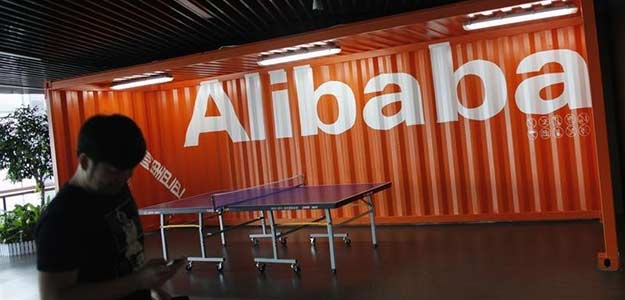
New York: The highly anticipated debut of Alibaba Group Holding Ltd, the Chinese e-commerce group, will come amid the busiest year for initial public offerings since the technology bubble burst in 2000.
Alibaba's IPO, which could come as soon as September 19, could raise more than $21 billion and claim Facebook Inc's title of biggest tech IPO. It will usher in a fall season when plenty of new names sell shares for the first time in the US market.
Returns from IPOs so far this year have been mixed. Some analysts say large swaths of the market, especially biotechnology stocks, are frothy.
The percentage of IPOs coming from money-losing companies has jumped to a 14-year high, according to Jay Ritter, a professor of finance and leading scholar of IPOs at the University of Florida.
The mixed financial results could dim enthusiasm for some of the hot names coming later this year, including web hosting company GoDaddy, airline Virgin America, and possibly burger chain Shake Shack, which has been exploring an IPO.
Roughly one-third of the 188 stocks that debuted this year are selling below their IPO price. New stocks have risen an average of 19 per cent over the first three months of trading, compared with 36 per cent in 2013, and 23 per cent in 2012, according to research firm Dealogic in New York.
"With the exception of mature companies like Alibaba, a lot of the companies that have all the hype around them tend to underperform beyond the first day. They just get squeezed to valuations that are beyond what they can absorb," said Kathleen Smith, who manages Greenwich, Connecticut-based Renaissance Capital's IPO ETF.
MediWound Ltd, a biopharmaceutical company, serves as a cautionary tale. Its shares down 60 per cent from the first closing price.
In perhaps the year's biggest flop, shares of King Digital Entertainment Plc, the maker of mobile game "Candy Crush Saga," have tumbled more than 29 per cent since going public in March.
"Remember how a few years ago, everyone had Angry Birds? That seems so 1998 now. These things run on a life cycle, and you need new things in the content pipeline all the time," said Jim O'Donnell, chief investment officer at San Francisco-based Forward, which has $5 billion in assets under management.
Some of the IPOs from late last year, including casual dining chain Potbelly Corp, have also sunk. Potbelly is down 60 per cent from its first-day close.
Given the underwhelming performance of several high-profile IPOs in recent months, some analysts worry investor appetite for risk is reaching unsustainable levels.
Much of the influx of money-losing companies comes from one sector, biotechnology, where investors tolerate spotty track records in hopes of cashing in on lucrative payouts.
While some investors find their bets rewarded, as in the case of UltraGenyx Pharmaceutical Inc, which is up 176 per cent from its IPO price, others are disappointed. Three of the five worst performing IPOs of 2014 are in biotechnology.
"They're essentially looking at companies that don't have much in the way of revenue or profit and hoping to see that one big blockbuster drug approval or pharma company buyout," said Jeff Reeves, editor of InvestorPlace.com in Rockville, Maryland.
Yet even excluding biotech, IPOs look rich. Offer prices have been about 50 per cent higher this year than the average from 2001 to 2013, even as median sales declined to $136.2 million from $187.3 million in the year before the companies go public, according to Ritter.
Experts say the stock market's gains, with the S&P 500 topping 2,000 for the first time last month, are somewhat responsible for the appetite for risk. And with the U.S. Federal Reserve keeping rates low, investors seeking growth are attracted to more untested companies.
"Individual investors' appetite for risk will be predicated on the economic backdrop. If they think the Fed will continue to be accommodating, they'll be more apt to want to take risks on IPOs," said Joel Guth, chief executive officer of Gryphon Financial Partners, a member of the HighTower Network.
Still, there are some indications investors are becoming cautious. In the second quarter, stocks rose an average of 9.2 per cent on their first day of trading. In each of the three quarters before that, stocks popped about 20 per cent.
That could mean the torrent of companies slated for IPOS in the next few months, like restaurant-arcade chain Dave & Buster's Entertainment and peer-to-peer banker LendingClub, will be met with more skepticism.
"When valuations are at their highest level in years, at some point, there's going to be a correction," Ritter said.
Copyright: Thomson Reuters 2014

-
The Curious Case of Equitas Small Finance Bank And A CEO Who Quit For Stock

PN Vasudevan believes persistent investor concerns over a perceived conflict of interest had become a governance overhang on Equitas Small Finance Bank's stock, even as the lender improved profitability and asset quality.
-
Talking Points This Week: AI Cash Burn, A Tiger Comeback And An India That Still Finds Its Own Path
India is not immune to higher oil or tighter global liquidity, yet its earnings base is broader, its domestic policy levers are still available.
-
Foreign Investors Own Half Of HDFC Bank and ICICI Bank. An LTCG Cut Could Matter Most Here
Foreign portfolio investors have US$115 billion parked in HDFC Bank, ICICI Bank. If the government cuts long-term capital gains tax, Jefferies says returning foreign money could land here first.
-
'Never Seen This Level Of Negativity': Sandeep Tandon Says The Next Rally May Be Closer Than You Think
Veteran investor Sandeep Tandon says foreign selling is easing, large-caps are due a comeback and mid-caps are crowded, while he turns positive on gold, power and pharma this Diwali.
-
Indians Stay With Family, Not In Hotels | The Reason Why
India still lacks enough clean, reliable and affordable hotels for budget-conscious travellers.
-
The Economic Imperative: Analysing The Material Driving Force Behind India-Canada Strategic Reset
This economic complementarity is further reinforced by deep institutional investment ties and talent mobility, which form the bedrock of the bilateral framework.
-
Medicine Pricing: Where Must Profit Stop?
India must confront excessive margins, hidden incentives and regulatory gaps that threaten the integrity of medicine.
-
Why Amazon And Flipkart Are Struggling To Beat Meesho In India's Smaller Cities
With 274 million users and lowest-cost logistics, Meesho is defending its value commerce crown against giants like Amazon and Flipkart.
-
High US Salaries, No Green Card Certainty: The Financial Calculation Facing Indian H-1B Families
The suspension of PERM processing at eight technology employers does not cancel existing H-1B visas. What it does is force a question many Indian families have been avoiding: is the US salary worth tying your career and family plans to one employer?
-
Swiggy vs Eternal: Food Delivery's Two Rivals Are No Longer In The Same Race
Eternal is building a private AI assistant, dark.ai. Swiggy is still working out how to make Instamart pay, with an operating loss of Rs 895 crore in the July-September quarter while Blinkit stayed profitable.










