Americans Less Likely To Trust Facebook Than Rivals On Personal Data: Poll
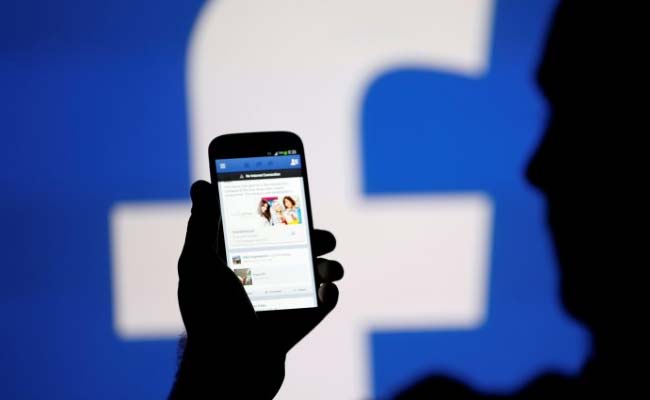
New York/San Francisco: Fewer than half of Americans trust Facebook to obey US privacy laws, according to a Reuters/Ipsos poll released on Sunday, illustrating the challenge facing the social media network after a scandal over its handling of personal information.
The poll, taken Wednesday through Friday, also found that fewer Americans trust Facebook than other tech companies that gather user data, such as Apple Inc, Alphabet Inc's Google, Amazon.com Inc, Microsoft Corp and Yahoo.
Some 41 per cent of Americans trust Facebook to obey laws that protect their personal information, compared with 66 per cent who said they trust Amazon, 62 per cent who trust Google, 60 per cent for Microsoft and 47 per cent for Yahoo.
The Reuters/Ipsos poll was conducted online in English throughout the United States. It gathered responses from 2,237 people and has a credibility interval, a measure of accuracy, of 2 percentage points.
Facebook, the world's largest social media firm, has been offering apologies as it tries to repair its reputation among users, advertisers, lawmakers and investors for mistakes that let 50 million users' data get into the hands of political consultancy Cambridge Analytica.
Facebook shares tumbled 14 per cent last week, while the hashtag #DeleteFacebook gained traction online and the company's chief executive officer, Mark Zuckerberg, faced demands that he appear before US lawmakers to testify in a hearing.
Mr Zuckerberg and Facebook's chief operating officer, Sheryl Sandberg, said last week that shoring up trust was their priority. "We know this is an issue of trust. We know this is a critical moment for our company," Ms Sandberg told CNBC on Thursday.
It is too early to say if distrust will cause people to step back from Facebook, eMarketer analyst Debra Williamson said. Customers of banks or other industries do not necessarily quit after losing faith, she said.
"It's psychologically harder to let go of a platform like Facebook that's become pretty well ingrained into people's lives," she said.
One reason that Facebook and other internet companies collect personal information from users is to deliver advertisements for products and services to people who are most likely to want them.
Facebook, with more than 2 billion monthly active users, made almost all its $40.6 billion in revenue last year from advertising.
The poll found that many people take a dim view of those "targeted" advertisements.
Some 63 per cent said they would like to see "less targeted advertising" in the future, while 9 per cent said they wanted more. When asked to compare them with traditional forms of advertising, 41 per cent said targeted ads are "worse" while 21 percent said they are "better".
"I think they make a lot of assumptions that are not true," poll respondent Maria Curran, 56, who lives near Manchester, New Hampshire, said in a follow-up interview.
"It's like if I show an interest in healthy eating, all of a sudden all of the ads are about weight control and exercise and how to lose weight. I just get inundated," she said.
Ms Curran said she knows online retailer Amazon.com also collects her information for targeted marketing, but that it is less annoying because it is a shopping site, not a place for personal conversations.
Another poll respondent, Kamaal Greene, 26, said he likes targeted ads better than traditional ones because they provide a service, steering him to products he wants.
"A while ago I was looking for a special kind of glove for my job," said Mr Greene, a firefighter from Detroit.
"I put it in my Amazon cart and forgot about it. Then, later, the ad popped up on ... Facebook, and I was like 'oh shoot.' It reminded me and I clicked on it and bought it."
A plurality of adults said they would like the government to take a bigger role in overseeing the industry's handling of user information. According to the poll, 46 per cent of adults said they want more government regulation, while 17 per cent said they want less. Another 20 per cent said they wanted no change, and the remaining 18 per cent said they did not know.

-
AI Bias In Investing Cannot Be Eliminated, But It Can Be Governed

Framing is a particularly important example as identical financial information presented in terms of gains rather than losses can lead an LLM to reach a different assessment.
-
Joining The Dots | Dark Skies, Steady Diya: Why Hope Holds This Diwali
With war, a weak rupee and foreign outflows weighing on sentiment, policymakers at the NDTV World Summit and market veterans at NDTV Profit Ignite: Diwali Edition offered the same advice: stay invested and filter out the noise.
-
The Curious Case of Equitas Small Finance Bank And A CEO Who Quit For Stock
PN Vasudevan believes persistent investor concerns over a perceived conflict of interest had become a governance overhang on Equitas Small Finance Bank's stock, even as the lender improved profitability and asset quality.
-
Talking Points This Week: AI Cash Burn, A Tiger Comeback And An India That Still Finds Its Own Path
India is not immune to higher oil or tighter global liquidity, yet its earnings base is broader, its domestic policy levers are still available.
-
Foreign Investors Own Half Of HDFC Bank and ICICI Bank. An LTCG Cut Could Matter Most Here
Foreign portfolio investors have US$115 billion parked in HDFC Bank, ICICI Bank. If the government cuts long-term capital gains tax, Jefferies says returning foreign money could land here first.
-
'Never Seen This Level Of Negativity': Sandeep Tandon Says The Next Rally May Be Closer Than You Think
Veteran investor Sandeep Tandon says foreign selling is easing, large-caps are due a comeback and mid-caps are crowded, while he turns positive on gold, power and pharma this Diwali.
-
Indians Stay With Family, Not In Hotels | The Reason Why
India still lacks enough clean, reliable and affordable hotels for budget-conscious travellers.
-
The Economic Imperative: Analysing The Material Driving Force Behind India-Canada Strategic Reset
This economic complementarity is further reinforced by deep institutional investment ties and talent mobility, which form the bedrock of the bilateral framework.
-
Medicine Pricing: Where Must Profit Stop?
India must confront excessive margins, hidden incentives and regulatory gaps that threaten the integrity of medicine.
-
Why Amazon And Flipkart Are Struggling To Beat Meesho In India's Smaller Cities
With 274 million users and lowest-cost logistics, Meesho is defending its value commerce crown against giants like Amazon and Flipkart.










