AMD’s AI Optimism Helps Investors Look Past Tepid Forecast
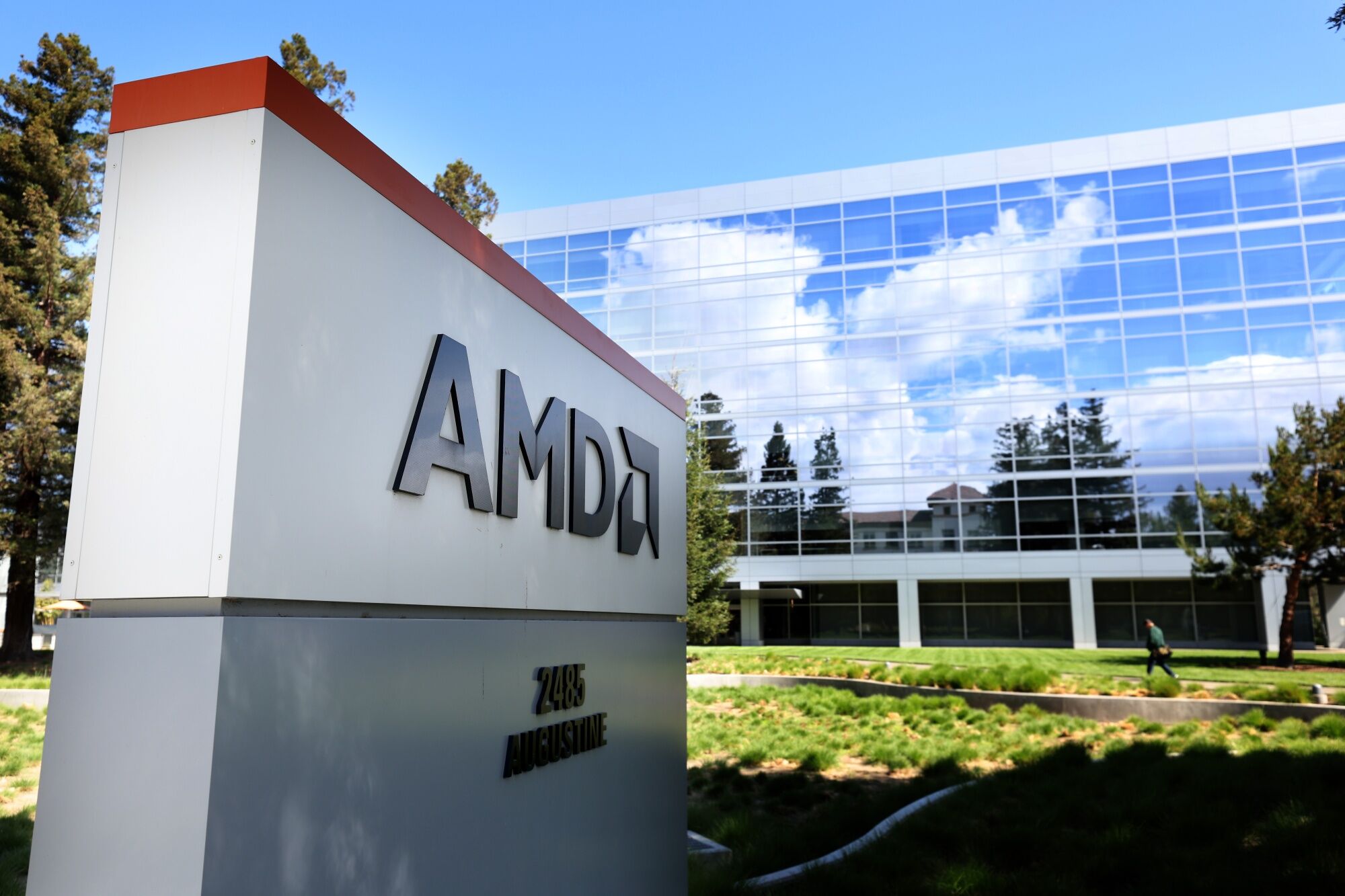
(Bloomberg) -- Advanced Micro Devices Inc. said a new AI chip will generate $2 billion in sales next year, fueling optimism that demand for the component will offset a slump in orders for video-game equipment.
The company's MI300 processor, which will compete with Nvidia Corp. products in the market for artificial intelligence accelerators, is set to begin shipping in the coming weeks, AMD said during a post-earnings conference call Tuesday.
The chip has received strong early orders, including from large cloud computing customers. It should bring in $400 million in revenue this quarter, on the way toward generating $2 billion for the whole of 2024, AMD said. In fact, it's on course to be the fastest-ever AMD product to reach $1 billion in sales, the company projected.
“We think the market is huge,” Chief Executive Officer Lisa Su said. “We're playing to win and we think MI300 is a great product. I'm encouraged with the progress we're making with the hardware and software.”
Those prospects helped take the focus off a sales forecast that fell short of many Wall Street estimates. Fourth-quarter revenue will be $5.8 billion to $6.4 billion, AMD said earlier Tuesday. The average analyst estimate was $6.4 billion.
Otherwise strong demand will be offset by “lower sales in the gaming segment,” Chief Financial Officer Jean Hu said in a statement. Chips for industrial, automotive and networking systems — known as the embedded market — will continue to weaken as well.
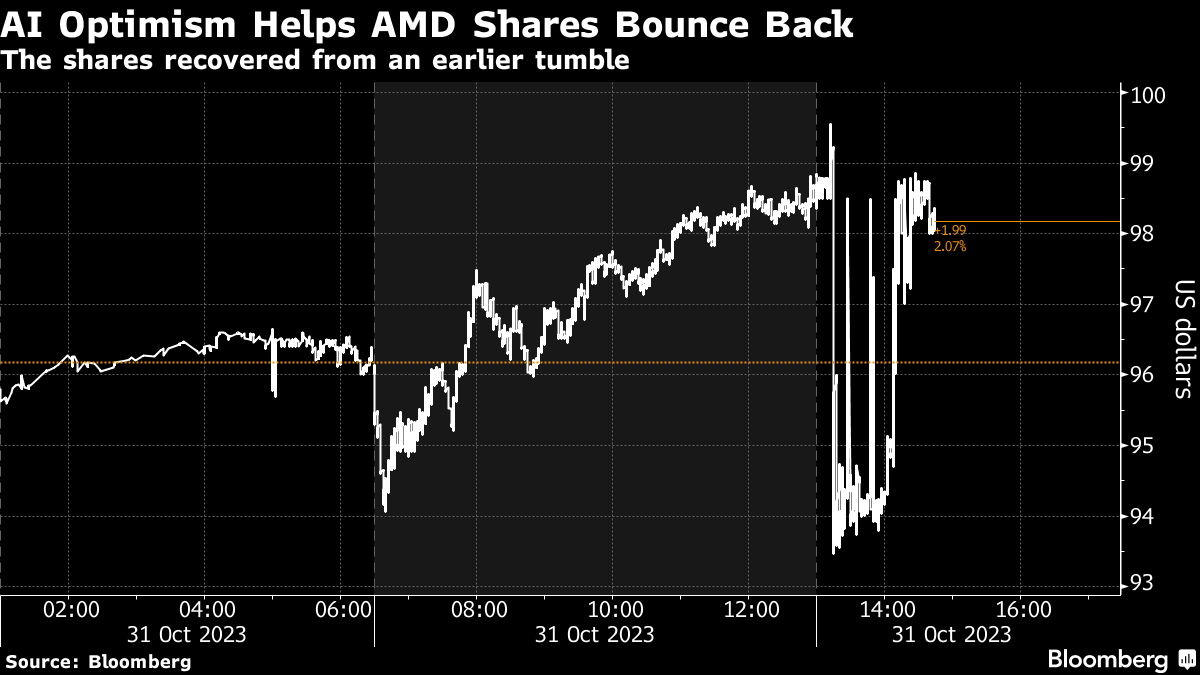
The forecast initially sent AMD shares down as much as 5.1% in late trading, but they recovered almost all of the loss after the AI remarks on the conference call. The stock was up 52% this year through the close, lifted by a broader resurgence in chipmaker shares.
AMD is playing catch-up with Nvidia in AI accelerators, the processors used to develop chatbots and other advanced tools. There's a lot riding on AMD's new MI300. The total market for such chips could top $150 billion by 2027, Su has said.
“We're just at the very early innings of people adopting this,” she said on the conference call with analysts, who mostly focused their questions on the prospects for the MI300.
Read More: AMD's New AI Chip Poised to Steal Earnings Spotlight
In the nearer term, the company has been helped by a rebound in its traditional business, the main processors for PCs. That industry has emerged from a slump that was made worse by a massive buildup in excess inventory. AMD is the second-largest maker of PC processors, after Intel Corp.
AMD's third-quarter earnings amounted to 70 cents a share, excluding some items, compared with an estimate of 68 cents. Revenue was $5.8 billion, versus an average projection of $5.7 billion.
AMD's PC chip division had revenue of $1.45 billion, compared with a $1.23 billion estimate, while data center sales were $1.6 billion, just short of a $1.62 billion projection. Gaming computer-related revenue was $1.51 billion, missing a $1.53 billion prediction.
AMD is the second-largest maker of chips that go onto add-in graphics cards, which turn PCs into gaming machines. It also provides chips to both Sony Group Corp. and Microsoft Corp. for their consoles. Demand for such products typically goes up during the end-of-year holiday shopping season, and components needed for that seasonal peak would have been ordered by now. Nvidia leads the market for PC add-in card chips.
The age of the Sony and Microsoft console models — both of which went on sale in late 2020 — means that demand is naturally declining, AMD's Su said. Still, they're selling at higher levels than the preceding generations of the gaming machines, she said.
The weakness in the embedded market has hurt other chipmakers, including Texas Instruments Inc., which has reported that demand for industrial semiconductors is cooling. AMD makes programmable chips that are used in networking gear, vehicles, space and defense hardware.
Demand from makers of communications equipment, particularly 5G-related mobile-phone gear, has declined sharply and will continue to do so, AMD projected. In the broader industrial market, orders in Europe are weak, the company said.
AMD, Nvidia and Intel, meanwhile, are trying to make their technology essential in data centers, part of a race to capture new spending on AI hardware. For now, Nvidia has taken the lead in this scramble, helping propel its market valuation past $1 trillion this year.
The chipmakers will also have to navigate new more strict rules on the export of those chips to China, the largest market for semiconductors. Washington has clamped down on such shipments in an effort, it says, to protect US national security.
(Updates with more details from conference call in 10th paragraph.)
More stories like this are available on bloomberg.com
©2023 Bloomberg L.P.

-
Talking Points This Week: Leadership Shock At Nvidia, Earnings Strength, And The Fog Over Hormuz

The Anthropic IPO pricing and first trading day, Nvidia's upcoming earnings, and any fresh signals from Iran will set the tone for the following week.
-
Signature Play: The Classic Cocktail Is Dead. Or Is It?
Classic cocktails are disappearing from India's cocktail menus. But they're still being ordered, taught to bartenders and borrowed from. So, who's really having the last drink?
-
A New Samvat Wishlist: Inclusive Prosperity And Human Development
India has strengthened its economic foundations through infrastructure, digital access and enterprise. Its next growth chapter must deepen productivity, create better livelihoods and widen participation in prosperity.
-
Love, Sex Aur Dhokha: The Audacious Plot To Spy On Jensen Huang
A Taipei dinner, a Singapore chip buyer and a suspected Chinese asset: inside the alleged spy operation that got close to NVIDIA's Jensen Huang.
-
Ten Things I Learnt This Samvat
Patience can be a trap. Cheap stocks can stay cheap. Leverage can wipe you out. What did Samvat 2082 teach us? Niraj Shah writes on 10 lessons from the year gone by.
-
Talking Points This Week: Tech Nerves, FII Buying, And A Faraway Banking Shock
The global markets are not shining this Diwali. The exception in the large markets is, India.
-
Midterm Rally Lasted A Day. The Hard Reality Of A Divided US May Last Two Years | Opinion
Between a contested AI boom, a debt ceiling that arrives in 2027 and a president with every incentive to act alone, the next two years may prove more volatile than the first day's rally suggests.
-
Blue Wave Will Derail the AI Trade but Won't Dismantle the AI Era | Unhedged Position
The Democrats' sweep of the US Congress will see politics collide with economic forces both over the long and short term.
-
It's Time To Take The GST Council's Bet On Trust Global
Payment records can prove India's services exports, and clear, proportionate rules can bring foreign digital sellers into the tax net.
-
Opinion | India at 38: From Innovation Overperformer to Innovation Powerhouse
India now has 453 VC-backed deep science startups, 18 of them late-stage, after 117 percent growth since 2020. Laurus Labs, at USD 9.3 billion, is the most valuable deep science company in any middle-income economy outside China.









