Amazon Prime Day Flashes Warning for Retailers
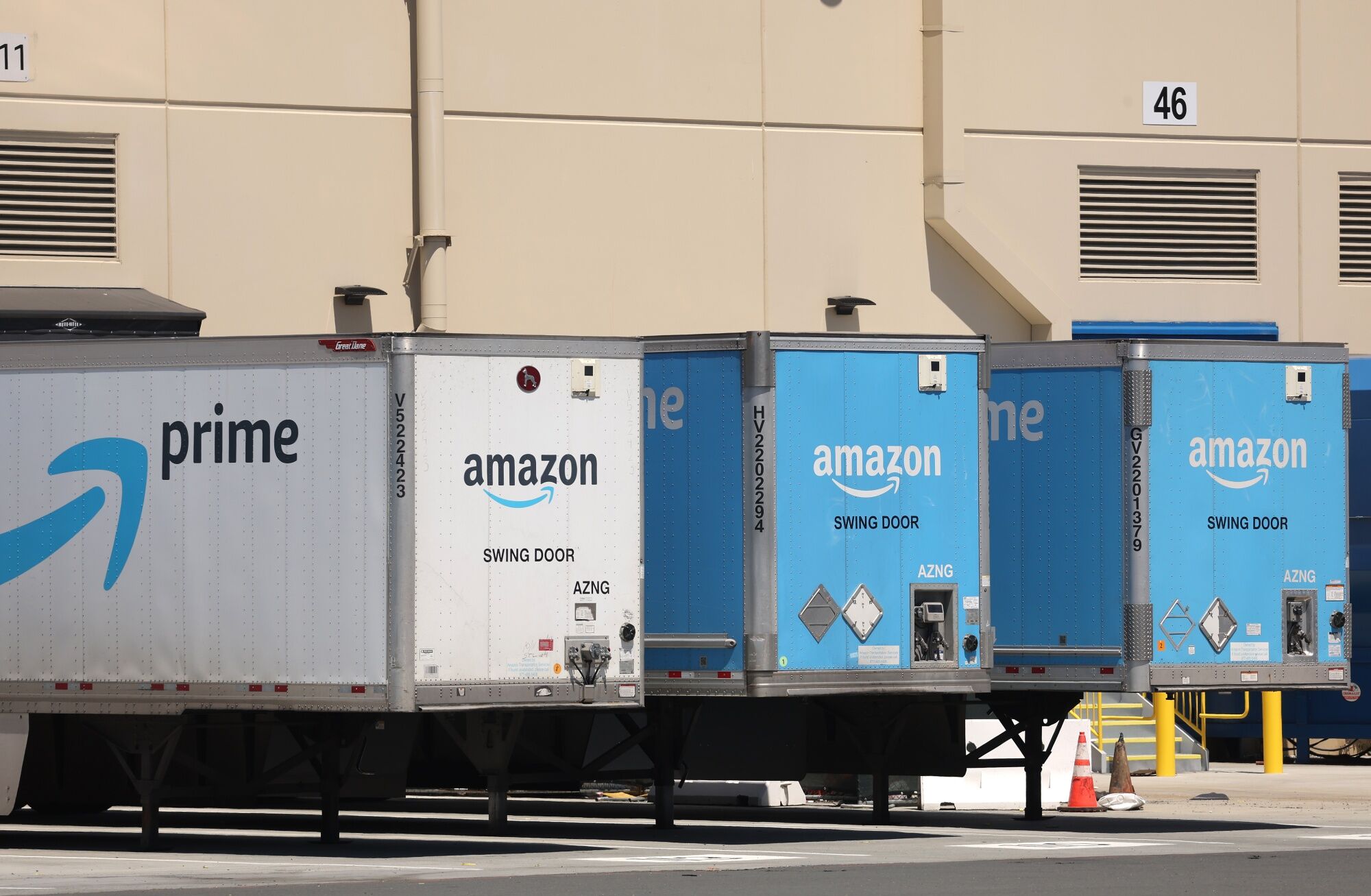
(Bloomberg Opinion) -- Amazon.com Inc. crowed over this week's Prime Day sales, boasting that the two-day discount promotion “outpaced” last year's event. Such a flashy description suggests the unofficial kickoff to the holiday season has set up the broader retail industry for a bright few months. But independent data from credit card transaction data provider Facteus paint a much more muted sales picture, with Amazon making slight gains and the broader retail industry falling behind.
The lackluster spending is a troubling signal for the sector, which was hoping for a rebound after a year of sluggish consumer spending. Instead, retailers are facing a disappointing end to the year with few choices other than to take on risky promotions to keep their heads above water — a strategy that will widen the gap between the haves and have-nots of the sector.
The Prime Day event that concluded Wednesday, a sequel to Amazon's big sales promotion in July, is being closely scrutinized for signs of how the retail industry will fare during the holidays. Prime Day has morphed into a sector-wide bonanza, with retailers from Walmart Inc. to Macy's Inc. running competing events in both summer and fall. While not as big as the post-Thanksgiving Black Friday weekend, it does give retailers clues about consumers' mood. When sales in October are humdrum, it isn't a good sign.
Amazon brought in an estimated $144.53 in average spending per customer for the retailer, amounting to a 2% increase from last year's tally, according to Facteus. But for other retailers running competing discounts this week, sales fell by an estimated 1% compared with last year, according to Salesforce.
Those are sales losses Amazon competitors can't afford. Retailers entered the fourth quarter under a lot of pressure. A slowdown in consumer spending on nice-to-have goods has dealt a blow to top-line growth. Best Buy Co. Inc., Dollar Tree Inc. and Target Corp. all have narrowed their guidance for the rest of the year, saying inflation has put a crimp in consumers' shopping habits.
Gap Inc.'s Old Navy brand said demand over the summer was noticeably weaker among its lower-income customers. Home-improvement rivals Lowe's Cos. Inc. and Home Depot Inc. both saw sales declines and shoppers foregoing large DIY projects for smaller ones. Macy's said its shoppers have become more intentional about how they use their disposable income, leading to slower sales growth.
Retail rivals Amazon and Walmart are entering the season on stronger footing. A behemoth like Amazon can better afford to offer discounts. It has an estimated 167 million Prime customers in the US alone, people who typically pay $139 a year to join the company's leading subscription program and can be counted on to shop with Amazon year after year. Walmart has the advantage of being a renowned discounter and the country's largest grocer by sales volume. The company has seen solid sales growth even as its brick-and-mortar peers struggle under weakened consumer spending. It also has invested in its e-commerce business, with the rollout of a competing subscription program called Walmart+, and leads in online grocery sales.
Smaller retailers have no choice but to continue offering deals to vie for shoppers who increasingly put price ahead of brand loyalty. Three in five consumers who plan to shop this winter say they want to spend the least amount of money possible, according to market research firm Mintel. This type of environment sets up retailers for risky discount wars as they fight for customers.
For some companies, price wars come at a high cost. Discount retail chain Big Lots Inc. reported a slight dip in its gross margin rate last quarter due to increased discounts. Dollar General Corp. expects a $170 million hit to operating profit in the back half of the year due to increased markdown activity. Foot Locker Inc. told investors in August it expects gross margins for the year to decline in part due to steeper discounts. A discount war could be what drives a bigger wedge between smaller retailers betting on promotions and retail heavyweights.
At Amazon, Chief Executive Officer Andy Jassy has been relentless in cutting costs across the business. In the last year, the company, which accounts for 40% of US e-commerce sales, has streamlined its distribution business around eight regional centers. That helped reverse its US e-commerce operating income swing to a gain in its most recent quarter and should allow the company to withstand bumps in the holiday period.
There is one bright spot for the rest of the industry: Retailers are entering the holiday season with more balanced inventories, which means they likely won't be scrambling to offload surplus goods. That should help boost margins for retailers, who bring in about a third of their annual revenue during the holiday season.
While a steady job market certainly soothes consumers' nerves, it might not be enough to offset the queasiness they feel about inflation. In all likelihood, retailers are facing a less-than-sparkling holiday season.
More From Bloomberg Opinion:
- American Consumers Have Everyone Fooled — Even the Fed: Karl W. Smith
- The US Economy Is Dynamic Again, But Will It Last?: Allison Schrager
- Retailers May Want to Hold Off on Christmas Cheer: Andrea Felsted
(Clarifies in the 7th paragraph that Amazon has 167 million customers in the US.)
This column does not necessarily reflect the opinion of the editorial board or Bloomberg LP and its owners.
Leticia Miranda is a Bloomberg Opinion columnist covering consumer goods and the retail industry. She was previously a business reporter at NBC News and a retail reporter at BuzzFeed News.
More stories like this are available on bloomberg.com/opinion
©2023 Bloomberg L.P.

-
One El Nino, India Can Handle. Two Could Break The Granary

India's grain stocks can absorb one bad year, but a second El Nino could drain the buffer in two to three years, economists say.
-
India's Troika Of Good Luck | Joining The Dots
As Jensen Huang's exit drags Nvidia down, a cooling AI trade and resilient earnings have revived investor interest in India. A likely RBI rate hike looms.
-
Talking Points This Week: Leadership Shock At Nvidia, Earnings Strength, And The Fog Over Hormuz
The Anthropic IPO pricing and first trading day, Nvidia's upcoming earnings, and any fresh signals from Iran will set the tone for the following week.
-
Signature Play: The Classic Cocktail Is Dead. Or Is It?
Classic cocktails are disappearing from India's cocktail menus. But they're still being ordered, taught to bartenders and borrowed from. So, who's really having the last drink?
-
A New Samvat Wishlist: Inclusive Prosperity And Human Development
India has strengthened its economic foundations through infrastructure, digital access and enterprise. Its next growth chapter must deepen productivity, create better livelihoods and widen participation in prosperity.
-
Love, Sex Aur Dhokha: The Audacious Plot To Spy On Jensen Huang
A Taipei dinner, a Singapore chip buyer and a suspected Chinese asset: inside the alleged spy operation that got close to NVIDIA's Jensen Huang.
-
Ten Things I Learnt This Samvat
Patience can be a trap. Cheap stocks can stay cheap. Leverage can wipe you out. What did Samvat 2082 teach us? Niraj Shah writes on 10 lessons from the year gone by.
-
Talking Points This Week: Tech Nerves, FII Buying, And A Faraway Banking Shock
The global markets are not shining this Diwali. The exception in the large markets is, India.
-
Midterm Rally Lasted A Day. The Hard Reality Of A Divided US May Last Two Years | Opinion
Between a contested AI boom, a debt ceiling that arrives in 2027 and a president with every incentive to act alone, the next two years may prove more volatile than the first day's rally suggests.
-
Blue Wave Will Derail the AI Trade but Won't Dismantle the AI Era | Unhedged Position
The Democrats' sweep of the US Congress will see politics collide with economic forces both over the long and short term.









