All You Need To Know About National Common Mobility Card For Traveling In Delhi Metro
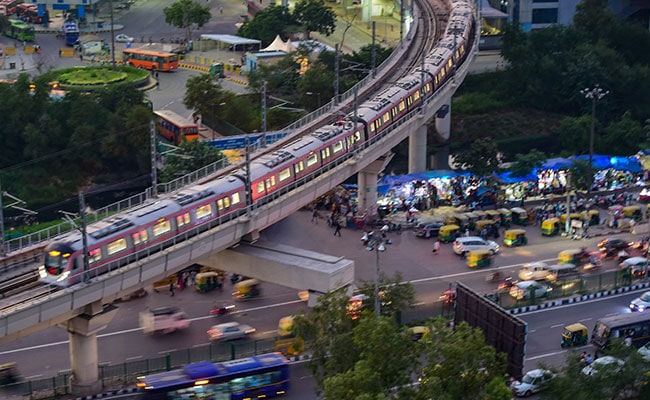
National Common Mobility Card (NCMC): The Delhi Metro Rail Corporation (DMRC) will launch the fully operational National Common Mobility Card (NCMC) for metro travel on the 23 km long Airport Express Line from New Delhi to Dwarka Sector 21 on December 28, 2020. The NCMC is an automatic fare collection system. With this facility, passengers will also be able to use a mobile phone to enter or exit a metro station on its corridors. The national common mobility card, known as the ‘One Nation One Card' is an inter-operable transport card, launched for passengers to pay multiple kinds of transport charges, including metro and bus services, through a common card. (Also Read: Atmanirbhar Bharat: Delhi Metro Signs Pact To Develop Indigenous Rail Systems )
The national common mobility card also allows cardholders to pay their parking charges, toll taxes, retail shopping, as well as withdraw money. Earlier in the year, the Delhi Metro Rail Corporation stated that the facility to use the mobile phones to enter/exit the automatic fare collection (AFC) gates are present in modern transport systems in many countries across the world, including South Korea's Seoul Metro System. In the upcoming Delhi Metro Phase-IV project, the AFC system will fully accept NCMC, which can also be used in any city across the country.
A mobile phone will work as a smart card, and commuters will be able to use it to enter/exit the AFC gates, in Delhi Metro Phase-IV corridors. Presently, Delhi Metro Airport Express line commuters can also enter/exit AFC gates by using a QR code on a phone, that has to be collected from a Delhi Metro counter. However, in future stages, Delhi Metro plans to have a system whereby commuters can generate their own QR codes on their mobile phones as well as enter through the AFC gates using that facility. The old Delhi Metro smart cards will also work Phase-IV corridors.
Meanwhile, Prime Minister Narendra Modi will be flagging off the country's first-ever fully automated driverless train service on the 37 km long Delhi Metro Magenta Line Janakpuri West to Botanical Garden on December 28, 2020, said the Delhi Metro Rail Corporation in a statement.

-
Signature Play: The Classic Cocktail Is Dead. Or Is It?

Classic cocktails are disappearing from India's cocktail menus. But they're still being ordered, taught to bartenders and borrowed from. So, who's really having the last drink?
-
A New Samvat Wishlist: Inclusive Prosperity And Human Development
India has strengthened its economic foundations through infrastructure, digital access and enterprise. Its next growth chapter must deepen productivity, create better livelihoods and widen participation in prosperity.
-
Love, Sex Aur Dhokha: The Audacious Plot To Spy On Jensen Huang
A Taipei dinner, a Singapore chip buyer and a suspected Chinese asset: inside the alleged spy operation that got close to NVIDIA's Jensen Huang.
-
Ten Things I Learnt This Samvat
Patience can be a trap. Cheap stocks can stay cheap. Leverage can wipe you out. What did Samvat 2082 teach us? Niraj Shah writes on 10 lessons from the year gone by.
-
Talking Points This Week: Tech Nerves, FII Buying, And A Faraway Banking Shock
The global markets are not shining this Diwali. The exception in the large markets is, India.
-
Midterm Rally Lasted A Day. The Hard Reality Of A Divided US May Last Two Years | Opinion
Between a contested AI boom, a debt ceiling that arrives in 2027 and a president with every incentive to act alone, the next two years may prove more volatile than the first day's rally suggests.
-
Blue Wave Will Derail the AI Trade but Won't Dismantle the AI Era | Unhedged Position
The Democrats' sweep of the US Congress will see politics collide with economic forces both over the long and short term.
-
It's Time To Take The GST Council's Bet On Trust Global
Payment records can prove India's services exports, and clear, proportionate rules can bring foreign digital sellers into the tax net.
-
Opinion | India at 38: From Innovation Overperformer to Innovation Powerhouse
India now has 453 VC-backed deep science startups, 18 of them late-stage, after 117 percent growth since 2020. Laurus Labs, at USD 9.3 billion, is the most valuable deep science company in any middle-income economy outside China.









